
What Is a Transfer Switch for Solar Generators and Why It Matters
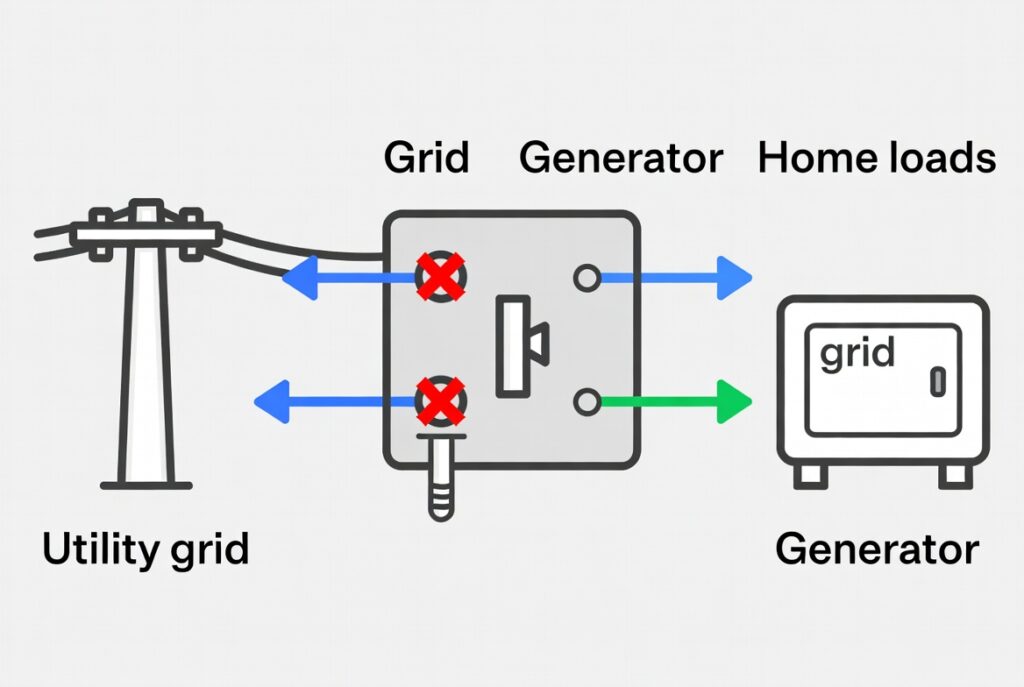
Deciding if you need a transfer switch for solar generator integration is the moment you move from running extension cords to powering hardwired loads like your furnace and well pump. A transfer switch is a permanent electrical device installed by a licensed electrician at your main panel. It physically disconnects the home from the utility grid before connecting the generator. That physical break prevents backfeed, which is the single most dangerous thing a generator owner can do.
Backfeed sends generator power back through the utility meter into the grid. This energizes downed power lines that Hydro One workers assume are dead. Backfeed kills utility workers every year across North America. In Ontario, backfeeding without a transfer switch is illegal under ESA regulations and CEC Section 64. The NEC requires a transfer switch for any generator connected to household wiring. There is no legal workaround.
Without a transfer switch, you are limited to running extension cords from your solar generator to individual appliances. With a transfer switch, you power hardwired loads including your furnace, well pump, sump pump, and hardwired lighting with the flip of a single switch. For a broader look at Ontario generator options, see our solar generator Ontario guide.
Manual Versus Automatic Transfer Switches and Which Type Fits Solar
A manual transfer switch is a mechanical sub-panel with toggle switches for each circuit. When the power goes out, you physically flip the toggles to disconnect from the grid and connect to your generator. This is the most common type for portable solar generators. Installation costs $500 to $1,500 CAD including the electrician, permit, and inspection. A 6-circuit manual switch covers furnace, well pump, fridge, kitchen lights, garage, and one bedroom.
An automatic transfer switch senses grid failure and switches the power source without manual intervention. Installation costs $1,000 to $2,500 CAD. ATS units are typically paired with permanent standby generators. However, solar generators with UPS mode like the Bluetti AC200L and EcoFlow DELTA Pro 3 act as a mini-ATS for plugged-in loads. The AC200L switches over in 20ms, keeping connected devices running through the outage without manual intervention. This covers plugged-in loads only, not hardwired circuits.
Transfer Switch Versus Extension Cords and When to Upgrade
Extension cords are the default for most portable solar generator owners. They cost $50 to $100, require no installation, and work immediately during an outage. However, they cannot power hardwired loads. Your furnace, well pump, sump pump, and hardwired lighting circuits are permanently connected to the electrical panel. No extension cord reaches them. For the full outage protocol using extension cords, see our solar generator outage protocol.
| Feature | Extension Cords | Transfer Switch |
|---|---|---|
| Setup Speed | Slow (running cords) | Instant (flip a switch) |
| Furnace and Well Pump | NO (hardwired) | YES (panel level) |
| Safety Risk | Trip hazard | Safe (no backfeed) |
| Legal for Panel Connection | Not applicable | Required by code |
| Cost | $50 to $100 | $500 to $1,500 installed |
The upgrade from extension cords to a transfer switch makes sense the moment you need hardwired loads during an outage. If your furnace is gas or propane with an electric igniter, extension cords cannot reach it. If your well pump is hardwired, extension cords cannot power it. If your sump pump is wired to a dedicated circuit, extension cords require splicing that violates code. The transfer switch solves all three.
The Furnace Neutral-Ground Bond Solution
Most gas and propane furnaces require a neutral-ground bond to fire the electronic igniter. Standard portable solar generators use floating neutral, which means the neutral and ground conductors are not connected inside the unit. When you plug a floating-neutral generator directly into a furnace circuit, the igniter control board does not detect a proper ground reference and refuses to fire. The furnace sits idle even though the generator is providing power.
A transfer switch with proper grounding and bonding solves this at the panel connection point. The transfer switch bonds the neutral and ground conductors when the panel switches to generator power. No separate bonding plug adapter is needed. This is the fix for the furnace problem referenced in our outage protocol, our 3000W guide, and our brand comparison. For motor starting loads on the same circuits, see our solar generator surge wattage guide.
The Halton Hills Furnace Victory
A homeowner in Halton Hills was tired of shivering during Hydro One outages because his natural gas furnace is hardwired to the electrical panel. He could not plug a hardwired furnace into a portable solar generator with extension cords. He had a licensed electrician install a 6-circuit manual transfer switch at his main panel for approximately $1,200 CAD. The electrician wired the furnace, well pump, kitchen lights, fridge circuit, garage circuit, and one bedroom circuit to the transfer switch sub-panel.
During the next February freeze, he plugged his Bluetti AC200L into the transfer switch inlet and flipped the furnace toggle. The blower motor kicked on instantly. Because the transfer switch was properly grounded and bonded at the panel connection point, it solved the floating neutral issue that normally prevents portable solar generators from firing furnace igniters. He did not need a separate bonding plug adapter because the transfer switch handled the neutral-ground bond internally.
Installing a transfer switch is like installing a proper tow hitch with a wiring harness instead of tying a rope to the bumper. The connection is rated for the load, the safety systems communicate correctly, and the equipment works as designed every time. The $1,200 installation cost paid for itself the first time his furnace ran during an outage. Without the transfer switch for solar generator connection, his furnace would have sat idle while he ran space heaters that drained the battery in 70 minutes.
The Guelph Backfeed Close Call
A DIYer near Guelph built a male-to-male extension cord and plugged his solar generator into a dryer outlet to backfeed power into his home panel. He did not have a transfer switch to isolate the house from the utility grid. He did not pull the main breaker before connecting the generator. He assumed the power was out and therefore the grid connection was safe.
When utility power was restored, the grid sent a massive surge back through the dryer outlet into his generator. The overcurrent event fried the inverter and BMS in his $3,000 unit instantly. The generator was not recoverable. Even worse, during the hours his generator was backfeeding, his setup was energizing the downed power lines outside his property, putting Hydro One line workers at risk of electrocution.
Backfeeding without a transfer switch is the electrical equivalent of bypassing a safety sensor on a hydraulic lift. It works until it kills someone. A transfer switch physically disconnects the home from the grid before connecting the generator. That physical break is what prevents backfeed. In Ontario, backfeeding without a transfer switch is not just dangerous. It is illegal under ESA regulations and CEC Section 64. For more on gas generator safety, see our solar generator versus gas generator comparison.
Transfer Switch Verdict and Who Actually Needs One in Ontario
The transfer switch verdict depends entirely on whether your critical loads are hardwired or plugged in.
- Apartment and condo dwellers do not need a transfer switch. You cannot modify the electrical panel in a rental or strata property. Use high-quality 12AWG extension cords from your solar generator to your appliances. An Anker SOLIX C1000 with extension cords covers apartment essentials for 8 to 10 hours.
- Homeowners with a furnace, well pump, or sump pump need a manual transfer switch installed by a licensed electrician. Budget $500 to $1,500 CAD for the switch, installation, permit, and ESA inspection. Wire your furnace, pump, fridge, and critical lighting circuits to the transfer switch sub-panel. Pair with a Bluetti AC200L or EcoFlow DELTA Pro 3 for the wattage and surge capacity needed. For pump sizing, see our 3000W solar generator guide.
- Homeowners who want automatic switchover without a panel transfer switch should buy a solar generator with UPS mode. The Bluetti AC200L switches over in 20ms and the EcoFlow DELTA Pro 3 offers similar capability. Plug critical loads directly into the generator. The UPS mode keeps devices running through the outage without manual intervention. This does not power hardwired loads, but it eliminates the need for a panel switch for plugged-in essentials. For brand details, see our solar generator brand guide.
Frequently Asked Questions
Q: Can I install a transfer switch myself?
A: No. In Ontario, the ESA requires a licensed electrician for all electrical panel work. A permit and inspection are required for every transfer switch installation. DIY panel modifications are illegal and void your home insurance coverage.
Q: Does a transfer switch charge my generator?
A: No. A transfer switch only transfers power from the generator to the home circuits. You still need solar panels or a wall outlet to charge the generator itself. The transfer switch is a one-way path from generator to panel.
Q: Will a transfer switch work with any solar generator brand?
A: Yes. As long as the generator has a standard 120V AC outlet or a 30A NEMA outlet, it can connect to a matching transfer switch inlet. The transfer switch is brand-agnostic because it connects to the AC output, not the battery system. Verify that your generator’s continuous wattage exceeds the total load on the transfer switch circuits before connecting.
NEC Article 702.6 requires a transfer switch for any generator connected to household wiring to prevent backfeed into the utility grid. The transfer switch must physically disconnect the home from the grid before connecting the generator. All transfer switch installations must comply with NEC requirements and be performed by a licensed electrician. Current standards are published at nfpa.org.
CEC Section 64 outlines identical requirements for transfer switch installations in Ontario. The ESA enforces these regulations and requires a permit and inspection for every installation. Failure to comply can result in fines, insurance voiding, and liability for any injuries or damage caused by backfeed. The ESA provides current compliance guidelines at esasafe.com.
This build is engineered within the 48V DC Safety Ceiling. Diagnostic logic is based on 20+ years of technical service experience. All structural and electrical installations must be verified by a Licensed Professional and comply with your Local AHJ. See our legal and safety disclosure for full scope.
About the Author
Robert Bertrand spent 20 years as a service advisor in the automotive industry (Lexus and Nissan), where precision diagnostics, wiring integrity, and documentation standards were non-negotiable. He brings that same technical discipline to GridFree Guide, where he researches, tests, and documents off-grid solar systems for Ontario conditions. Based in Rockwood, Ontario, every article is built on verified specifications, manufacturer data, and the real-world climate constraints of Canadian off-grid living.
As an Amazon Associate I earn from qualifying purchases. This site also contains affiliate links to other products and services. GridFree Guide earns a small commission at no extra cost to you.