
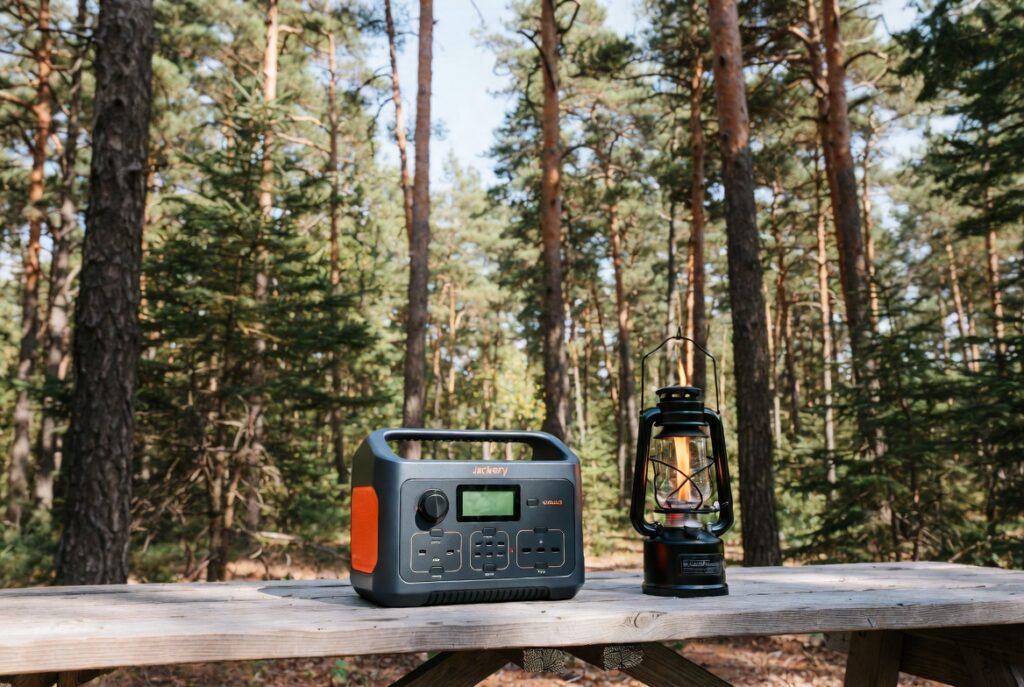
Solar Generator for Camping and Why Weight Decides Everything
Selecting the right solar generator for camping is a weight decision first and a capacity decision second because you have to carry it from the parking lot. A 2,000Wh unit with 62 lbs of mass is not camping equipment. It is cottage backup equipment with a carrying handle. The spec that matters most at a provincial park campsite is not wattage or capacity. It is how far you can carry the unit without regretting the purchase.
Ontario camping spans four weight classes of portable power. The 300Wh class at 8 lbs is backpackable. The 500Wh class at 13 lbs is a comfortable one-hand carry. The 1,000Wh class at 28 lbs is car-to-site only. The 2,000Wh class at 62 lbs should stay home. Each step up in capacity doubles the weight. The right solar generator for camping depends on how far you walk from the parking lot and how many days you stay.
Most Ontario camping loads are 12V essentials. Phones, LED lanterns, portable fridges, CPAP machines, and Bluetooth speakers draw 50W to 100W continuous overnight. If you need 120V AC for cooking, a $30 propane stove is the correct tool. The solar generator handles everything else in silence. For more on small portable units, see our best small solar generator guide.
The Camping Weight and Portability Matrix
The weight comparison below shows why size class matters more than raw capacity for camping. A unit you cannot carry is a unit that stays in the car. Every pound above 15 lbs reduces the distance you are willing to carry it from the parking lot.
| Size Class | Representative Unit | Weight | Portability Rank |
|---|---|---|---|
| 300Wh | Jackery Explorer 300 Plus | 8.3 lbs | Backpackable |
| 500Wh | EcoFlow RIVER 2 Max | 13.2 lbs | One-hand carry |
| 1,000Wh | Anker SOLIX C1000 | 28.0 lbs | Car-to-site only |
| 2,000Wh | Bluetti AC200L | 62.4 lbs | Do not bring camping |
The 300Wh and 500Wh classes cover 90 percent of camping use cases. The 1,000Wh class is reserved for CPAP users who need the humidifier running or week-long trips with zero margin for error. The 2,000Wh class belongs at a cottage or home, not a campsite. For the RV alternative, see our Ontario RV solar guide.
Solar Generator for Camping Runtime for Common Loads
A 500Wh class solar generator for camping handles common loads comfortably when you use the 85 percent efficiency rule. Phone charging at 12W gives approximately 35 full charges. An LED lantern at 5W runs for approximately 85 hours. A CPAP without humidifier at 8W lasts approximately 53 hours, which covers 6 nights of sleep. For more on CPAP runtime, see our solar generator for CPAP guide.
A portable fridge at 35W average runs for approximately 12 hours on a single charge and requires solar to sustain beyond one day. An electric air pump at 200W provides approximately 2 hours of runtime, which inflates approximately 25 queen-sized mattresses. The total typical overnight camping load of 50W to 100W continuous means a 500Wh unit delivers 8 to 17 hours per charge. That is one full night with margin for most camping scenarios.
The Ontario Tree Canopy Penalty and Why Solar Is a Range Extender
Most solar generator specs are tested in California desert conditions with direct overhead sun. Ontario provincial parks are not California. At Killarney, Algonquin, or Bon Echo, your campsite sits under a dense canopy of maple and pine. Direct sun gives 100 percent panel output. Dappled shade at a standard Ontario campsite gives 30 to 50 percent. Deep woods or overcast conditions give 10 to 15 percent. For more on seasonal output, see our cloudy weather solar output guide.
A 100W Renogy panel in dappled shade produces 30W to 50W actual output. That means refilling a 500Wh battery from empty takes 10 to 17 hours of daylight under tree cover. For a week-long Ontario trip, treat solar as a range extender, not a primary fuel source. Charge the unit fully before you leave home. Use solar to top up during the day. Do not depend on panels alone to sustain multi-day loads under canopy.
The Pinery Long Weekend Success
A family at Pinery Provincial Park used a Jackery Explorer 300 Plus for a long weekend of car camping. The unit weighs 8.3 lbs, which made it easy to carry from the car to the beach and back every day. They used it to power a small Bluetooth speaker, keep four phones topped up, and run a 12V electric pump for their paddleboards. They did not attempt to run a fridge, heater, or any high-draw appliance.
Because the total load stayed under 30W average, the 288Wh capacity was more than enough for a 3-day trip. They used approximately 60 percent of the battery over the entire weekend. They did not bring a solar panel because the load was light enough to sustain on a single charge. They recharged the unit from the car’s 12V outlet on the 20-minute drive to the trailhead each morning.
For light camping focused on phones, lights, and small accessories, the 300Wh class is the correct solar generator for camping. Smaller is almost always better when you are carrying it. The family spent zero time managing battery levels or worrying about recharge. Larger units would have added weight and complexity without adding value for this use case.
The Killarney Oversizing Failure
A camper at Killarney Provincial Park decided to bring a 2,000Wh solar generator to run a full-sized coffee maker and an electric frying pan. The unit weighed over 60 lbs. He also packed a 200W solar panel for daytime recharge. His plan was to cook breakfast on electric power instead of propane.
The trouble started at the portage. He made three trips just to move the power station and solar panels from the parking lot to the campsite. Once set up, the 1,500W frying pan drained 40 percent of the battery in 20 minutes of making breakfast. Under the Killarney pine canopy, his 200W panel produced approximately 50W actual output. That meant a full recharge would take over 30 hours of daylight. For a comparison of when gas or propane is the correct choice, see our solar generator versus gas generator comparison.
He spent more time managing his battery than enjoying the lake. The heavy unit was difficult to reposition when rain moved through the site. The 120V cooking loads were the wrong application for a solar generator for camping under tree cover. A $30 propane stove would have handled the cooking while a 300Wh unit at 8 lbs handled everything else.
Solar Generator for Camping Verdict and Which Size to Buy
This solar generator for camping verdict splits into three profiles. The right choice depends on your trip length, your load type, and how far you carry your gear.
- Weekend car campers focused on phones, lights, and speakers should buy the Jackery Explorer 300 Plus at 8.3 lbs. It handles essentials for 3 to 4 days on a single charge without a solar panel. No battery management required. Carry it in one hand from the parking lot to any campsite in Ontario.
- Extended-trip campers running a portable fridge or CPAP without humidifier should buy a 500Wh class unit like the EcoFlow RIVER 2 Max at 13.2 lbs. It runs a Dometic-class fridge for 12 hours and a CPAP for 6 nights on a single charge. Pair it with a small panel for multi-day recharge under Ontario tree cover. For the full Ontario camping context, see our solar generator Ontario guide.
- CPAP users needing humidifier support or week-long trips with zero risk margin should buy the Anker SOLIX C1000 at 28 lbs. This is car-camping only due to weight. It provides the capacity buffer for medical users who cannot risk running out at 3:00 AM. For the full CPAP runtime math, see our solar generator for CPAP guide.
Frequently Asked Questions
Q: Can I leave a solar generator out in the rain?
A: No. Most solar generators have open cooling fans and are not waterproof. Use a waterproof solar panel like the Renogy 100W outdoors but keep the battery unit inside your tent or vehicle. Water damage is not covered under any manufacturer warranty.
Q: Are solar generators allowed in Ontario provincial parks?
A: Yes. Unlike gas generators which are restricted or banned in many campgrounds, solar generators are silent and emission-free. They are allowed 24 hours a day in every Ontario provincial park including backcountry sites. No noise permits or time restrictions apply.
Q: Will it charge from my car while I drive?
A: Yes, but car outlets are typically limited to 100W. That means a 5 to 8 hour recharge time for a mid-sized unit. It is practical for topping up between campsites on a road trip. For faster recharge, charge fully from a wall outlet before your trip and treat the car outlet as a supplement during travel days.
NEC Article 694 covers small-scale photovoltaic systems and portable solar equipment used in recreational and temporary installations. Portable solar generators must comply with applicable overcurrent and grounding requirements. Current standards are published at nfpa.org.
CEC Section 64 outlines requirements for portable power equipment used in outdoor and recreational settings in Ontario. All equipment must be CSA or UL certified. The Electrical Safety Authority (ESA) provides current compliance information and safe-use guidance at esasafe.com.
This build is engineered within the 48V DC Safety Ceiling. Diagnostic logic is based on 20+ years of technical service experience. All structural and electrical installations must be verified by a Licensed Professional and comply with your Local AHJ. See our legal and safety disclosure for full scope.
About the Author
Robert Bertrand spent 20 years as a service advisor in the automotive industry (Lexus and Nissan), where precision diagnostics, wiring integrity, and documentation standards were non-negotiable. He brings that same technical discipline to GridFree Guide, where he researches, tests, and documents off-grid solar systems for Ontario conditions. Based in Rockwood, Ontario, every article is built on verified specifications, manufacturer data, and the real-world climate constraints of Canadian off-grid living.
As an Amazon Associate I earn from qualifying purchases. This site also contains affiliate links to other products and services. GridFree Guide earns a small commission at no extra cost to you.