
The Solar Generator Warranty Standard and Why the Fine Print Matters More Than the Sticker
Understanding your solar generator warranty is just as important as checking the battery capacity before you buy. Most major brands including EcoFlow, Bluetti, Anker, and Jackery now offer a 5-year warranty on their current LFP units. That 5-year coverage applies to manufacturing defects, inverter electronics failure, and battery cell failure. It does not apply to normal capacity degradation, water damage, physical drops, or use beyond rated specifications.
The distinction between a manufacturing defect and normal wear is the line that separates a successful claim from a denied one. If your inverter fails while running a lamp at 60W, that is a defect and the warranty covers it. If your battery holds 85 percent of original capacity after 3 years of daily use, that is normal LFP aging and no solar generator warranty in the world covers it. The 3,500-cycle rating is a performance specification, not a warranty promise.
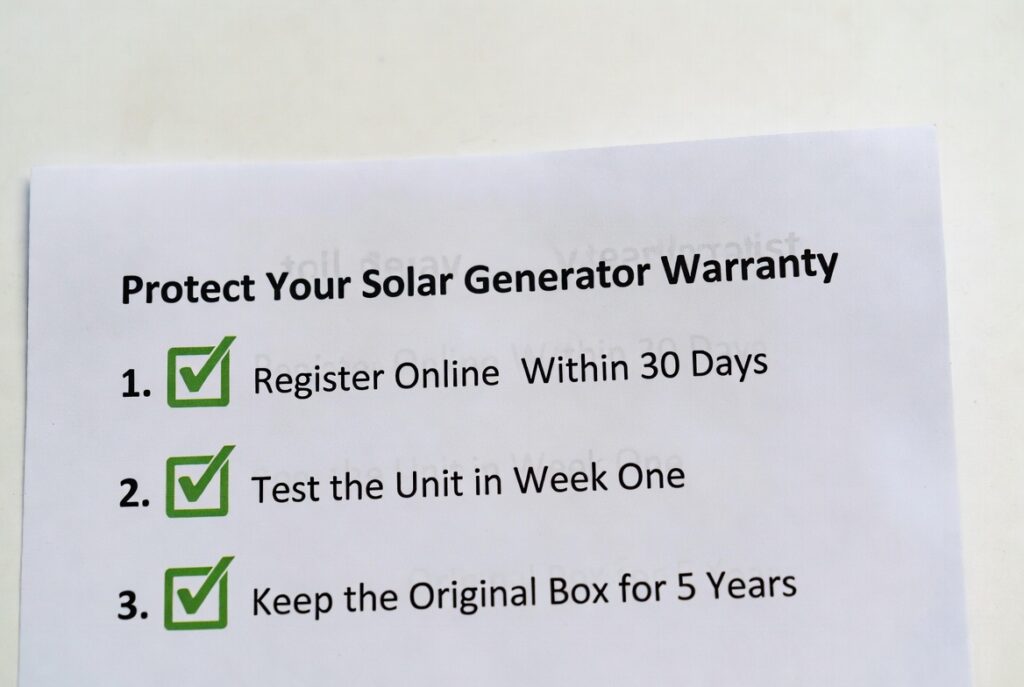
Ontario buyers face an additional challenge. No major solar generator brand has a service center in Ontario or anywhere in Canada. All warranty claims ship to US distribution centers. Expect 2 to 4 weeks turnaround including cross-border shipping both ways. Keep your original box, register the warranty online within 30 days, and test the unit before you need it. For a broader overview, see our solar generator Ontario guide.
The Big Four Brand Warranty Comparison for 2026
All four major brands now offer 5-year warranties on their current LFP product lines. The coverage periods apply to units purchased in 2025 and 2026. Older models with NMC chemistry or pre-LFP designs may carry shorter 2-year warranties. Always verify the warranty period for your specific model on the manufacturer’s website before purchasing.
| Brand | Warranty Period | Ontario Support | Claims Process |
|---|---|---|---|
| EcoFlow | 5 years | Ship to US | App-based or email |
| Anker | 5 years | Ship to US | Phone and email |
| Bluetti | 5 years | Ship to US | Email support ticket |
| Jackery | 5 years | Ship to US | Direct email |
Anker currently offers the strongest customer service response with phone support in addition to email. EcoFlow provides app-based diagnostics that can resolve some issues without shipping. Bluetti and Jackery handle claims through email support tickets. All four brands require the original proof of purchase. For brand ecosystem comparison, see our solar generator brand guide.
What a Solar Generator Warranty Covers and What It Does Not
A solar generator warranty covers manufacturing defects that cause the unit to malfunction during normal residential use. This includes inverter electronics failure, battery cell failure that causes sudden capacity loss, charging port defects, display malfunctions, and BMS errors that cause unexpected shutdowns. If the unit arrives dead on arrival, fails to charge, or loses more than 40 percent capacity within the warranty period under normal use, the manufacturer will repair or replace it.
A solar generator warranty does not cover water damage, physical damage from drops, use beyond the rated continuous output, modifications, or opening the case. All units have internal tamper-evident seals. If a warranty technician finds broken seals, the claim is denied regardless of the actual failure cause. Water damage triggers internal moisture sensors that brands check during every claim inspection. Normal battery degradation to 80 percent capacity after 3,000+ cycles is expected LFP behavior and is not a defect. For load limits, see our solar generator surge wattage guide.
What Voids a Solar Generator Warranty and the Five Mistakes to Avoid
Opening the case or removing any screw voids the warranty immediately. All units have tamper-evident seals on internal screws that brands inspect during claims. Water exposure voids the warranty because no portable solar generator is waterproof. The cooling vents that prevent overheating also allow water ingress. One hour in 2 inches of basement flood water is enough to trigger the internal moisture sensors even if the unit appears dry externally.
Running the unit beyond its rated continuous output can log an overload event in the BMS firmware. Some brands check these logs during claims. Using third-party repair services voids the warranty. Failing to register the warranty online within 30 days of purchase may reduce coverage from 5 years to 2 years on some brands. Using non-brand solar panels does NOT void the warranty as long as you stay within the unit’s rated input voltage and amperage limits.
The Milton DOA Recovery
A client in Milton received an EcoFlow DELTA Pro 3 that would not charge past 99 percent right out of the box. The display showed a charging error code that did not appear in the user manual. He contacted EcoFlow support within the first week of ownership. He had his original Amazon receipt and had not opened the case or removed any screws.
Because the seals were intact and the purchase documentation was clean, the solar generator warranty claim was straightforward. He shipped the unit to the US distribution center at his own expense, which cost approximately $45 CAD for the cross-border shipment. Three weeks later, a brand-new replacement unit arrived at his door. The total downtime was 21 days from claim submission to replacement delivery.
This was like a manufacturer defect caught in the first 100 kilometers on a new vehicle. The seals were intact. The paperwork was clean. The brand stood behind the product. The lesson is simple: do not open the case, do not lose the receipt, and test the unit within the first week of ownership. If it is defective, the solar generator warranty process works. If you wait 6 months to discover the defect, the claim is harder to prove.
The Rockwood Basement Flood Denial
A DIYer in Rockwood had his Anker SOLIX C1000 sitting on the floor of his basement when his sump pump failed during a spring storm. The unit sat in 2 inches of standing water for approximately one hour before he discovered it and moved it to a shelf. The unit appeared to work normally for the next 4 weeks. No visible water damage on the exterior.
One month later, the inverter failed during a routine load test. He filed a solar generator warranty claim expecting a replacement. The brand opened the unit during inspection and found the internal moisture indicators had tripped. The claim was denied immediately as environmental damage. The internal corrosion from one hour of water exposure had slowly degraded the inverter board over 4 weeks before it failed completely.
This is like hydrolocking an engine by driving through standing water. You cannot blame the manufacturer for a flood. The unit was not defective. It was damaged by water exposure that the warranty explicitly excludes. The lesson: always keep your solar generator on a shelf or riser at least 6 inches off the floor. Basement flooding is common in Ontario during spring thaw and summer storms. A $10 shelf protects a $900 investment. For storage best practices, see our solar generator maintenance guide.
The Solar Generator Warranty Verdict and How to Protect Your Coverage in Ontario
This solar generator warranty verdict comes down to three actions you must take within 30 days of purchase.
- Register the warranty online through the manufacturer’s app or website within 30 days. Save the PDF confirmation. Print your Amazon receipt and store it with the unit in a clear sleeve taped to the side. Some brands reduce coverage from 5 years to 2 years if you skip registration. This takes 5 minutes and protects $900 to $4,500 of investment.
- Test the unit within the first week. Charge to 100 percent. Run a load test at 50 percent of rated output for one hour. Verify the display, the charging ports, and the AC outlets all function correctly. If anything is wrong, file the claim immediately while the purchase is fresh and the seals are unbroken. For ongoing testing, see our solar generator lifespan guide.
- Keep the original box for the full 5-year warranty period. Shipping an 80 lb lithium battery across the border without the original packaging is expensive, difficult, and sometimes impossible due to dangerous goods regulations. The original box includes the required lithium battery shipping labels and foam inserts. Replacing this packaging after disposal can cost $50 to $100 CAD if you can find a suitable alternative at all.
Frequently Asked Questions
Q: Does using third-party solar panels void the warranty?
A: No. As long as you stay within the rated input voltage and amperage limits of the unit’s charge controller, you can use any solar panel from any brand. The warranty covers the unit itself, not the accessories connected to it.
Q: Is the battery covered for the full 5 years?
A: The battery is covered for sudden failure or defects, not for normal degradation. If the battery drops to 60 percent capacity within 5 years under normal use, most brands will replace it. If it drops to 80 percent after 3,000 cycles of daily use, that is expected LFP aging and is not a warranty claim.
Q: What if the company goes out of business?
A: This is a real risk with smaller brands. Stick to the four established brands with 5-year track records: EcoFlow, Bluetti, Jackery, and Anker. These companies have the financial stability and customer base to honor warranty claims in year 4 and year 5.
NEC Article 110 covers equipment safety requirements including manufacturer warranty obligations for consumer electrical products. All portable power equipment sold in North America must comply with UL or CSA safety certification standards. Current standards are published at nfpa.org.
CEC Section 64 governs consumer electrical equipment safety certification and warranty disclosure requirements in Ontario. All units sold for residential use must carry valid CSA or UL certification. The Electrical Safety Authority (ESA) provides current compliance guidelines at esasafe.com.
This build is engineered within the 48V DC Safety Ceiling. Diagnostic logic is based on 20+ years of technical service experience. All structural and electrical installations must be verified by a Licensed Professional and comply with your Local AHJ. See our legal and safety disclosure for full scope.
About the Author
Robert Bertrand spent 20 years as a service advisor in the automotive industry (Lexus and Nissan), where precision diagnostics, wiring integrity, and documentation standards were non-negotiable. He brings that same technical discipline to GridFree Guide, where he researches, tests, and documents off-grid solar systems for Ontario conditions. Based in Rockwood, Ontario, every article is built on verified specifications, manufacturer data, and the real-world climate constraints of Canadian off-grid living.
As an Amazon Associate I earn from qualifying purchases. This site also contains affiliate links to other products and services. GridFree Guide earns a small commission at no extra cost to you.