
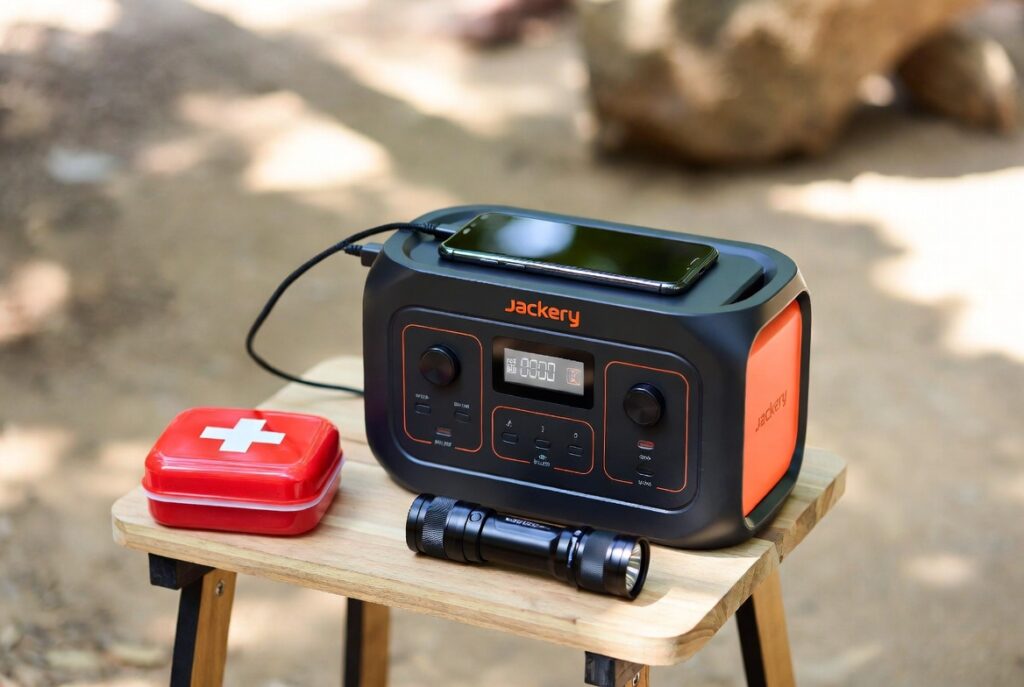
Best Small Solar Generator for Emergencies and Why Weight Is the First Spec
Finding the best small solar generator for an emergency kit is a balance of weight, price, and just enough capacity to keep communication alive for 72 hours. A 4,000Wh whole-house backup unit is excellent for a rural property, but it is useless if you live in a Toronto apartment with no garage. Ontario Emergency Management recommends a 72-hour preparedness kit for every household. A small solar generator is the power component of that kit.
The definition of small for this guide is under 600Wh capacity, under 15 lbs, and under $500 CAD. These units fit under a bed, in a hallway closet, or on a top shelf. They recharge from a standard wall outlet in 60 to 90 minutes. They are light enough to carry one-handed or toss into a go-bag during an evacuation. They are not designed to run a fridge or a microwave. They are designed to keep phones charged, LED lights on, and CPAP machines running.
A 300Wh unit keeps three phones charged and LED lights running for 3 full days without solar recharge. That covers the 72-hour standard. The five units compared below span 256Wh to 1,056Wh, covering every emergency use case from a backpack kit to the upper limit of portable. For a broader look at Ontario generator options, see our solar generator Ontario guide.
The Compact Comparison Table for Units Under 600Wh
The table below ranks the best small solar generator options by weight, capacity, and primary use case. Every unit listed uses LFP chemistry for long cycle life and safe indoor storage. The Anker C1000 is included as the upper limit of portable for buyers who need more capacity and accept the weight trade-off.
| Unit | Capacity (Wh) | Weight (lbs) | Best For |
|---|---|---|---|
| EcoFlow RIVER 2 | 256 | 7.7 | 72-hour kit and backpacking |
| Jackery Explorer 300 Plus | 288 | 8.3 | Reliability and durability |
| Bluetti EB3A | 268 | 10.1 | Fastest charging and budget |
| EcoFlow RIVER 2 Max | 512 | 13.2 | CPAP for multiple nights |
| Anker SOLIX C1000 Gen 2 | 1,056 | 28.0 | Upper limit (fridge capable) |
The EcoFlow RIVER 2 is the lightest at 7.7 lbs. The Jackery Explorer 300 Plus offers the best long-term reliability with 3,000+ LFP cycles. The Bluetti EB3A charges from wall power in approximately 30 minutes, which is the fastest in this class. The Anker SOLIX C1000 crosses the 15 lb line at 28 lbs but adds fridge and microwave capability for buyers who need more.
The Size Line Between Small Enough to Carry and Too Small to Matter
Small units in the 200Wh to 300Wh range cover the essential emergency loads: phones, tablets, LED lights, and CPAP machines without the humidifier. Medium units at 500Wh and above add the ability to run a small car fridge or a CPAP with the heated humidifier enabled. Below 150Wh, the units are essentially oversized power banks. They lack the AC inverter strength to sustain any meaningful appliance during an Ontario ice storm.
The line is 200Wh minimum for a legitimate emergency kit. Below that threshold, you cannot run an LED lamp and charge two phones simultaneously for more than one night. Above 600Wh, the weight starts to compromise portability and the unit belongs in the home backup category rather than the emergency kit category. For indoor placement details, see our indoor solar generator guide.
Best Small Solar Generator Runtime for Common Emergency Loads
A 300Wh class unit using the 85 percent inverter efficiency rule delivers the following runtimes. Phone charging at 12W gives approximately 21 full charges. An LED lantern at 5W runs for approximately 51 hours, which covers 3 full nights. A CPAP without humidifier at 8W lasts approximately 32 hours or 4 nights of sleep. A CPAP with humidifier at 50W lasts approximately 5 hours, which is not enough for a single full night.
The humidifier variable is the critical decision point for the best small solar generator in this class. Without the humidifier, a 300Wh unit is a 4-night CPAP solution. With the humidifier, the same unit dies before sunrise. For CPAP users who need the humidifier, the 500Wh class is the minimum. For complete CPAP runtime math, see our solar generator for CPAP guide.
The Guelph Apartment 72-Hour Success
A family in a Guelph apartment kept an EcoFlow RIVER 2 tucked into their hallway closet. The unit weighs 7.7 lbs and fits beside a shoe rack. When a transformer blew nearby, they lost power for two nights. They had no garage, no shed, and no space for a full-sized backup unit.
Because the unit is so light, their 10-year-old was able to carry it safely between rooms without help. They kept three phones charged, ran a small LED desk lamp for 5 hours each night, and still had 40 percent battery remaining when power returned. The total load across two nights was approximately 150Wh out of the 256Wh capacity. A 2,000Wh unit would have been overkill and would not have fit in their closet.
A small solar generator is like a high-quality jump-starter pack in your trunk. It is not meant to replace your alternator or run your air conditioning. It is exactly what you want when the main system fails and you need communication and light for the next 48 hours. For apartment dwellers in Ontario without garage space, the best small solar generator is the one that fits your storage and covers your essentials. For the full outage protocol, see our solar generator outage protocol.
The Rockwood CPAP Humidifier Mistake
A client in Rockwood bought a Bluetti EB3A for his CPAP machine during camping trips. The EB3A has 268Wh of capacity and 600W of output. He figured 268Wh was more than enough for sleeping power over a weekend. He did not calculate the difference between CPAP with and without the heated humidifier.
He left the humidifier and heated hose enabled. At 50W draw, the EB3A hit 0 percent in just over 4 hours. He woke up at 2:00 AM without airflow. The same unit would have lasted 32 hours with the humidifier off at 8W draw. That is 4 nights of sleep versus half of one night on the same battery.
Running a heated CPAP hose on a small battery is like leaving your headlights on with the engine off. You are draining the reserve six times faster than the essential load requires. The fix is simple. Turn off the humidifier when running on battery, or upgrade to a 500Wh+ unit that handles the 50W draw for a full night. For more on camping setups, see our solar generator for camping guide.
Best Small Solar Generator Verdict and Which Unit Fits Your Emergency Kit
This best small solar generator verdict splits into three profiles based on your use case, weight tolerance, and whether you need CPAP support.
- 72-hour emergency kit and apartment backup buyers should get the EcoFlow RIVER 2 at 7.7 lbs. It is the lightest legitimate power station available. It fits in a closet, a go-bag, or under a bed. It keeps three phones charged and LED lights running for two full nights on a single charge.
- Budget camping and weekend trip users should buy the Jackery Explorer 300 Plus or Bluetti EB3A. Both weigh under 11 lbs and handle phones, lights, and speakers for 3 to 4 days. The EB3A charges fastest at approximately 30 minutes from wall power. The Jackery has the best long-term reliability with LFP chemistry and 3,000+ cycle rating.
- CPAP users or anyone needing 500Wh+ in a portable form factor should buy the EcoFlow RIVER 2 Max at 13.2 lbs. It runs a CPAP without humidifier for 8+ nights. With humidifier at 50W, it lasts approximately 8.5 hours, which covers one full night with margin. For users who outgrow small units entirely, see our solar generator expansion guide.
Frequently Asked Questions
Q: Can a small solar generator run a coffee maker?
A: No. Most coffee makers draw 1,000W or more, which exceeds the inverter capacity of units in the 300W output class. Attempting to run a coffee maker will trigger inverter overload protection and shut the unit down. Use a propane stove or upgrade to a unit in the 1,000W+ class for coffee.
Q: How long can a small unit hold a charge in storage?
A: High-quality LFP units like the Jackery 300 Plus and Bluetti EB3A can sit for 6 months and retain 80 to 90 percent of their charge. The self-discharge rate on LFP is approximately 2 to 3 percent per month. Check and top up to 80 percent every 6 months for long-term readiness.
Q: Can I charge a small generator with a solar panel?
A: Yes. A 100W Renogy portable panel refills most 300Wh class units in 3 to 5 hours of Ontario sun. This makes solar a practical range extender for multi-day camping trips. For more on charge times, see our solar panel charge time guide.
NEC Article 702 covers optional standby systems including portable solar generators used for emergency preparedness. All portable power equipment must be operated according to manufacturer safety guidelines. Current standards are published at nfpa.org.
CEC Section 64 outlines requirements for emergency power supply equipment in Ontario residential settings. All portable generators must be CSA or UL certified. The Electrical Safety Authority (ESA) provides current compliance guidelines and emergency preparedness resources at esasafe.com.
This build is engineered within the 48V DC Safety Ceiling. Diagnostic logic is based on 20+ years of technical service experience. All structural and electrical installations must be verified by a Licensed Professional and comply with your Local AHJ. See our legal and safety disclosure for full scope.
About the Author
Robert Bertrand spent 20 years as a service advisor in the automotive industry (Lexus and Nissan), where precision diagnostics, wiring integrity, and documentation standards were non-negotiable. He brings that same technical discipline to GridFree Guide, where he researches, tests, and documents off-grid solar systems for Ontario conditions. Based in Rockwood, Ontario, every article is built on verified specifications, manufacturer data, and the real-world climate constraints of Canadian off-grid living.
As an Amazon Associate I earn from qualifying purchases. This site also contains affiliate links to other products and services. GridFree Guide earns a small commission at no extra cost to you.