
Ampere Time LiFePO4 Review and Why the LiTime Rebrand Changes Nothing
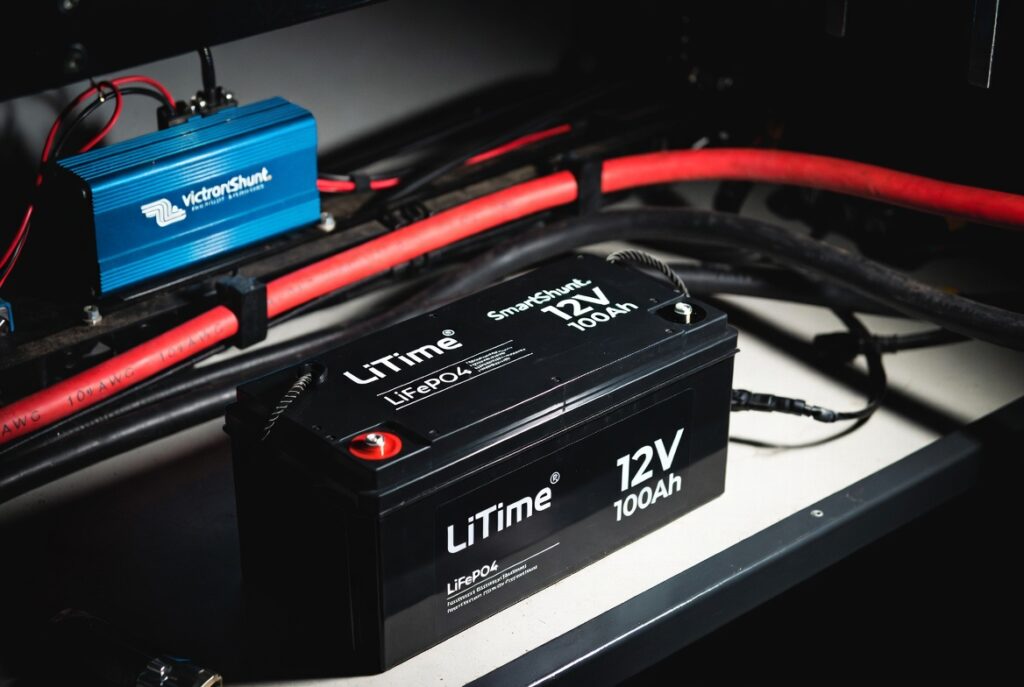
This ampere time lifepo4 review covers the battery now sold under the LiTime brand and explains why it is the strongest budget LFP option for Tier 1 Ontario builds. The rebrand from Ampere Time to LiTime does not change anything about the product. Same factory, same Grade A prismatic cells, same BMS architecture. Only the sticker changed.
The LiTime 12V 100Ah LiFePO4 costs approximately $240 CAD for 100Ah of usable capacity at 100 percent DoD. Over 4,000 cycles, the cost per cycle drops to $0.04. That makes it the cheapest legitimate LFP battery on Amazon with a real BMS and a 5-year warranty. For Tier 1 Ontario builds, this is the entry point into lithium.
However, the LiTime has real limitations that matter in Ontario. It has no internal heater, no communication ports, and no heated model option. For three-season cottages and sheds, those gaps do not matter. For year-round unheated installations, they are deal-breakers. This ampere time lifepo4 review covers both sides of that equation. For a broader look at lithium chemistry options, see our Ontario LiFePO4 battery guide.
LiTime 100Ah Verified Specs and What the 100A BMS Actually Protects
The LiTime 12V 100Ah has a nominal voltage of 12.8V and a capacity of 1,280Wh. The built-in 100A BMS handles overcharge, over-discharge, overcurrent, and short circuit protection. The battery weighs 24.25 lbs in a Group 31 form factor. It supports up to 4S4P configuration for systems up to 51.2V and 400Ah.
The charging temperature range is 0 degrees C to 50 degrees C. Discharge is allowed from minus 20 degrees C to 60 degrees C. There are no CAN bus, RS485, or communication ports of any kind. For a full charge, you need a charger with a lithium or LFP profile that reaches 14.4V to 14.6V. A lead-acid charger will damage the cells. For compatible options, see our smart battery charger guide.
Ampere Time LiFePO4 Review Comparison Table and the Cost Per Cycle Math
This ampere time lifepo4 review puts the LiTime head-to-head against Battle Born 100Ah LFP and Chins 100Ah. The numbers tell a clear story at this price range. LiTime wins on cost per cycle. Battle Born wins on warranty and heated model availability. Chins matches LiTime on price but falls short on BMS quality and documentation.
| Battery | Cost (CAD) | BMS Quality | Heated Model | Warranty | Cost per Cycle |
|---|---|---|---|---|---|
| LiTime (Ampere Time) | $240 | Good | No | 5-year | $0.04 |
| Battle Born | $1,200 | Professional | Yes | 10-year | $0.24 |
| Chins | $220 | Basic | No | 5-year | $0.05 |
At $0.04 per cycle, the LiTime is the most affordable legitimate LFP option on Amazon. Battle Born costs six times more per cycle but offers a 10-year warranty with phone support and a heated model for year-round Ontario use. Chins costs $0.05 per cycle with a slightly less robust BMS. For a full breakdown of how depth of discharge affects these numbers, see our depth of discharge guide.
The Ontario Cold Weather Lockout and Why LiTime Has No Heated Option
The LiTime 100Ah BMS blocks charging at 0 degrees C. This prevents damage from cold-temperature charging, but it also means the battery will not charge in freezing conditions. For three-season Ontario cottages, the solution is simple. Disconnect the bank at 80 percent SOC and store the batteries indoors for winter. The 3 percent monthly self-discharge rate means they will hold charge through a 5-month storage period without issue.
For year-round off-grid builds in unheated spaces, LiTime is the wrong battery. You need either a heated battery enclosure with a thermostat set to maintain 5 degrees C minimum, or a Battle Born 100Ah Heated LFP with its built-in heating element. The heated Battle Born costs approximately $1,400 CAD but eliminates the lockout problem entirely. For full cold weather protocols, see our heated battery standard for Ontario.
The Muskoka Summer Cottage Win
A seasonal cottage owner in Muskoka wanted a lithium upgrade without spending $5,000. He swapped four 100Ah AGM batteries for two LiTime 100Ah units ordered from Amazon at $240 CAD each. The total battery cost was approximately $500 CAD. The same capacity in Battle Born would have cost $2,400 CAD.
Because LiTime supports 100 percent depth of discharge, the two units delivered 200Ah of usable energy. That matched what his old 400Ah AGM bank provided at 50 percent DoD. The weight dropped by nearly 200 lbs from his equipment shelf. During the summer months, the batteries held a steady 22 degrees C and the voltage plateau stayed at 13.2V all night, keeping his CPAP and fridge running without a single flicker.
For a seasonal three-season build, the LiTime pair outperformed the AGM bank in every measurable way. The usable capacity doubled relative to the old lead-acid setup while the weight dropped by two-thirds. The $500 CAD investment paid for itself in one season of reliable operation. For Tier 1 summer cottage builders in Ontario, this ampere time lifepo4 review confirms the LiTime as the correct entry point. For help calculating your own bank size, see our battery sizing calculator.
The Frontenac County January Lockout
A DIYer in Frontenac County installed two LiTime 100Ah batteries in an uninsulated outdoor shed for a year-round security camera system. The system ran perfectly through fall and into December. The batteries powered the cameras, a router, and a small LED light with capacity to spare. He did not install a battery heater because the system ran fine through November.
On a minus 15 degrees C clear January morning, the sun was out and the Victron MPPT 100/30 was ready to push 20A into the bank. However, the LiTime BMS detected the freezing internal temperature and blocked the charge entirely. The Victron SmartShunt showed 0A incoming despite full sun on the panels. The owner thought the batteries were broken because the system would not charge.
The battery did exactly what it was designed to do. It protected itself from cold-temperature charging damage. However, the lack of an internal heater made the system unable to accept a charge for 30 days until a week-long thaw arrived in February. For year-round Ontario installations in unheated spaces, this ampere time lifepo4 review makes the limitation clear. You need either a heated battery enclosure or a different battery with a built-in heater. For the full winter protocol, see our heated battery standard for Ontario.
Ampere Time LiFePO4 Review Verdict and Who Should Buy LiTime
This ampere time lifepo4 review comes down to three buyer profiles. The right choice depends on your season of use, your budget, and whether your battery space stays above freezing.
- Tier 1 shed, van, or summer cottage builders should buy the LiTime 12V 100Ah at $240 CAD. It is the best value in Ontario solar storage today. Pair it with a Victron MPPT 100/30 and a Renogy 100W panel. Store batteries indoors over winter.
- Budget-conscious builders who cannot afford $1,200 CAD for Battle Born should consider the LiTime as the most stable alternative on Amazon. The $0.04 cost per cycle and 4,000 cycle life make it a legitimate long-term investment. At this price, you can buy two replacements over 10 years and still spend less than one Battle Born. For the lead-acid alternative at an even lower entry point, see our LFP versus AGM comparison.
- Year-round Ontario builders with unheated battery spaces should skip LiTime. Buy a Battle Born 100Ah Heated LFP instead. The built-in heater prevents the 0 degrees C lockout that shuts down unheated LiTime installations for weeks at a time. For Tier 2 and Tier 3 builders needing 15kWh or more, skip all 12V drop-ins entirely and see our EG4 battery review. For battery lifespan planning, see our solar battery lifespan guide.
Frequently Asked Questions
Q: Is Ampere Time the same as LiTime?
A: Yes. Ampere Time rebranded to LiTime in 2023. The factory, Grade A prismatic cells, BMS architecture, and warranty terms are all identical. Products on Amazon now appear under the LiTime name, but the ampere time lifepo4 battery you researched is the same unit.
Q: Can I use my old lead-acid charger with LiTime?
A: No. Lead-acid chargers push incorrect voltage profiles that can damage LFP cells. You need a charger with a dedicated lithium or LFP profile to reach the 14.4V to 14.6V absorption voltage required for a full charge. For compatible options, see our smart battery charger guide.
Q: Is LiTime better than Chins?
A: In testing, LiTime has a slightly more robust BMS and better documentation than Chins. Both cost roughly the same at $220 to $240 CAD for 100Ah. LiTime’s 4,000 cycle rating and 5-year warranty give it the edge as the preferred budget standard for Ontario builds.
NEC Article 706 covers energy storage systems including overcurrent protection, disconnecting means, and BMS requirements for LFP battery installations. All LiTime installations must comply with NEC 706.7 for disconnecting means and NEC 706.30 for overcurrent protection sizing. Current standards are published at nfpa.org.
CEC Section 64 governs battery storage installations in Ontario. All structural and electrical installations must be verified by a Licensed Professional and comply with your Local AHJ. The Electrical Safety Authority (ESA) provides current standards and inspection requirements at esasafe.com.
This build is engineered within the 48V DC Safety Ceiling. Diagnostic logic is based on 20+ years of technical service experience. All structural and electrical installations must be verified by a Licensed Professional and comply with your Local AHJ. See our legal and safety disclosure for full scope.
About the Author
Robert Bertrand spent 20 years as a service advisor in the automotive industry (Lexus and Nissan), where precision diagnostics, wiring integrity, and documentation standards were non-negotiable. He brings that same technical discipline to GridFree Guide, where he researches, tests, and documents off-grid solar systems for Ontario conditions. Based in Rockwood, Ontario, every article is built on verified specifications, manufacturer data, and the real-world climate constraints of Canadian off-grid living.
As an Amazon Associate I earn from qualifying purchases. This site also contains affiliate links to other products and services. GridFree Guide earns a small commission at no extra cost to you.