
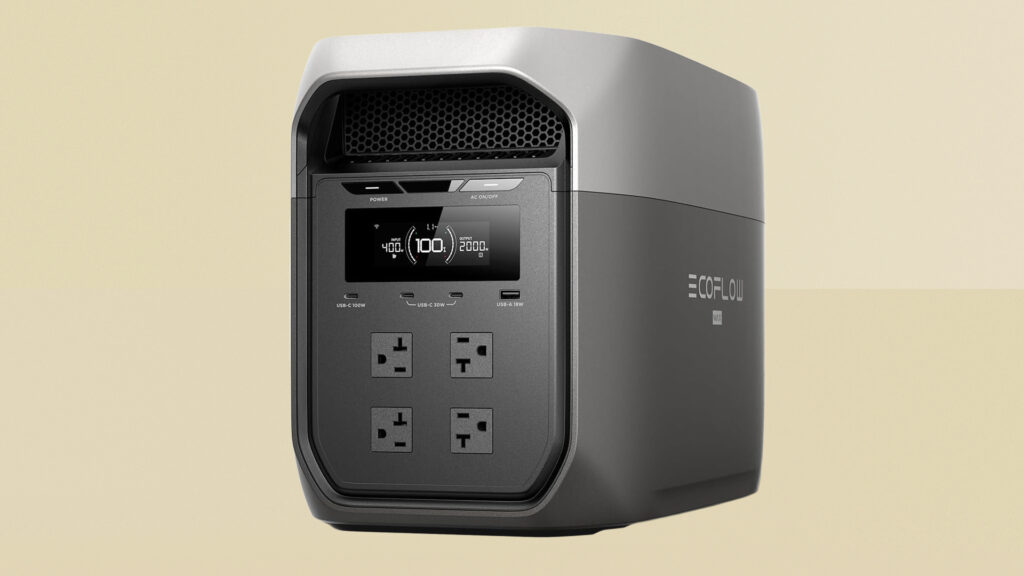
The EcoFlow Delta 3 Classic earned its place on the bench in Rockwood. The first night Hydro One dropped the grid mid-inference, the unit caught the event clean. I run a multi-AI content production ensemble on the workstation. Losing power means restarting Ariel from a cold boot.
The verdict came in early. The EcoFlow Delta 3 Classic passes the Service Advisor inspection as a workstation UPS. Zero flicker, zero reboot, zero state loss across multiple Ontario outages.
Mid-inference power loss matters more than most reviewers admit. A 72B parameter model takes 5 to 10 minutes to reload after a crash. Across multiple Ontario outages last winter, that became significant cumulative time. This is not a phone-charging use case.
The EcoFlow Delta 3 Classic showed a consistent 3-hour runtime under my workstation load. Typical Rockwood Hydro One outages last 1 to 2 hours. That gives me a real safety margin for longer service interruptions in Ontario winter conditions.
For broader buying context, see our solar buyers guide. For deeper UPS theory and switchover specs, read our solar generator UPS standard. The unit reviewed here is the EcoFlow Delta 3 Classic on Amazon.
| Spec | Manufacturer Rating | Real-World Result | Verdict |
|---|---|---|---|
| UPS switchover time | Under 10ms claimed | Zero flicker on workstation and TV across multiple outages | Pass |
| AC continuous output | 1800W | Workstation + TV ran indefinitely, 340W average draw | Pass |
| Output waveform | Pure sine wave | Workstation PSU stable, no instability | Pass |
| Display runtime accuracy | Variable estimate | Showed 3 hours, math matched | Pass |
| Battery capacity | 1024Wh LiFePO4 | Confirmed via runtime math under known load | Pass |
Why a workstation needs a real UPS, not just a power station
A UPS is more than just backup power. It provides instant switchover to prevent data loss and hardware damage. A pure sine wave output is essential for sensitive desktop PSUs. Modified sine wave inverters can cause instability in workstation hardware.
Most portable power stations have a 20 to 30ms switchover time, which is too long for workstations. Desktops need under 10ms to avoid rebooting during outages. Anything slower triggers the desktop PSU to drop and the operating system to crash.
The under-10ms threshold is the minimum spec for reliable workstation protection. The EcoFlow Delta 3 Classic meets that minimum spec by manufacturer claim. The Rockwood outage data confirmed it under real load.
The Rockwood save: how the EcoFlow Delta 3 Classic survived the first Hydro One drop
It was a late evening in winter 2025-2026. I was running Ariel, my 72B parameter AI model, on the workstation. The TV was on across the room. Hydro One service had been intermittent that week, so the EcoFlow Delta 3 Classic was already plugged in and live.
The grid dropped without warning. The workstation did not flicker. The TV did not flicker. The only way I noticed the outage was looking out the window and seeing the streetlights gone.
The equipment never registered the event at all. The display lit up showing 3 hours of runtime remaining at the current load.
The under-10ms switchover did exactly what a UPS is supposed to do. This is the BMS equivalent of a modern ECU compensating for a sensor fault before the driver feels a stumble. The car keeps running smoothly because the system caught the failure faster than the human could.
Capacity math under real workstation load
The EcoFlow Delta 3 Classic has a 1024Wh LiFePO4 battery. Under my workstation and TV load, it displayed a consistent 3-hour runtime. The calculation is simple: 1024Wh divided by 3 hours equals approximately 340W average draw.
That matches the typical inference load for a 72B parameter model on dual-GPU hardware with a TV running. The runtime number on the display held steady throughout the outage. No sudden drops, no surprise depletion warnings.
Most Rockwood outages resolve in 1 to 2 hours. The 3-hour reserve gives a real safety margin in Ontario winter conditions. However, 3 hours is finite. For extended outages, you need solar input or generator integration to extend runtime.
See our solar generator UPS standard for the full integration approach. The EcoFlow Delta 3 Classic provides reliable short-term backup, not unlimited duration.
What the EcoFlow Delta 3 Classic BMS actually does
The Battery Management System functions like an ECM or ECU in a car. It monitors cell voltage, temperature, and current draw in real time. The BMS protects against overvoltage, overcurrent, and thermal events that would damage the cells.
The LFP chemistry suits standby mode operation. The unit lives in standby 95% of the time waiting for an outage that may not come for weeks. LFP handles long standby better than NMC chemistry, with less self-discharge and better safety margin in storage.
Pre-charge behavior prevents the inrush spark on connection. Cycle life of 3000+ cycles to 80% capacity matches the use case. A unit firing once a week through outage season will last well beyond a decade in Ontario.
That cycle math is the diagnostic equivalent of a properly engineered timing chain on a Lexus. Built to outlast the typical ownership window without intervention.
The diagnostic verification: watching the runtime match the math
A separate outage event came a few weeks later. This one ran longer than the first. After 20 years in dealership service, I do not trust spec sheets without verification. I decided to watch the EcoFlow Delta 3 Classic display in real time.
The display showed 3 hours and stayed close to that estimate as the minutes ticked down. I ran the math on paper: 1024Wh divided by 3 hours equals approximately 340W average draw. Most portable power station spec sheets overstate runtime by 20 to 30% under real load. The EcoFlow Delta 3 Classic display matched reality.
The runtime accuracy proves the BMS is doing its job. A poor BMS lies to the user about state of charge and remaining capacity. Think of it as a properly calibrated fuel gauge versus one that drops from half tank to empty without warning. The Service Advisor’s instinct held: trust the meter, not the marketing.
What the EcoFlow Delta 3 Classic is not for
The EcoFlow Delta 3 Classic is not a whole-home backup solution. It is not a multi-day power source without solar or generator integration. It is not rated for sub-zero charging without protection, so indoor placement is required for Ontario winter operation.
The unit is not a substitute for a Tier 2 or Tier 3 permanent battery bank. For permanent off-grid loads, spec a proper LFP bank with Victron MultiPlus integration. The EcoFlow Delta 3 Classic is designed as a UPS and short-duration backup, delivering cleanly within its 1024Wh design envelope.
For the broader off-grid context and where this unit fits in a larger build, see our off-grid living guide. The right tool for the right job is the entire diagnostic principle.
NEC Article 690 governs solar PV system integration if you connect solar input to the EcoFlow Delta 3 Classic. The DC circuit from any solar input to the unit must comply with NEC battery output circuit requirements. Standalone plug-and-play UPS operation does not require permitting under NEC. Current standards are published at nfpa.org.
CEC Section 64 governs electrical installations in Ontario. Plug-and-play operation of the EcoFlow Delta 3 Classic in a residential setting does not require an ESA permit. Any permanent wiring or solar integration would. The Electrical Safety Authority publishes compliance guidelines at esasafe.com.
Pro Tip: Test any portable power station as a workstation UPS before trusting it. Plug a small lamp into a regular wall outlet and the workstation into the unit in UPS mode. Flip the breaker to simulate the outage. The lamp confirms the grid drop happened, but the workstation should not flicker.
EcoFlow Delta 3 Classic verdict: the right tool for the right job
- For the off-grid AI workstation operator: The EcoFlow Delta 3 Classic is the right tool. Zero-latency switchover, pure sine wave output, 3 hours of real-load reserve at 340W draw. It earns its place in the equipment rack.
- For the Ontario homeowner with a sensitive home office or NAS: Same recommendation applies. Anyone running a desktop, NAS, or any equipment that cannot tolerate power interruption mid-task gets real protection. The price-to-protection ratio is favourable for this use case.
- For the Tier 2 or Tier 3 off-grid builder considering this as a primary battery bank: Wrong tool. The EcoFlow Delta 3 Classic is a UPS and short-duration backup, not a primary battery bank. Spec a proper LFP bank with Victron MultiPlus integration for permanent off-grid loads.
Frequently asked questions
Q: How long does the EcoFlow Delta 3 Classic actually run a desktop computer?
A: Approximately 3 hours under combined workstation and TV load at 340W average draw. That figure is from real measured data in Rockwood Ontario. Capacity is 1024Wh LiFePO4. Runtime varies with actual load, and lower-draw single-device use extends accordingly.
Q: Will the EcoFlow Delta 3 Classic protect a workstation during a power outage without rebooting it?
A: Yes, based on multiple zero-flicker switchover events across the past Rockwood Ontario winter. The under-10ms UPS switchover is fast enough that desktop PSUs do not register the grid drop. Modified sine wave units cannot match this protection level.
Q: Can the EcoFlow Delta 3 Classic run an AI workstation continuously?
A: Yes within its 1024Wh capacity limit. For unlimited continuous duration during extended outages, you need solar input or grid restoration. The unit is designed as a UPS and short-duration backup, not a primary battery bank.
This build is engineered within the 48V DC Safety Ceiling. Diagnostic logic is based on 20+ years of technical service experience. All structural and electrical installations must be verified by a Licensed Professional and comply with your Local AHJ. See our legal and safety disclosure for full scope.
This article contains affiliate links. If you purchase through these links, I earn a small commission at no extra cost to you.
About the Author
Robert Bertrand spent 20 years as a service advisor in the automotive industry (Lexus and Nissan), where precision diagnostics, wiring integrity, and documentation standards were non-negotiable. He brings that same technical discipline to GridFree Guide, where he researches, tests, and documents off-grid solar systems for Ontario conditions. Based in Rockwood, Ontario, every article is built on verified specifications, manufacturer data, and the real-world climate constraints of Canadian off-grid living.
As an Amazon Associate I earn from qualifying purchases. This site also contains affiliate links to other products and services. GridFree Guide earns a small commission at no extra cost to you.