
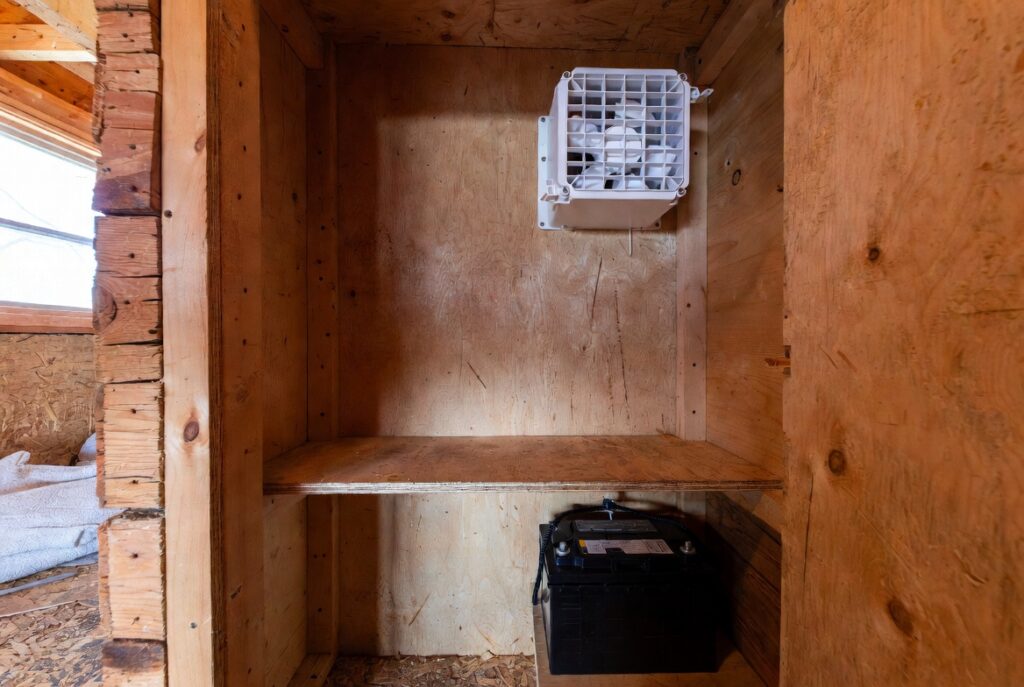
How you store solar batteries determines whether they last a decade or cause a $2,200 incident in a closet. Lead-acid batteries produce hydrogen gas during charging. At 4 percent concentration in air, hydrogen is explosive. A sealed closet with no vent becomes a hazard within weeks of continuous trickle charging.
LFP batteries avoid the hydrogen problem but introduce a different risk. The BMS blocks charging below 0 degrees C. If panels stay connected in an unheated Ontario cottage, the charge controller attempts charging repeatedly. That cycling degrades the BMS contactor and can lock the system into a permanent fault.
This guide covers the three storage requirements every battery owner must meet: ventilation, temperature control, and containment. For the full chemistry comparison, see our solar battery guide for Ontario.
| Storage Risk | Lead-Acid (AGM/FLA) | LFP (Lithium) | Fix |
|---|---|---|---|
| Hydrogen gas | Yes, explosive at 4% | None | $35 vent kit |
| Freeze damage | Cracks at -15 degrees C at 30% SOC | BMS blocks charging below 0 degrees C | $180 heated enclosure |
| Acid leak | Sulfuric acid destroys surfaces | No liquid electrolyte | Containment tray |
| Heat degradation | Lifespan halves per 8 degrees C above 25 | Minimal impact below 45 degrees C | Ventilated room |
| Seasonal layup | Charge to 100%, disconnect loads | Disconnect panels in unheated space | 6-step protocol |
Why how you store solar batteries matters more than which brand you buy
The storage environment determines safety and lifespan before chemistry enters the equation. A premium Battle Born 100Ah LFP in an unheated shed fails just like a $200 AGM in a sealed closet. Hydrogen accumulation, temperature extremes, and acid leaks are the three risks. Every location where you store solar batteries needs ventilation, temperature management, and containment.
You can buy the best battery on the market. If it sits in a sealed room with no airflow, the investment is wasted. The BMS does not protect against environmental failures. Only the storage setup protects the battery from the space around it.
The hydrogen ventilation rule for lead-acid batteries
Lead-acid batteries release hydrogen gas during charging, even if labelled sealed or AGM. That gas is lighter than air and rises to pool near the ceiling. At 4 percent concentration, hydrogen becomes explosive from a single spark. A light switch, relay click, or static discharge can ignite it.
A $35 battery box vent kit installed on the enclosure wall moves enough air by natural convection to prevent buildup. The vent requires no power and no maintenance. Our battery room ventilation guide covers the minimum airflow calculations. Always ventilate any space where you store solar batteries regardless of the sealed label.
The temperature range that protects every battery chemistry
The optimal storage temperature range is 5 to 35 degrees C. The ideal operating point is 25 degrees C. For lead-acid, every 8 degrees C above 25 cuts lifespan in half. A battery room at 33 degrees C year-round loses two years of service compared to one held at 25.
LFP batteries will not charge below 0 degrees C due to BMS protection. In Ontario, unheated cabins reach negative 20 to negative 30 degrees C in January. If you store solar batteries in unheated Ontario cottages, a $180 heated enclosure keeps cells above the threshold. Our lithium battery safety guide covers the full temperature management protocol.
Acid containment and why you must store solar batteries above a tray
Lead-acid battery cases can crack during extreme cold or physical shock. The sulfuric acid inside destroys concrete, corrodes steel, and dissolves wood framing. A plastic containment tray under every lead-acid installation is mandatory. The tray must hold the full electrolyte volume of the largest battery in the bank.
For two 100Ah batteries, the tray needs at least 6 litres of capacity. LFP cells have no liquid electrolyte and do not require acid containment. Our off-grid fire suppression guide covers additional safety measures. If you store solar batteries using any lead-acid chemistry, the containment tray is non-negotiable.
The 6-step Ontario seasonal layup protocol
Before closing your cottage for winter, charge the battery bank to 100 percent SOC. This prevents sulphation in lead-acid cells during months of inactivity. Clean all terminal connections with a wire brush to remove corrosion. Disconnect every load including the inverter, all DC breakers, and lighting circuits.
Disconnect the Renogy 100W panels from the Victron MPPT 100/50 charge controller. For LFP systems, this step is critical to prevent BMS cycling below freezing. Verify all vents are clear of snow or ice. If you have a Victron SmartShunt with a GX device, set it to storage mode for remote monitoring.
The Haliburton County hydrogen incident
A cottage owner in Haliburton County stored two 100Ah AGM batteries in a sealed plywood closet under the stairs. He left panels connected and the charge controller on trickle charge through winter. He believed sealed lead-acid batteries did not produce gas. The closet had no ventilation of any kind.
Hydrogen gas accumulated over four months of continuous trickle charging. The gas pooled at the ceiling and slowly built toward explosive concentration. When the owner returned in April and flipped a nearby light switch, the spark ignited the buildup. The closet door blew off its hinges and surrounding drywall cracked.
No fire started, but both batteries were destroyed by pressure damage. Repairing the drywall and replacing the batteries cost $2,200. A $35 vent kit installed before winter would have prevented every problem. You must always store solar batteries in ventilated spaces regardless of the sealed label.
The Lanark County BMS cycling failure
A cabin owner in Lanark County left a 200Ah LFP bank in an unheated equipment room with panels still connected. Overnight temperatures inside the uninsulated room dropped to negative 22 degrees C. The BMS correctly blocked all charging below 0 degrees C. However, the charge controller kept attempting to push voltage to the battery.
The controller attempted charging 47 times over three weeks. Each attempt triggered a BMS shutdown within seconds. The repeated high-speed cycling wore out the internal contactor. By late March, the system locked into a permanent fault code.
The owner shipped the battery back for factory reset and lost his entire spring charging season. A $180 heated enclosure would have kept the cells above 0 degrees C. Disconnecting the panels before departure would have cost nothing. You can store solar batteries safely without heat, but only if you cut the panel connection first.
NEC and CEC code requirements for battery storage
NEC 480.10 requires ventilation in all enclosed spaces housing battery installations to prevent accumulation of explosive gases. Passive or active airflow must keep hydrogen concentration below 1 percent at all times. Any enclosed battery space without verified ventilation will fail electrical inspection. Contact the NFPA at nfpa.org for current NEC 480 requirements.
CEC Section 64 mandates identical ventilation and containment standards under Ontario’s Electrical Safety Code. The Electrical Safety Authority at esasafe.com publishes clear guidelines on battery room airflow and acid containment. A cottage or cabin installation is not exempt from these requirements. Contact ESA before closing any battery enclosure for seasonal use.
Pro Tip: Before you leave your cottage for winter, tape a note to the inside of the front door that reads “CHECK BATTERY VENTS.” When you return in spring, that note is the first thing you see. Open the battery enclosure slowly and from a distance. If you smell anything unusual, ventilate the room for 30 minutes before entering or flipping any switches.
Store solar batteries verdict: ventilate, heat, and disconnect
- Lead-acid owners in cottages and sheds: Install a $35 vent kit in every battery enclosure. Add a plastic containment tray under all lead-acid banks. Never leave batteries in a sealed space. Our indoor solar battery installation guide covers placement best practices.
- LFP owners leaving systems unattended through winter: Disconnect panels before departure or install a $180 heated enclosure. The BMS protects the cells, but repeated charge attempts degrade the contactor. One panel disconnection prevents a $300 factory reset.
- Year-round off-grid homeowners: Maintain the 5 to 35 degrees C range in the battery room at all times. Monitor SOC remotely via SmartShunt and GX device. Schedule spring commissioning to verify ventilation, terminals, and SOC before first use.
Frequently asked questions
Q: Do sealed lead-acid batteries need ventilation?
A: Yes, AGM and SLA batteries still release small amounts of hydrogen through pressure relief valves. Even minor leaks accumulate over weeks and become explosive at 4 percent concentration. Always ventilate any space where you store solar batteries. The sealed label does not eliminate the gas risk.
Q: Can I leave my LFP battery in an unheated cottage over winter?
A: Yes, if you disconnect the panels before leaving. The BMS blocks charging below 0 degrees C, but repeated charge attempts degrade the contactor. Without disconnection or heating, the BMS can lock into a permanent fault before spring.
Q: What temperature should I store solar batteries at?
A: The optimal range is 5 to 35 degrees C, with 25 degrees C being ideal. For lead-acid, every 8 degrees C above 25 cuts lifespan in half. LFP requires above 0 degrees C for safe charging. Stay within this window to maximize service life.
This build is engineered within the 48V DC Safety Ceiling. Diagnostic logic is based on 20+ years of technical service experience. All structural and electrical installations must be verified by a Licensed Professional and comply with your Local AHJ. See our legal and safety disclosure for full scope.
About the Author
Robert Bertrand spent 20 years as a service advisor in the automotive industry (Lexus and Nissan), where precision diagnostics, wiring integrity, and documentation standards were non-negotiable. He brings that same technical discipline to GridFree Guide, where he researches, tests, and documents off-grid solar systems for Ontario conditions. Based in Rockwood, Ontario, every article is built on verified specifications, manufacturer data, and the real-world climate constraints of Canadian off-grid living.
As an Amazon Associate I earn from qualifying purchases. This site also contains affiliate links to other products and services. GridFree Guide earns a small commission at no extra cost to you.