
The solar industry runs on acronyms and technical terms that can make a beginner feel like they need an engineering degree just to buy a panel. They don’t.
Think of it like knowing the difference between a head gasket and a spark plug. When you walk into a shop with that knowledge, a contractor can’t oversell you on repairs you don’t need. The same principle applies to solar knowing these terms means no installer can confuse you into a system that doesn’t fit your needs or your budget.
This solar energy glossary is designed to be bookmarked as your cheat sheet. Fifty terms, plain English, organized into five categories so you can find what you need fast. Use the category links below to jump directly to any section.
Jump to:
Pure Sine Wave vs Modified Sine Wave Inverter
What Is a Solar Charge Controller?
How Long Does It Take Solar Panels to Pay for Themselves?
How Much Solar Power Do I Actually Need?
For a broader foundation, How Does Solar Power Work? covers the full system in plain English before you dig into individual terms.
Solar Energy Glossary: The Basics
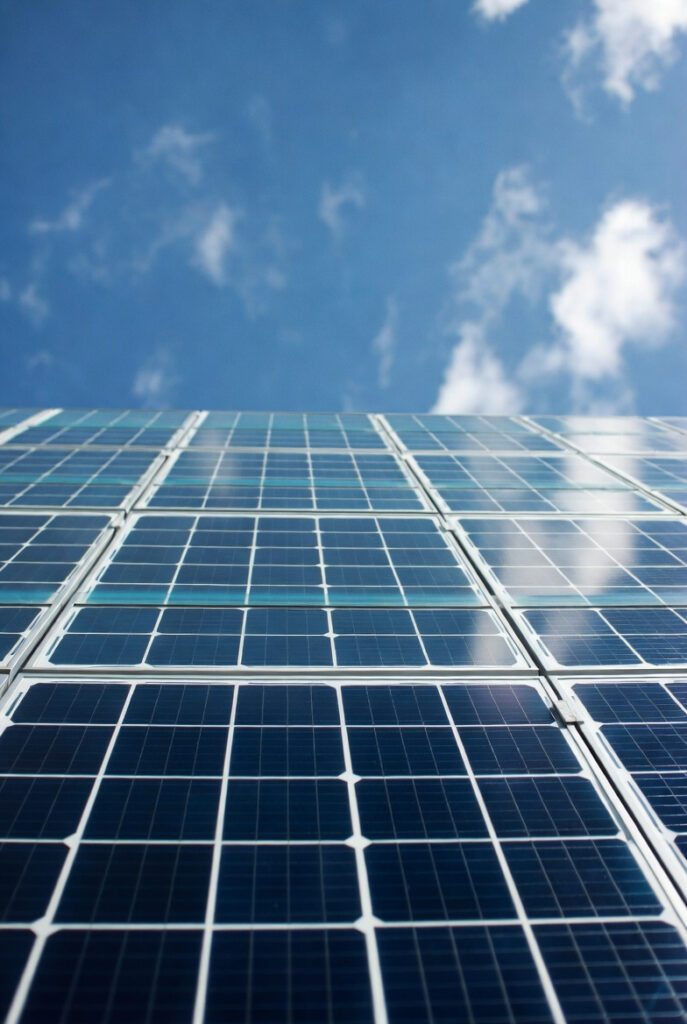
Photovoltaic (PV): Photovoltaic refers to the process that converts sunlight into electricity using semiconductors. Solar panels are PV devices they harness this technology to generate power. It’s the core mechanism behind every solar system on the market.
Kilowatt (kW): A kilowatt is a unit of power measurement used in sizing both individual solar panels and entire systems. It tells you the maximum power a system can generate under optimal conditions essential for determining what you actually need.
What is a Kilowatt-hour (kWh)?
A kilowatt-hour measures energy consumed over time and is the unit that appears on your Ontario hydro bill. Unlike kW which measures instantaneous power, kWh tells you how much total energy you used over a period of time.
What is a Watt?
A watt measures the rate at which energy is consumed or produced at any given moment. Solar panels are rated in watts under standard test conditions it’s the baseline number for comparing panel output.
DC (Direct Current): Direct current flows in one direction only. Solar panels produce DC electricity. Batteries store DC electricity. Everything needs to be converted before your home appliances can use it.
AC (Alternating Current): Alternating current periodically reverses direction and is the standard form of power used in homes. Your fridge, lights, and laptop all run on AC which is why every solar system needs an inverter.
Voltage (V): Voltage is like water pressure in a pipe it’s the force pushing electricity through the wire. Higher voltage means more force and more efficient transmission over longer distances.
Amperage (A) / Amps: Amperage is like the flow rate of water in a pipe it measures how much current moves at once. More amps means more electrical flow capacity. Both voltage and amperage must be matched across your system components.
Watt-hours (Wh): Watt-hours represent energy used over time, calculated by multiplying watts by hours of use. This is the number that matters most for battery sizing how much energy do you actually need to store?
What Are Peak Sun Hours?
Peak sun hours are not total daylight but the hours when sunlight is intense enough to drive meaningful solar panel output. Canada averages approximately 3.5 peak sun hours per day annually this number is the foundation of every system sizing calculation.
Solar Hardware Terms You Need to Know
Solar Panel: An assembly of photovoltaic cells that converts sunlight into DC electricity. Panels are rated in watts under standard test conditions real-world output is always somewhat lower depending on temperature, shading, and angle.
Monocrystalline vs. Polycrystalline: Monocrystalline panels use single-crystal silicon for higher efficiency and a uniform black appearance. Polycrystalline panels use multiple silicon crystals, cost less, and are slightly less efficient. Monocrystalline is the dominant choice in 2026.
Inverter: An inverter converts DC electricity from your panels into AC power your home can use. Every grid-tied and hybrid system needs one. Factor in a 10–15% efficiency loss during conversion most beginners forget to account for this when sizing their system. For a full breakdown see Pure Sine Wave vs Modified Sine Wave Inverter.
Pure Sine Wave Inverter: Produces a clean AC waveform identical to grid power. Required for modern electronics, medical equipment, and any sensitive appliance. This is the only acceptable choice for a home system.
Modified Sine Wave Inverter: Cheaper but produces a rougher AC waveform. Acceptable for basic loads like fans and incandescent lights. Can damage motors, variable speed drives, and sensitive electronics over time. Not recommended for whole-home use.
Charge Controller: Manages the flow of electricity from solar panels to your battery bank, preventing overcharging that degrades or destroys batteries. Not optional skipping it shortens battery life dramatically. See What Is a Solar Charge Controller? for a full explanation.
MPPT (Maximum Power Point Tracking): MPPT technology continuously adjusts to extract maximum output from your panels regardless of changing temperature or shading conditions. It’s 20–30% more efficient than PWM and worth the extra cost for any system over 200W.
PWM (Pulse Width Modulation): The simpler, cheaper charge controller technology. Works adequately for small systems under 200W. Not the right choice for larger builds where the efficiency gap becomes significant.
Battery Bank: Multiple batteries connected together to store excess solar energy. Total capacity determines how long you can run your loads when the sun isn’t producing. Sizing the bank correctly is as important as sizing the panels.
BMS (Battery Management System): Monitors and protects your battery bank from overcharging, over-discharging, and thermal runaway. Built into most modern LiFePO4 batteries. Non-negotiable for safe long-term operation.
Solar Combiner Box: Collects electrical output from multiple solar panels into a single cable before it reaches the charge controller. Required for multi-panel arrays to simplify wiring and protect each string with individual fusing.
Solar Battery Terms You Need to Know
LiFePO4 (Lithium Iron Phosphate): LiFePO4 batteries use a stable chemistry with no thermal runaway risk, a cycle life of 3,000–5,000 charges, and are safe for indoor installation. This is the gold standard for off-grid energy storage today not because of marketing, but because no other chemistry matches its combination of safety, lifespan, and depth of discharge.
Lithium-Ion (Li-Ion): Higher energy density than LiFePO4 but carries greater thermal risk. Common in portable power stations where weight matters. Not the preferred choice for stationary home storage where safety and longevity are the priority.
AGM (Absorbent Glass Mat): Lead-acid chemistry, cheaper upfront, significantly heavier, and shorter lifespan than lithium options. Acceptable for budget builds where upfront cost outweighs long-term performance. Should not be discharged below 50% without accelerating degradation.
What is Depth of Discharge (DoD)?
Depth of discharge is the percentage of a battery’s total capacity that has been used before recharging. LiFePO4 batteries safely handle 80–90% DoD. AGM batteries should stay above 50% DoD to avoid premature failure.
State of Charge (SoC): The battery’s current charge level expressed as a percentage. Distinct from DoD — SoC tells you what’s left, DoD tells you what’s been used. Monitoring SoC in real time prevents accidental over-discharge.
Cycle Life: The number of complete charge and discharge cycles a battery can handle before reaching end of useful life. LiFePO4 reaches 3,000–5,000 cycles. AGM typically reaches 300–500. The math on long-term cost strongly favours LiFePO4 despite the higher upfront price.
Self-Discharge Rate: How quickly a battery loses charge when not in use. Relevant for seasonal systems that sit idle for months. LiFePO4 has a very low self-discharge rate typically 2–3% per month making it well suited for cottage or seasonal storage.
C-Rate: Describes how fast a battery can be charged or discharged relative to its total capacity. A 1C rate on a 100Ah battery means full charge or discharge in one hour. Understanding C-rate helps size your system for peak demand without stressing the battery.
Thermal Runaway: A dangerous condition where internal heat triggers a positive feedback loop leading to uncontrolled temperature rise, fire, or explosion. A known risk in standard lithium-ion chemistry. LiFePO4 chemistry largely eliminates this risk one of the primary reasons it dominates off-grid installations.
Solar Measurement and Performance Terms
Irradiance: The amount of solar power hitting a surface per unit area, measured in watts per square metre (W/m²). Higher irradiance means more panel output. Irradiance varies by location, season, time of day, and cloud cover.
Standard Test Conditions (STC): The laboratory conditions under which solar panels are rated 25°C, 1,000 W/m² irradiance, no wind. Real-world output is always lower. Use STC ratings for comparison but size your system on real-world expectations.
Temperature Coefficient: The rate at which panel output drops as temperature increases. Panels are tested at 25°C but a rooftop in July can reach 60–70°C, reducing output by 10–25%. Counterintuitively, cold clear days often outperform hot hazy ones.
Tilt Angle: The angle at which panels are mounted relative to horizontal. In Canada, setting the tilt angle roughly equal to your latitude optimizes year-round output. Steeper angles favour winter production, shallower angles favour summer.
Azimuth: The compass direction your panels face. South-facing is optimal across Canada. East or west-facing reduces output by 15–20% depending on latitude and season.
Shading Loss: Even partial shading on one cell in a panel can reduce output of the entire string dramatically. A tree branch, chimney shadow, or rooftop vent can cost you more production than you’d expect. Shading analysis before installation is not optional.
Inverter Efficiency: The percentage of DC power successfully converted to AC. Modern inverters run 93–97% efficient. The remaining 3–7% is lost as heat and this loss compounds with other system inefficiencies. Most beginners calculate panel output and forget the inverter tax entirely.
System Efficiency: The overall ratio of usable output to total potential input, accounting for panel degradation, wiring losses, inverter conversion, and temperature effects. A realistic whole-system efficiency is 75–80% of rated panel capacity under real conditions.
Degradation Rate: The annual reduction in panel output due to natural aging. Typically 0.5–0.8% per year. A panel rated at 400W today produces roughly 360W after 10 years at 0.8% annual degradation. Factor this into long-term system sizing.
Solar System Types and Grid Terms
Grid-Tied System: Connected to the utility grid, no battery required, lowest upfront cost. Goes completely dark during a blackout due to anti-islanding safety protocols. If blackout protection is your goal, a grid-tied system is the wrong tool for the job.
Off-Grid System: Operates entirely independently of the utility grid. Requires battery storage for power at night or during low production periods. The only option for true energy independence or remote locations without grid access.
Hybrid System: Combines grid connection with battery backup. Can operate during blackouts unlike a pure grid-tied system. Offers flexibility but comes with higher complexity and cost than either grid-tied or off-grid alone.
Anti-Islanding: The safety protocol that forces grid-tied solar systems to shut down the moment the utility grid goes down. Prevents electricity from flowing back onto utility lines where workers may be performing repairs. This is why your grid-tied system won’t power your home during a blackout by design.
What is Net Metering in Ontario?
Net metering allows you to send excess solar production back to the grid in exchange for bill credits not cash. Credits roll over monthly but do not accumulate indefinitely. Ontario’s net metering rules differ from other provinces, so verify current terms with your local utility before sizing for export.
Feed-In Tariff (FIT): Ontario’s original FIT program paid a premium rate for solar power fed into the grid. It has largely wound down and is no longer available to new applicants. Current incentive programs offer different terms check with the Independent Electricity System Operator (IESO) for current options.
ESA (Electrical Safety Authority): Ontario’s electrical regulator. Any permanent electrical installation including fixed solar wiring falls under ESA jurisdiction and requires a permit. Portable power stations and standalone battery units are generally exempt.
String Inverter: One inverter manages the entire panel array. Most cost-effective option for unshaded roofs with simple layouts. Weakness: if one panel underperforms due to shading or damage, output of the entire string is affected.
Microinverter: Individual inverter mounted on each panel. Higher upfront cost but panel-level optimization means shading or failure on one panel doesn’t affect the others. Best choice for complex roofs or installations with unavoidable shading.
Power Optimizer: A panel-level device that sits between a string inverter and full microinverters. Optimizes output per panel without the full cost of individual microinverters on every module. A practical middle ground for partially shaded installations.
Payback Period: The time required for solar energy savings to offset the upfront system cost. In Ontario, the typical range is 7–12 years depending on system size, hydro rates, and available incentives. For the full calculation, see How Long Does It Take Solar Panels to Pay for Themselves?
Your Solar Energy Glossary Cheat Sheet
Knowing these 50 terms puts you in control of every conversation with a contractor, installer, or salesperson. You can ask the right questions, spot oversized proposals, and understand exactly what you’re buying before you sign anything.
Bookmark this page as your reference for the entire research and buying process. When you’re ready to move from terminology to action, start with the energy audit How Much Solar Power Do I Actually Need? is where the real numbers begin.
Affiliate Disclosure: GridFree Guide participates in the Amazon Associates program. If you purchase through links on this page, we may earn a small commission at no extra cost to you. We only recommend products we’ve researched and would use ourselves.