Wiring & Electrical

Safe, code-compliant wiring guides covering NEC, CEC, and the real-world mistakes that cause failures.

ntcvi

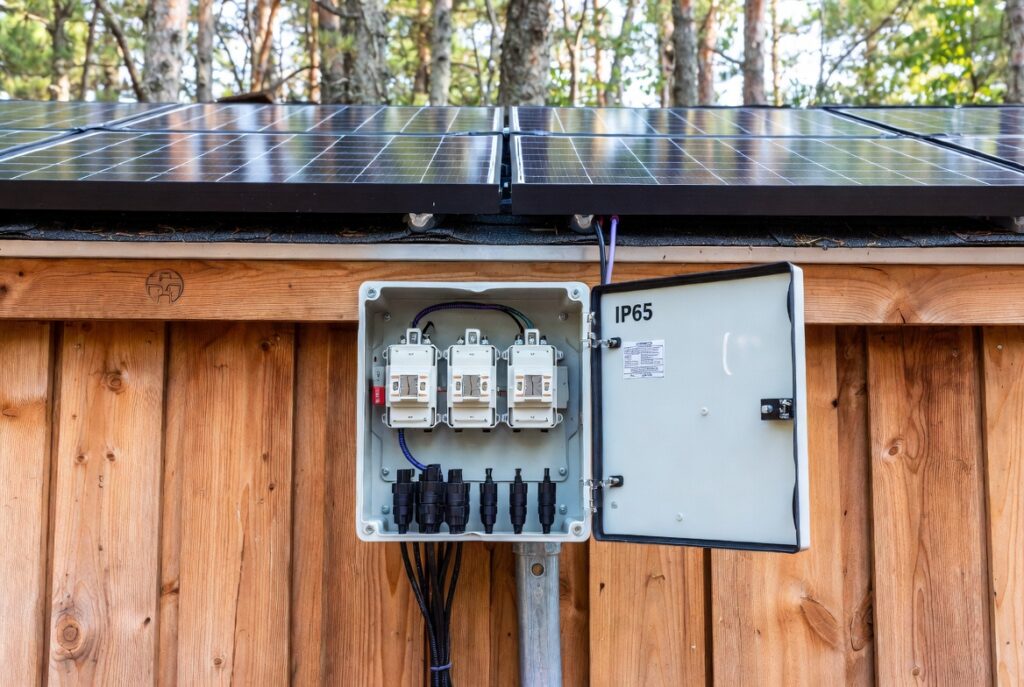
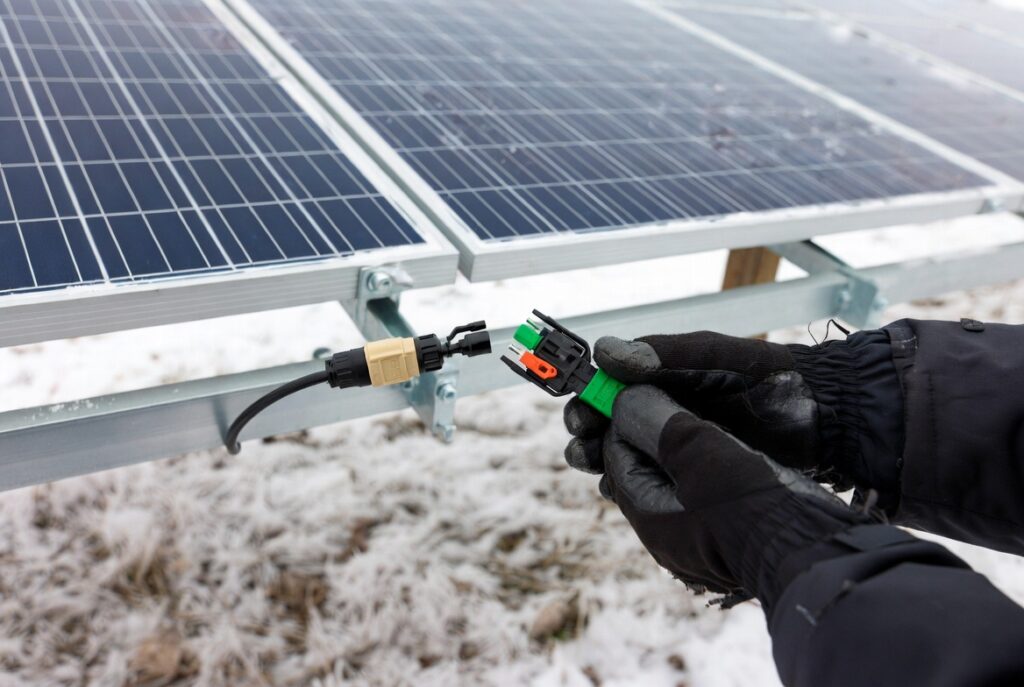
The Ontario Solar Combiner Guide: What a Combiner Box Does, When You Need One, String Fuse Sizing, and the Failed Fuse Diagnostic

The solar combiner Ontario failure that limits a Wellington County 1,200W three-string array to 800W production on a clear July afternoon is not a panel defect or an MPPT programming issue but a single blown 15A fuse inside the combiner box that disconnected one entire string from the array. The fuse element failed open from
The Ontario Solar Combiner Guide: What a Combiner Box Does, When You Need One, String Fuse Sizing, and the Failed Fuse Diagnostic Read More »

qku4a

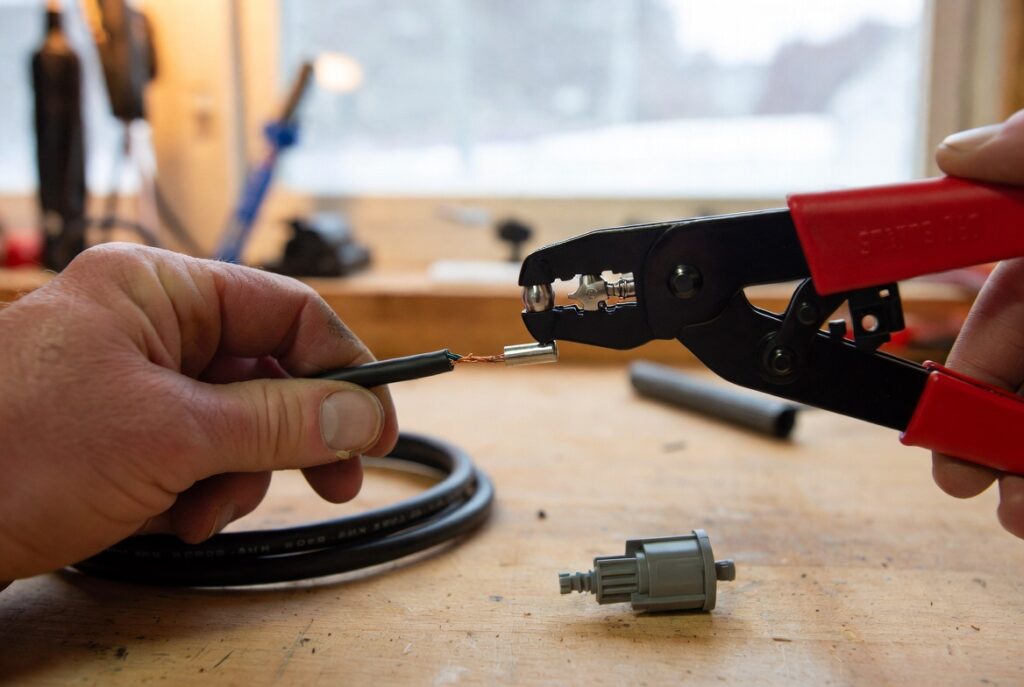
The Ontario Solar Crimp Guide: Why Ratchet Crimp Beats Solder for MC4 Connections, the 4-Step Verification, and the One Exception

The crimp solar Ontario failure that shows up most reliably in off-grid service work is not a broken panel or a dead inverter but a high-resistance MC4 connection made with a standard hardware store pliers-type crimp tool, because a property owner in Grey Bruce County installed their 400W array with exactly this tool and their

The Ontario Solar Crimp Guide: Why Ratchet Crimp Beats Solder for MC4 Connections, the 4-Step Verification, and the One Exception Read More »

jp8yo

The Ontario MC4 Connector Guide: Brand Match, IP67 Seal, Torque Spec, and the Branch Current Rule

The mc4 connector Ontario mistake that causes the most silent output loss in Ontario off-grid arrays is treating MC4 connectors as universal plugs, because a property owner in Simcoe County extended their Renogy 100W panel factory cables with generic extension cables and their Victron SmartShunt showed one full string at zero output after the first

The Ontario MC4 Connector Guide: Brand Match, IP67 Seal, Torque Spec, and the Branch Current Rule Read More »

qzvww

The Ontario Solar Wiring Mistakes Guide: 7 Silent Failures, How the SmartShunt Finds Them, and the Fix for Each

The solar wiring ontario failure that is hardest to diagnose is not the one that trips the BMS on the first day but the one that costs 15 percent of annual output for 18 months before the SmartShunt pattern confirms the source, because a property owner in Northumberland County made three solar wiring ontario mistakes

The Ontario Solar Wiring Mistakes Guide: 7 Silent Failures, How the SmartShunt Finds Them, and the Fix for Each Read More »

s4wya

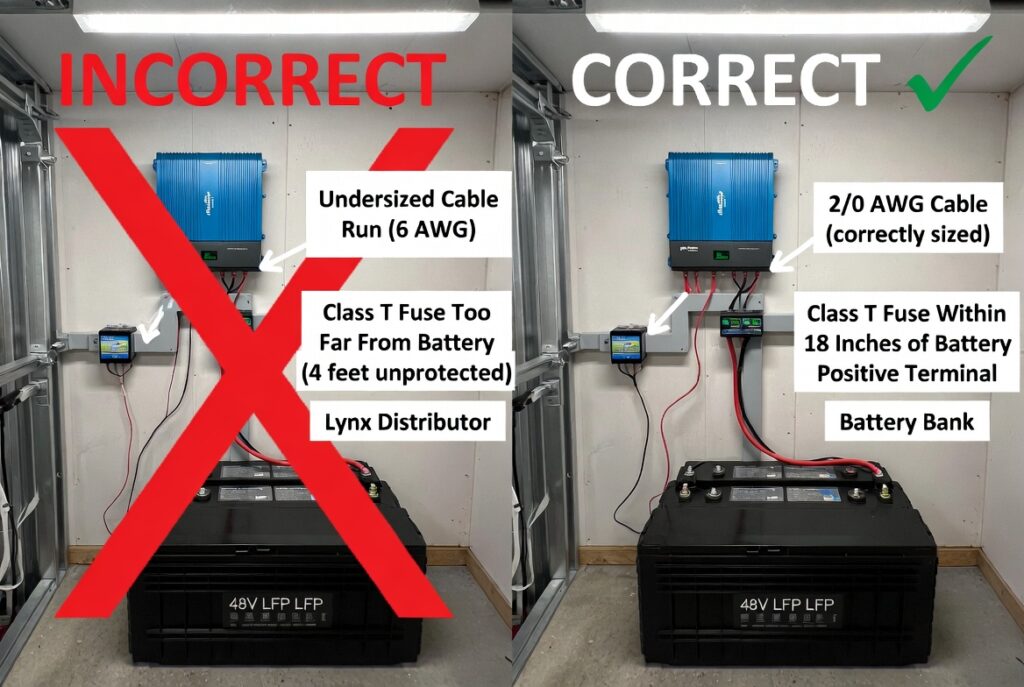
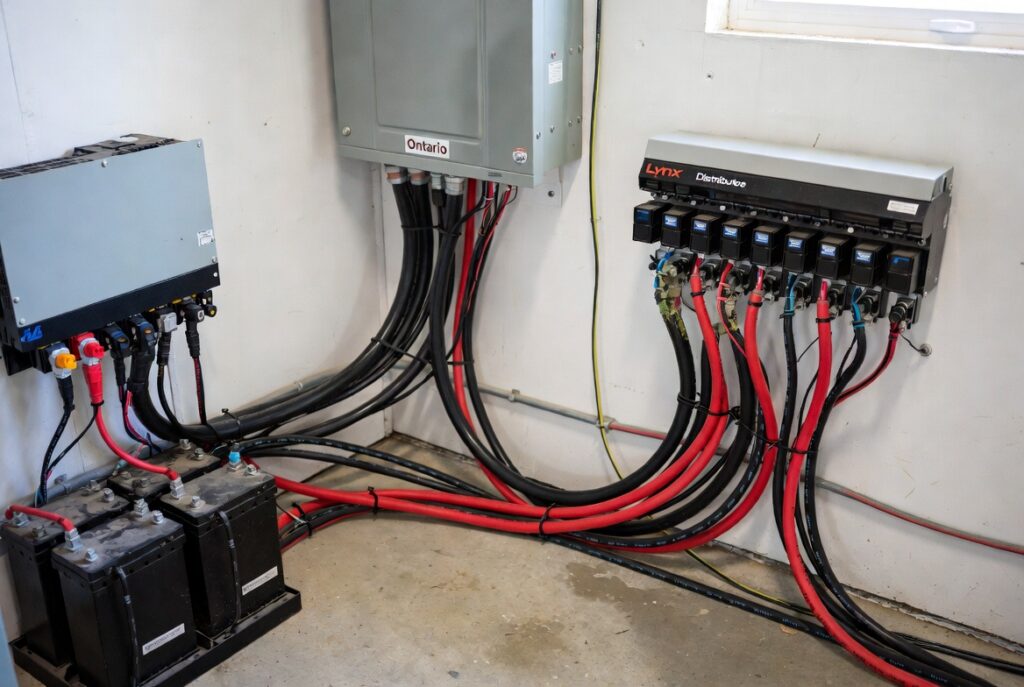
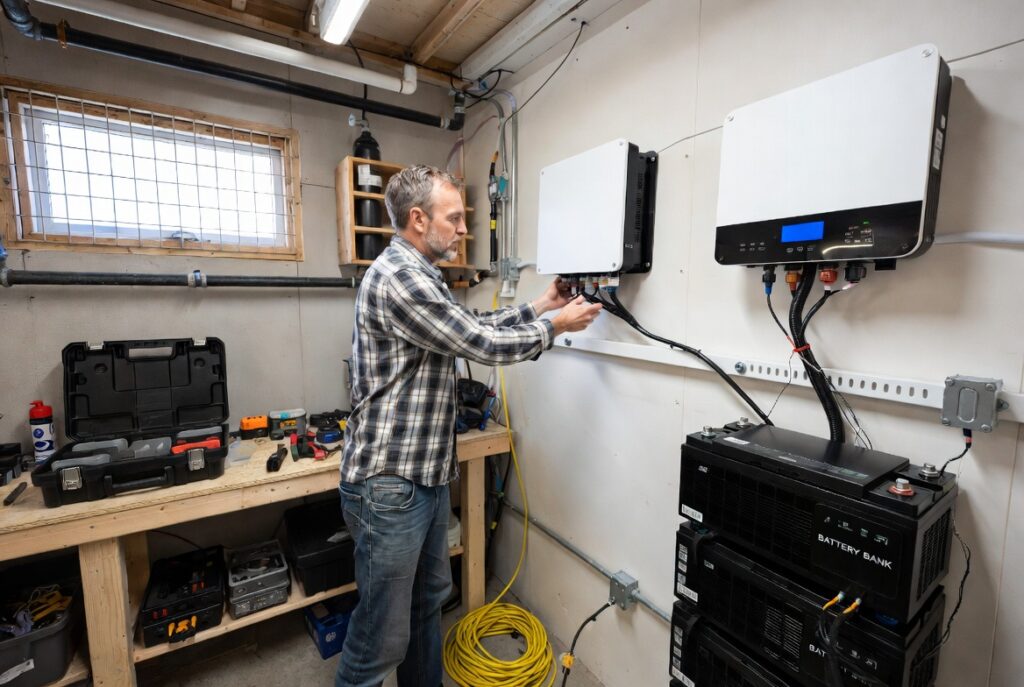
The Ontario Battery-to-Inverter Connection Guide: DC Cable Gauge, Fuse Placement, BMS Sequence, and SmartShunt

The battery inverter ontario connection that fails most often in Ontario is not caused by a faulty inverter or a defective battery, but by 6 AWG cable installed between a 48V 200Ah Battle Born heated LFP bank and a Victron MultiPlus-II, because a property owner in Orangeville used 6 AWG cable intended for AC household

The Ontario Battery-to-Inverter Connection Guide: DC Cable Gauge, Fuse Placement, BMS Sequence, and SmartShunt Read More »

zvdfc

The Ontario Solar Wire Gauge Guide: Cold Voc, 48V Advantage, and the January Sizing Standard

The most common Ontario solar wire gauge mistake is sizing the array wiring to the summer STC specification, because a property owner in Orangeville, Dufferin County sized his string run with standard 10 AWG solar cable based on his panel’s 22.5V STC Voc rating and discovered in January that the same panels were pushing 24.3V

The Ontario Solar Wire Gauge Guide: Cold Voc, 48V Advantage, and the January Sizing Standard Read More »

ojfaq (1)

The Ontario Off Grid Wiring Guide: Class T Fuse First, 4/0 AWG, and the Pre-Charge Protocol

The most dangerous moment in any Ontario off grid wiring project is the one where the property owner picks up the positive battery cable before connecting the Class T fuse, because a Battle Born LFP battery at 12V can deliver approximately 3,000 to 5,000A of short-circuit current instantaneously, and when a cable lug contacts a

The Ontario Off Grid Wiring Guide: Class T Fuse First, 4/0 AWG, and the Pre-Charge Protocol Read More »

to62j

The Solar Inverter Ontario Guide: PSW Mandate, Idle Draw, and the 2,000W vs 3,000W Decision

The most common solar inverter ontario mistake costs $80 at purchase and approximately $1,500 at repair: a property owner on Woolwich Street in Guelph, Wellington County chose a modified sine wave (MSW) inverter over a pure sine wave (PSW) unit to save $80 on a 2,000W inverter purchase in fall 2022, and by February 2023

The Solar Inverter Ontario Guide: PSW Mandate, Idle Draw, and the 2,000W vs 3,000W Decision Read More »

ad81ea90 d521 40b7 acd0 9bccd3b9a85f

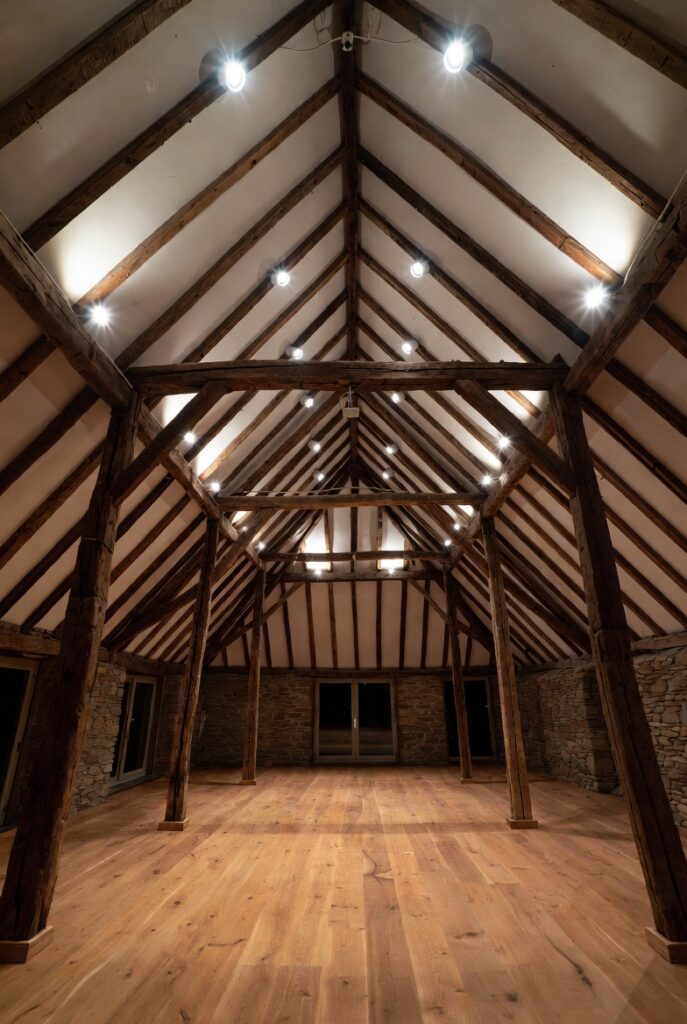
The High-Efficiency Standard: DC-Native Lighting for Ontario Properties

DC-native lighting eliminates the conversion overhead that forces your inverter to run 24 hours a day for a few watts of light. I helped a property owner near Bracebridge in Muskoka District, Ontario diagnose an efficiency problem in winter 2025. His 3kW inverter ran continuously even when his only load was 40 watts of LED

The High-Efficiency Standard: DC-Native Lighting for Ontario Properties Read More »

0d2c81ec 7a48 466f a1bd d791f3317a67

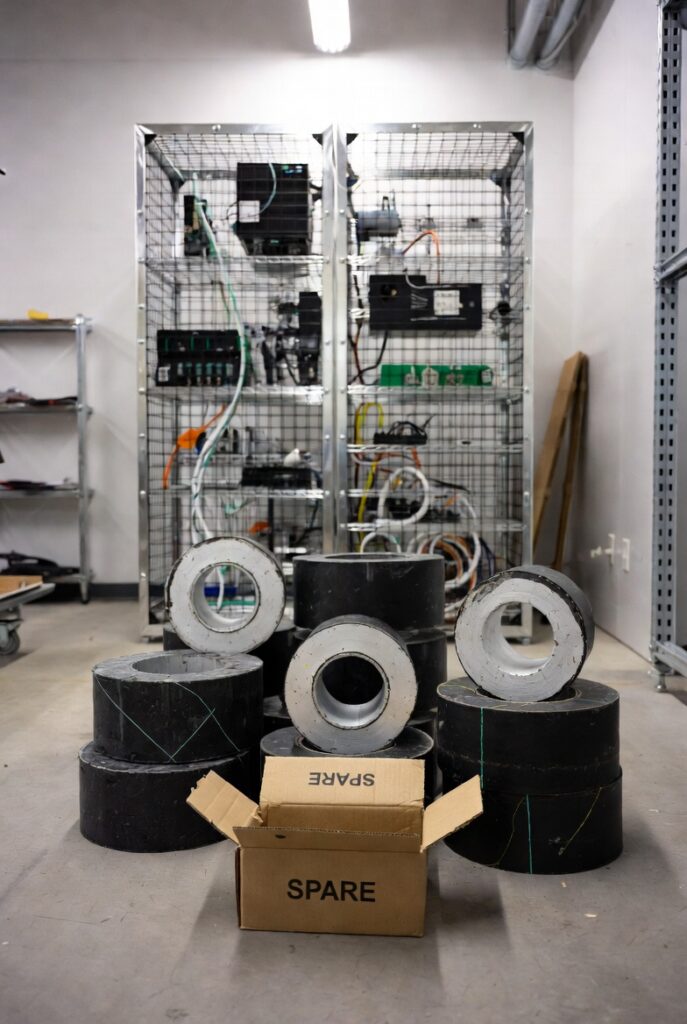
The EMP Hardening Standard: Solar EMP Protection for Off-Grid Resilience

Solar emp protection is not about building a bunker or wrapping everything in aluminum foil. It is about understanding that your $15,000 investment has a vulnerability measured in nanoseconds that standard surge protectors cannot address. I helped a property owner near Huntsville in Muskoka District, Ontario rebuild his system after a severe lightning storm in

The EMP Hardening Standard: Solar EMP Protection for Off-Grid Resilience Read More »