
If you’ve ever googled “how to go solar” you know it can feel overwhelming specs, brands, wattages, and technical diagrams everywhere. Here’s the truth: every solar system from a $500 portable setup to a $50,000 whole-home installation uses exactly the same five solar system components. Once you know what they are and what they do everything else makes sense.
The 5 Solar System Components
Five parts. One system. Each part has one job. Learn the jobs and you understand solar.
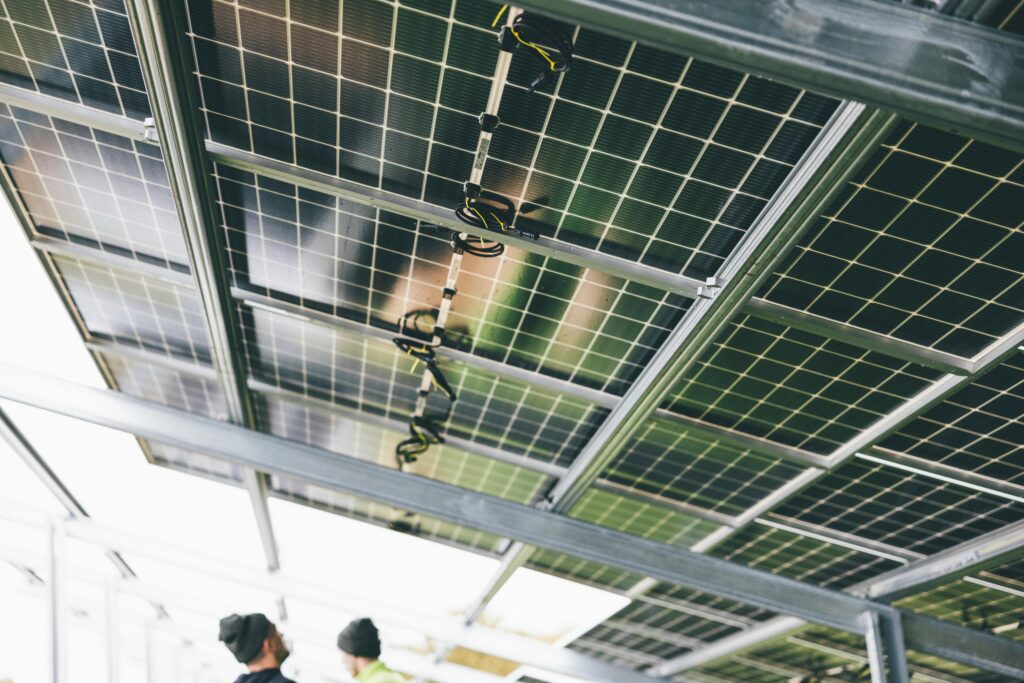
1. Solar Panels The Collectors
Their job: capture sunlight and convert it to DC electricity. Nothing more. They don’t store power. They don’t regulate it. They just collect it.
Key buying consideration: wattage and efficiency rating. A 100W panel produces roughly 100 watt-hours per peak sun hour. More efficient panels produce more power from the same surface area.
For help choosing your first panel see our Best Solar Panels for Beginners guide.
2. Charge Controller The Brain
Their job: stand between your panels and your battery bank and regulate the flow of power. Prevents overcharging. Blocks reverse current at night. Protects your entire battery investment.
Two types: PWM (budget, simple) and MPPT (efficient, worth it for larger systems). Don’t skip this component a system without a charge controller will destroy batteries fast.
For a full breakdown see our Solar Charge Controller guide.
3. Battery Bank The Storehouse
Their job: store the power your panels generate during the day so you can use it at night or on cloudy days.
The most expensive component of any off-grid system. Size it correctly or you’ll either run out of power overnight or waste money on capacity you never use. LiFePO4 batteries are the current gold standard longer lifespan, safer chemistry, better cold weather performance.
Key metric: capacity in amp-hours (Ah) or watt-hours (Wh). A 100Ah 12V battery stores 1200Wh roughly enough to run a fridge for 8 hours.
4. Inverter The Translator
Their job: convert DC electricity from your batteries into AC electricity your appliances can use. Every standard plug in your home runs on AC. Without an inverter your solar system can’t power anything that plugs into a wall.
Critical distinction: pure sine wave vs modified sine wave. Pure sine wave is the only safe choice for sensitive electronics, CPAP machines, and motors. Modified sine wave is cheaper but damages equipment over time.
5. Wiring and Fuses The Veins
Their job: connect everything safely and protect against electrical faults.
Most overlooked component. Most dangerous when done wrong. Undersized wire causes voltage drop and heat buildup — both silent killers of system performance and safety. Fuses protect against short circuits and fire.
Rule: always size wire for your maximum current draw not your average. When in doubt go thicker.
For the full wiring guide see our Solar Wire Gauge Guide.
Why Quality Matters at Every Link
A solar system is exactly as strong as its weakest component. Great panels connected with cheap undersized wire lose 20–30% of their output to heat before it ever reaches your battery. A quality battery bank protected by a budget charge controller will be dead in two years.
Don’t optimize one component while cutting corners on another. Budget evenly across all five or your investment suffers.
The System in One Picture
Here’s how every watt of solar power flows:
Sun → Solar Panels → Charge Controller → Battery Bank → Inverter → Your Appliances
Every watt your system produces follows that exact path. Every component in that chain matters equally. Remove or cheap out on any one of them and the whole system suffers.
For a deeper look at that flow see our How Does Solar Power Work? guide add URL when Article 17 is published.
Pro Tip: If you’re starting with a portable power station like the Anker SOLIX C1000 Gen 2 components 2, 3, and 4 are already built in. The charge controller, battery bank, and inverter are all integrated. You only need to add solar panels and connect them. It’s the fastest way to get a complete working system without wiring anything yourself.
Which Component Confuses You Most?
These five solar system components are the foundation of everything. Master them and every buying decision, every wiring question, every sizing calculation becomes easier.
Which one are you most confused about? Drop it in the comments below. The most common answers will become our next deep dive articles so your question directly shapes what we cover next.
The Verdict
Solar isn’t complicated. It’s five components with five jobs.
Panels collect. Controller protects. Batteries store. Inverter translates. Wiring connects.
Understand those five jobs and you understand solar. Everything else is just detail.
Internal Links
- How Much Solar Power Do I Actually Need?
- What Is a Solar Charge Controller?
- How Does Solar Power Work?
- Renogy Off-Grid Solar System Overview
Disclosure: This article contains affiliate links. If you buy through them, GridFree Guide earns a small commission at no extra cost to you.