
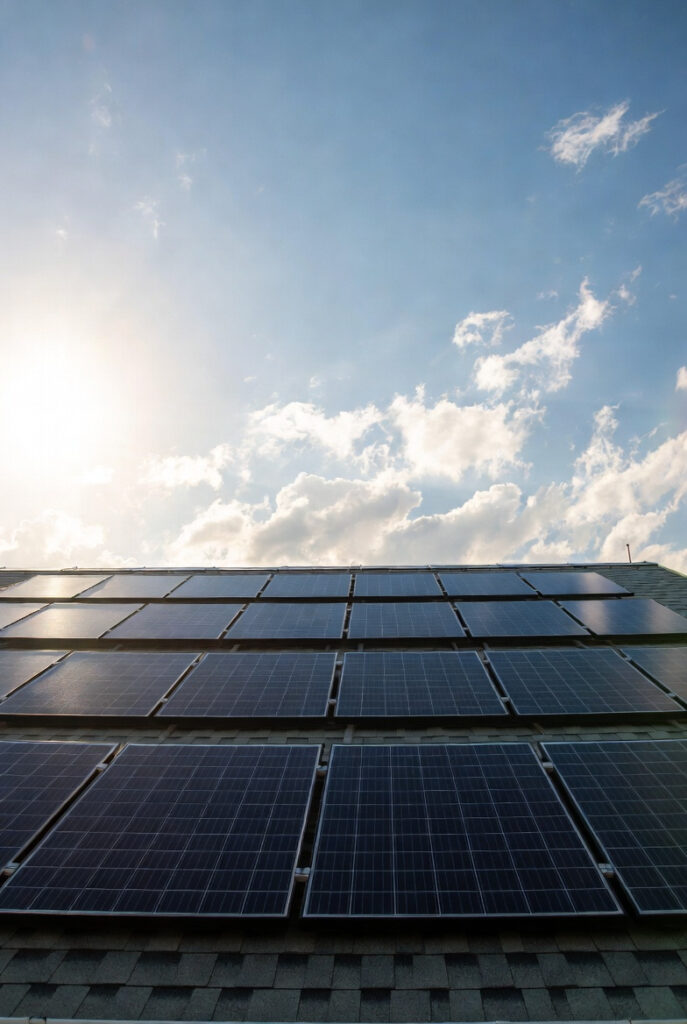
How does solar power work? It’s simpler than most people think. No textbook jargon here just honest explanations from one neighbor to another. This guide breaks down everything you need to know about solar energy in four plain English steps.
If you’re wondering how much power you actually need for your setup start with our solar sizing guide it’s the foundation everything else builds on.
The Water Analogy
Before the steps here’s a simple way to think about how electricity moves through a solar system.
Imagine solar energy as a stream of water. Voltage is the pressure behind it. Amps are how fast the water flows. Watts are the total power of that stream. Keep that picture in mind it makes everything that follows click into place.
How Does Solar Power Work? Four Simple Steps
Step 1: Capture Sunlight Hits the Panels
When sunlight hits your solar panels the cells inside absorb photons tiny particles of light. That’s where the process begins.
Here’s something most people don’t know: it’s light not heat that generates solar power. A cold clear January day in Ontario can actually outperform a hot hazy summer afternoon. Your panels don’t need warmth. They need sunlight. Good news for anyone who assumed solar was a warm weather only technology.
Step 2: Conversion Light Turns Into Electricity
Once the solar cells absorb those photons they convert that energy into DC electricity direct current. Think of DC as the raw unprocessed power coming straight from the sun.
The solar cells do all the heavy lifting. Your job is simply to make sure they’re clean, properly positioned, and getting good light.
Step 3: Storage and Regulation The Charge Controller Takes Over
Raw DC electricity flows from your panels into your charge controller. Think of it as a traffic cop standing between your panels and your battery bank.
Its job is to manage the flow adjusting the pressure in our water stream so nothing gets flooded. It prevents overcharging and ensures a steady safe flow of power into storage. Without it you’d burn through batteries fast.
For a deeper look at how charge controllers work see our complete charge controller guide.
Step 4: Transformation The Inverter Makes Power Usable
Your inverter takes the DC electricity stored in your batteries and converts it into AC electricity alternating current. AC is what every standard plug in your home runs on. Your fridge, your lights, your laptop, your coffee maker.
The inverter is the bridge between raw solar power and real everyday life.
Pro Tip: It’s light not heat that drives solar production. Panels are tested at 25°C in lab conditions but in real Canadian winters cold temperatures actually improve panel efficiency. The challenge isn’t cold. It’s shorter daylight hours and snow coverage. Both are manageable with proper sizing.
Does Solar Power Work Year-Round in Canada?
Yes and this is one of the biggest misconceptions we hear from beginners.
A well-sized system accounts for your lowest production months. If it covers your needs in January in Northern Ontario it will more than cover you the rest of the year. We cover exactly how to size for your situation in our solar power sizing guide.
Putting It All Together
Four steps. Plain English.
Sunlight hits your panels and solar cells absorb the light. That light gets converted into DC electricity. Your charge controller manages the flow into your battery bank. Your inverter converts DC into AC so you can power your home.
Sun to panel to controller to battery to inverter to your morning coffee. That’s the whole system.
For a deeper look at the science behind photovoltaic technology the U.S. Department of Energy’s solar explainer is worth reading.
Internal Links
- How Much Solar Power Do I Actually Need?
- What Is a Solar Charge Controller?
- Article 16 What Is Off-Grid Solar?
Disclosure: This article contains affiliate links. If you buy through them, GridFree Guide earns a small commission at no extra cost to you.
Pingback: What Is Off-Grid Solar and Is It Right for You?
Pingback: The 5 Solar System Components Every Beginner Must Know
Pingback: Solar Power Myths Debunked: What's Actually True in 2026
Pingback: Solar Energy Glossary: 50 Terms Every Beginner Should Know