
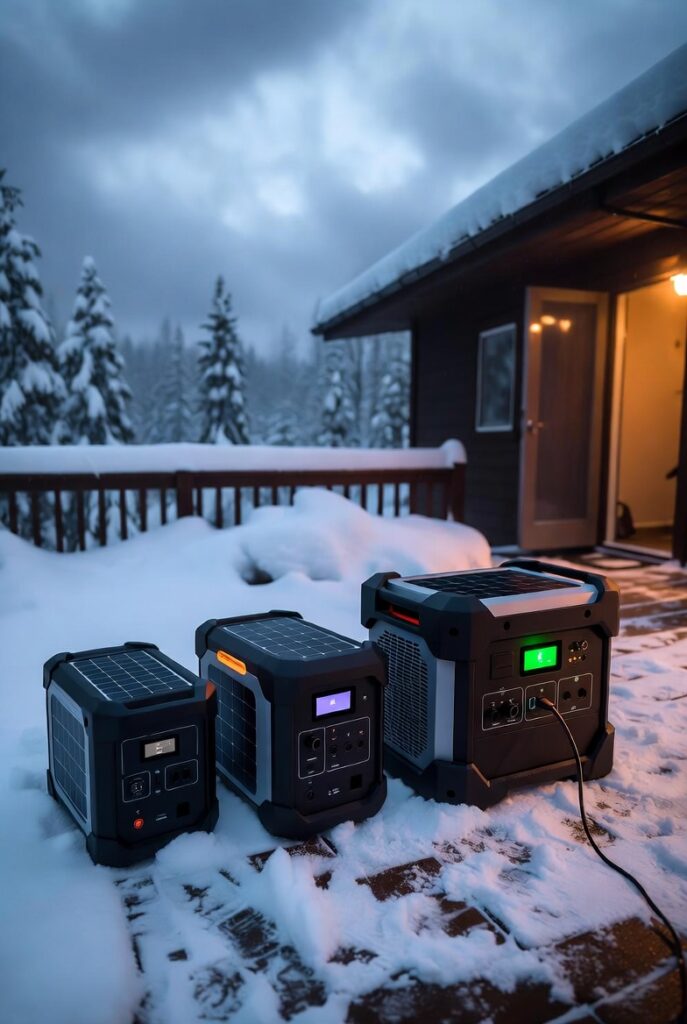
Choosing the best portable solar generator for Ontario requires a diagnostic shift away from marketing specs. Most manufacturers advertise peak performance at room temperature. An Ontario ice storm in February represents a completely different load profile. If the internal chemistry cannot maintain voltage at minus 10C, the nameplate capacity becomes irrelevant to your survival.
When I diagnose a backup power system, I look past the wattage number on the box. In my 20 years of service diagnostics, the real question is not how much energy the unit stores. The real question is whether the inverter handles the surge when the fridge compressor kicks on at 2 AM. Ontario winters expose every weakness in portable power.
What Makes the Best Portable Solar Generator for Ontario
The best portable solar generator for Ontario must survive two tests that most units fail. The first test is chemistry because only LFP cells maintain voltage stability below minus 10C. The second test is surge rating. A unit rated at 1000W running power still trips if the fridge compressor demands 1200W at startup.
When I see a unit advertised with peak specs only, I treat it like a car with no service history. The numbers look right on paper. The performance under load tells a different story. The best portable solar generator must handle motor loads and months of idle storage.
The LFP Cycle Rule That Eliminates Half the Market
NCM batteries offer 500 to 800 cycles before capacity drops to 80 percent. LFP batteries provide 3,000 to 4,000 cycles at the same threshold. Over a 10 year lifespan, the LFP unit costs less per cycle even at a higher purchase price. This cycle math is the first diagnostic gate that eliminates half the best portable solar generator market instantly.
LFP chemistry is also safer for indoor use during emergencies. The thermal stability of iron phosphate cells means they resist runaway reactions. In my experience, LFP cells maintain their voltage curve better in low temperatures.
A unit that reads 80 percent at minus 5C still delivers close to 80 percent of its rated output. NCM cells at the same temperature can drop 30 percent below their displayed charge level. This gap makes NCM chemistry unreliable for any best portable solar generator application in Ontario.
Best Portable Solar Generator Under $500
For buyers on a strict budget, the best portable solar generator under $500 is the Anker SOLIX C800 Plus. This unit provides 768Wh of LFP capacity with a 1200W inverter. It handles electronics, LED lighting, and phone charging through a full night. The Jackery Explorer 300 Plus offers a lighter alternative at 288Wh for camping and minimal backup use.
In Dufferin County near Orangeville, I ran a side by side field comparison during a November ice storm. Two 1000W tier units ran the same load profile of a fridge, LED lighting, and phone charging. One unit used older lead acid chemistry. The other used LFP at minus 10C overnight.
The lead acid unit lost 40 percent capacity immediately due to electrolyte slowdown. The LFP unit held 92 percent capacity under the same conditions. After 6 hours the lead acid unit shut down completely. The LFP unit ran for 14 hours on the same load profile before reaching 20 percent state of charge.
The unexpected consequence was the lead acid inverter fan. It ran continuously trying to compensate for voltage sag. That constant fan draw accelerated the capacity loss far beyond what the chemistry alone caused. The owner expected a slow decline but the unit hit a cliff at hour 5.
By hour 6 the lead acid unit was completely dead. This is like comparing a flooded battery to an AGM in a Canadian winter. The flooded battery cranks slower every degree below zero. The AGM holds voltage until it hits the wall.
The Mid-Tier Sweet Spot for Ontario Ice Storm Backup
The mid tier category is where most Ontario homeowners should invest. The Anker SOLIX C1000 Gen 2 provides 1056Wh of LFP capacity with a 2400W surge rating. That surge number determines whether the unit starts your fridge compressor or trips trying. Read more in our Solar Generator Sizing Ontario Standard.
In Wellington County near Fergus, a buyer purchased a 500Wh unit for cottage backup. The unit tripped instantly on the fridge compressor surge at 1200W startup demand. The inverter limit was only 500W. The buyer had checked running watts at 150W and assumed plenty of headroom.
The diagnostic finding was clear. Nameplate wattage matched running load but ignored surge demand entirely. The resolution was an upgrade to a 2000Wh unit with a 2400W surge rating. The total cost was $1,780 versus $1,400 if sized correctly from day one.
The unexpected consequence was BMS lockout. The original 500W unit was not physically damaged by the surge trips. However repeated attempts over two hours caused BMS protective lockout. The owner nearly discarded a $380 device that worked after a full AC reset.
Pro Tip: When selecting a mid tier portable solar generator, check the solar input voltage range. A unit that accepts at least 60V of solar input allows series parallel panel configurations. This doubles your recharge speed during the short winter daylight hours in Ontario.
Best Portable Solar Generator Over $1,200
In the premium category, the best portable solar generator must function as a partial home backup system. The EcoFlow DELTA Pro 3 delivers 4000W AC output with 4kWh of internal LFP capacity. It runs well pumps, portable heaters, and full kitchen circuits simultaneously during extended outages.
The Jackery HomePower 3000 offers a balanced alternative with high solar input and a portable form factor. Both units provide cost per cycle values under $0.50 over 10 years. Compare the top two brands in our Jackery vs EcoFlow Standard or read our Jackery Review.
When I evaluate premium units, cost per cycle becomes the primary metric. A $3,000 unit lasting 4,000 cycles costs less than $0.75 per use. These units connect to our broader Ontario strategy in the Solar Generator Hub.
The Ontario Winter Performance Tax
Winter performance taxes every best portable solar generator on the Ontario market. LFP cells cannot accept a charge if the internal temperature drops below 0C. Premium units include internal heating blankets that warm cells before allowing current in. Without this feature, your panels produce 400W but the battery refuses to accept the charge.
Cold weather also increases internal resistance in the wiring and cells. A unit rated at 2000Wh in July might deliver only 1700Wh in a freezing January garage. I always recommend over sizing capacity by at least 20 percent for this seasonal loss. Always consult the National Fire Protection Association for lithium battery storage guidelines.
The Comparison Table
| Unit Model | Capacity (Wh) | Surge (W) | LFP Cycles | Weight (lbs) | Solar Max (W) | Cost/Cycle |
|---|---|---|---|---|---|---|
| Jackery 300 Plus | 288 | 600 | 3000 | 8.2 | 100 | $0.12 |
| Anker SOLIX C800 Plus | 768 | 1200 | 3000 | 17.4 | 300 | $0.17 |
| Anker SOLIX C1000 Gen 2 | 1056 | 2400 | 4000 | 28.4 | 600 | $0.33 |
| EcoFlow DELTA 2 Max | 2048 | 4800 | 3000 | 50.0 | 1000 | $0.62 |
| Jackery 2000 v2 | 2042 | 4400 | 4000 | 39.5 | 1200 | $0.45 |
| EcoFlow DELTA Pro 3 | 4096 | 8000 | 4000 | 113.0 | 1600 | $0.92 |
The National Electrical Code provides the fundamental safety requirements for portable power systems used in residential backup applications. These units operate in island mode where they are not bonded to a household ground. You must follow manufacturer instructions for grounding the chassis if you power sensitive electronics during a storm. Voltage float issues can damage equipment if the neutral bond is not properly configured.
The Canadian Electrical Code offers specific regulations for portable generators and power stations in Ontario. The Electrical Safety Authority oversees how these units interface with home wiring. A transfer switch installation must be performed by a licensed electrician. Learn more in our Backup Power Guide.
Frequently Asked Questions
Can a portable solar generator run a refrigerator during an Ontario ice storm?
Yes, but only if the best portable solar generator has enough surge capacity for the compressor startup demand. A mid tier or premium unit with at least 2000W surge rating handles the 1200W startup spike. Budget units under 1000W surge will trip on the first compressor cycle.
What is the difference between running watts and surge watts?
Running watts measure the continuous power a device uses during operation. Surge watts measure the initial burst required to start motor driven appliances. A fridge that runs at 150W can demand 1200W for the first 3 seconds of compressor startup. Your generator must handle the surge or it trips.
How long does a 1000Wh solar generator last during a power outage?
A 1000Wh LFP unit running a fridge and LED lighting lasts 8 to 12 hours in summer conditions. In Ontario winter at minus 10C, expect 15 to 20 percent less runtime. Over sizing by 20 percent compensates for this seasonal loss.
Is it safe to use a portable solar generator indoors?
LFP chemistry is significantly safer for indoor use than NCM or lead acid alternatives. There is no combustion risk and no fumes. However always ensure proper ventilation around the unit and follow all manufacturer spacing requirements for heat dissipation.
- Best overall value: The Anker SOLIX C1000 Gen 2 offers the strongest balance of surge capacity, LFP longevity, and price for Ontario homeowners facing ice storm backup needs.
- Best for home backup: The EcoFlow DELTA Pro 3 provides the 4000W output required to run critical home infrastructure including well pumps and heating circuits during extended outages.
- Best for portability: The Jackery Explorer 300 Plus delivers LFP reliability in a sub 9 pound package that fits in a backpack for camping and light emergency use across Ontario.
Master Tech Advisory: When you perform a seasonal check on your unit, do not just look at the percentage on the screen. Plug in a high draw device like a toaster and watch the voltage sag on the display. If the unit trips at 50 percent capacity, your cells are likely out of balance or reaching end of service life. A healthy LFP pack maintains stable output until the final 5 percent of charge. If you see erratic behavior, perform a full discharge to zero and a slow AC charge back to 100 percent to recalibrate the BMS.
About the Author
Robert Bertrand spent 20 years as a service advisor in the automotive industry (Lexus and Nissan), where precision diagnostics, wiring integrity, and documentation standards were non-negotiable. He brings that same technical discipline to GridFree Guide, where he researches, tests, and documents off-grid solar systems for Ontario conditions. Based in Rockwood, Ontario, every article is built on verified specifications, manufacturer data, and the real-world climate constraints of Canadian off-grid living.
As an Amazon Associate I earn from qualifying purchases. This site also contains affiliate links to other products and services. GridFree Guide earns a small commission at no extra cost to you.