
This post contains affiliate links. If you purchase through our links, we may earn a small commission at no extra cost to you.
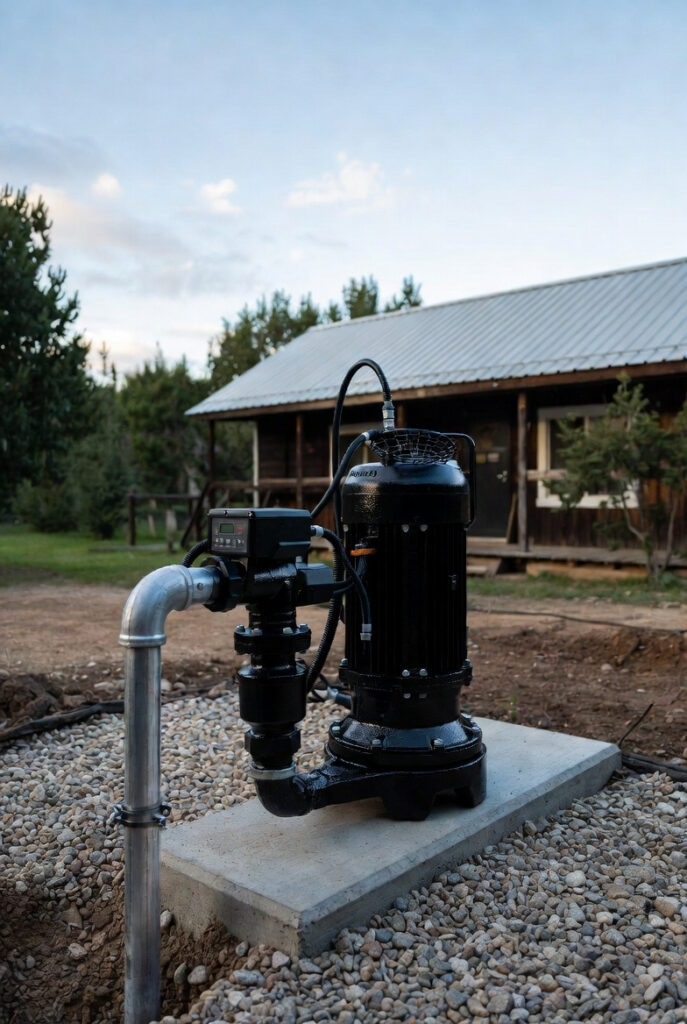
A solar well pump system that stutter-starts a submersible pump is destroying it one startup event at a time. I had a client replace his well pump twice in three years before calling me. He was running a 240V AC Franklin Electric 1HP submersible on a 2,000W modified sine wave inverter and a 200Ah AGM bank. On every startup the AGM voltage sagged, the inverter output dropped to approximately 200V for 0.3 seconds before recovering, and the pump motor received undervoltage during the inrush phase. An AC motor running at 200V during a 240V inrush event draws excess current and generates heat in the windings. After two or three hundred such startups the winding insulation fails. The pump burns out. The fix was a Grundfos SQ Flex BLDC submersible pump wired directly to a 48V battery bank through a dedicated solar pump controller. The pump has been running for two years without a single stutter start. For the pure sine wave vs modified sine wave context that explains why a modified sine wave inverter makes the undervoltage problem worse on motor loads, the inverter guide covers the waveform distortion mechanism.
Why a Solar Well Pump System Fails Without the Right Controller and Start Curve
The stutter start mechanism is straightforward. Undervoltage during inrush produces excess current, which generates heat in motor windings, leading to insulation degradation over repeated events. Every submersible pump motor has a torque-speed curve that determines how much current it draws at each point from 0 RPM to full speed. A controller that matches the available voltage and current to the pump’s start curve prevents the undervoltage inrush event entirely.
Linear Current Booster technology converts excess panel voltage into additional current, allowing the pump to start and run from panels alone without a battery bank. When the pump requires more current to start than the panels can deliver at their maximum power point voltage, the LCB steps the voltage down and the current up, maintaining constant power delivery while providing the additional current the pump needs to overcome starting torque. This allows a BLDC pump to start reliably at 30% irradiance while a standard pump controller may fail to start at the same irradiance. For the battery bank sizing that determines whether a battery-backed or panel-direct solar well pump system is the correct specification for the property’s demand pattern, the sizing guide covers the calculation.
BLDC vs AC Pump: The Solar Well Pump System Selection Standard
| Pump Type | Flow Rate | Best Application |
|---|---|---|
| BLDC Submersible (1/2 to 1HP) | 2 to 5 GPM | Daily household supply, cistern filling, panel-direct or battery |
| AC Submersible (1 to 2HP) | 8 to 15 GPM | Irrigation, fire suppression, high instantaneous demand |
| Surface Centrifugal (AC) | 10 to 25 GPM | Shallow well, cistern transfer, requires low lift |
BLDC submersible pumps operate at variable speed from panel voltage, have no brushes to wear, and connect directly to panels or a battery bank. A typical 1/2 to 1HP BLDC pump delivers 2 to 5 GPM. AC pumps deliver 8 to 15 GPM, making them the correct choice for irrigation and fire suppression applications. For properties requiring high instantaneous flow with an AC pump, the EasyStart soft starter reduces the inrush current on the AC pump motor, cutting the inverter surge requirement significantly.
For a property with a cistern that can be filled slowly throughout the day, the BLDC slow-flow strategy is the better engineering choice. A BLDC pump running 8 hours per day at 3 GPM fills 1,440 gallons into a holding tank. A household using 100 gallons per day has 14 days of water storage in a 1,500-gallon cistern even if the solar system goes offline. The cistern decouples water supply from electrical supply. For the full system sizing hub that covers the load calculation foundation for any solar well pump system, the hub covers the numbers.
Pressure Tank Sizing: Reducing Cycle Rate in a Solar Well Pump System
A standard 20-gallon pressure tank cycles the pump 4 to 8 times per hour under normal household demand. Each startup stresses the motor and check valve. An 80-gallon pressure tank cycles the pump 1 to 2 times per hour under the same demand. Fewer cycles mean less motor stress, longer seal life, and lower peak current draw from the battery bank per hour of use. For a rural Ontario property with a well pump on a solar system, an 80-gallon or larger pressure tank is the minimum specification. An 80-gallon tank at 30/50 PSI set points holds approximately 25 gallons of usable water before the pump must cycle. The Victron SmartShunt installed on the pump circuit logs the startup events per hour and confirms whether the pressure tank is adequately sized. If the shunt data shows more than 3 pump starts per hour during normal use, the pressure tank needs to be larger.
The Submersible Cable Standard: No Splices in the Wet Section
Splice failure is the leading cause of ground fault trips in deep well applications. Capillary action draws water into any non-immersion-rated splice. Copper corrodes. The ground fault path trips the GFCI breaker. The correct standard is a continuous run of submersible pump cable from the pump to the surface junction box with no splices in the wet section. If a splice is unavoidable, use a waterproof submersible-rated splice kit rated for continuous immersion. A wire nut and electrical tape splice in a well casing will fail. Submersible pump cable must be sized for the pump’s full load amperage with a 125% service factor and a voltage drop not exceeding 3% over the total cable run. For a 1HP pump at 240V drawing 6A running over a 200-foot cable run, 12AWG submersible pump cable keeps voltage drop within specification. For the sub-panel wiring standard that covers the surface panel connection for the pump circuit, the isolation standard covers the protection requirements.
Dry-Run Protection: The Solar Well Pump System Shutdown Standard
I received a call in August from a client whose pump had seized. He had a 200-foot drilled well on a rural property north of Guelph and a reliable 48V BLDC solar well pump system that had run without issues for 18 months. During the August drought the water table dropped below the pump intake. The pump ran dry for approximately four hours before the client noticed the pressure had dropped. Mechanical seals rely on the water being pumped for cooling and lubrication. Running dry for four hours destroyed the seals and scored the pump shaft. A dry-run protection sensor costs $40 to $80 and monitors the pump’s current draw. When the pump sucks air instead of water, the current drops to near zero. The sensor triggers a relay that shuts the pump off within seconds.
The system restarts after a set delay of 1 to 4 hours to allow the water table to recover. Three acceptable dry-run protection methods exist: a dedicated current-sensing relay on the pump circuit, a float switch at a known safe depth in the well casing, or a solar pump controller with built-in low-current shutdown. Any of the three is acceptable. None is optional in an Ontario well that experiences summer drawdown. For the battery room venting standard that covers the enclosure requirements for the pump controller installation, the venting guide covers the thermal management requirement.
The Solar Well Pump System Component Standard: Pump, Controller, Pressure Tank and Protection
The complete hydraulic standard for a rural Ontario solar well pump system covers six components. The pump is a Grundfos SQ Flex or equivalent BLDC submersible rated for the well’s static and dynamic water levels and the required flow rate. The controller is a dedicated solar pump controller or LCB matched to the pump’s start curve and the array’s maximum power point voltage. The pressure tank is an 80-gallon minimum unit, pre-charged to 2 PSI below the pump cut-in pressure, mounted above the water line in a frost-free location. The cable is a continuous run of submersible pump cable with no splices in the wet section, 12AWG minimum for a 1HP pump at 200-foot depth. The GFCI protection is a dedicated GFCI DC breaker at the surface junction box rated for the pump’s operating voltage. The dry-run protection is a current-sensing relay or solar pump controller with built-in low-current shutdown. Total system cost for a 1HP BLDC pump system to 200 feet runs $1,500 to $3,000 in components depending on pump brand and cistern configuration.
NEC and CEC: What the Codes Say About Solar Well Pump Systems
NEC 690 governs the PV source circuits that power a solar well pump system. NEC 680 covers submersible equipment grounding applicable to well pump installations. NEC 250.112(M) specifically requires that submersible pump motors be grounded through the pump cable and that the grounding conductor be continuous from the pump to the surface grounding electrode system. NEC 210.8 requires GFCI protection for circuits in wet locations, which includes the pump cable circuit. A GFCI breaker at the surface junction box meets the NEC wet location requirement for submersible pump circuits.
CEC Rule 68-302 covers submersible pump installations and requires that the pump cable be rated for continuous wet location use and protected from physical damage between the wellhead and the building. CEC Rule 68-304 requires that the pump circuit be provided with ground fault protection. In Ontario, a new well pump installation including solar-powered systems requires a permit from the local building department and must comply with the Ontario Water Resources Act for well construction standards. The ESA requires an electrical permit for the solar pump controller installation and surface wiring. The well itself is under MOE jurisdiction. Contact the local MOE district office for well permit requirements in Wellington County.
Pro Tip: Before you lower the pump into the well, tie a safety rope to the pump housing rated for at least 3x the pump weight. If the cable fails at depth, the safety rope is the only way to retrieve a $600 to $1,500 pump from 200 feet of water. In the shop, we do not drop a transmission without a jack stand under it.
The Verdict
A solar well pump system built to the hydraulic standard delivers reliable water from a 200-foot well on 300 watts of solar and a 48V battery bank.
- Use a BLDC submersible pump with a solar pump controller or LCB matched to the pump’s start curve. The AC pump on a modified sine wave inverter destroyed two pumps in three years. The BLDC has run for two years without a stutter start.
- Install an 80-gallon pressure tank minimum. The 20-gallon tank cycles the pump 4 to 8 times per hour. The 80-gallon tank cycles it once or twice. Fewer cycles mean longer pump life.
- Run continuous submersible cable with no splices in the wet section. The wire nut splice in the casing will fail. The GFCI will trip. The pump will stop. Fix it before it goes in the ground.
- Install dry-run protection before commissioning. A $50 current relay is the difference between a pump that runs for 20 years and a pump that seizes in a drought.
In the shop, we do not run an engine without oil. In the well, we do not run a pump without water.
Questions? Drop them below.
About the Author
Robert Bertrand spent 20 years as a service advisor in the automotive industry (Lexus and Nissan), where precision diagnostics, wiring integrity, and documentation standards were non-negotiable. He brings that same technical discipline to GridFree Guide, where he researches, tests, and documents off-grid solar systems for Ontario conditions. Based in Rockwood, Ontario, every article is built on verified specifications, manufacturer data, and the real-world climate constraints of Canadian off-grid living.
As an Amazon Associate I earn from qualifying purchases. This site also contains affiliate links to other products and services. GridFree Guide earns a small commission at no extra cost to you.