
How to Live Off-Grid on a Budget
Off-grid living is not just for millionaires with mountain retreats. It is for anyone willing to trade a little convenience for a lot of freedom. The biggest barrier is not money it is the assumption that you need to buy everything at once. You don’t. Here is how to live off-grid on a budget by building in phases and spending smart at every step.
You do not need a $10,000 system on day one. You need a $200 system on day one that grows into something bigger over time. Each phase pays for the next through savings on your hydro bill.
Think of it like maintaining an older vehicle. If you cannot afford a new Lexus you learn to do your own oil changes and brakes. Maintenance and smart planning save more than replacement. The same logic applies here build what you can afford, learn the system, then expand deliberately.
Phase 1: The Starter Kit ($200–$500)
Goal: Power your essential gadgets through a blackout and reduce grid dependency for small loads.
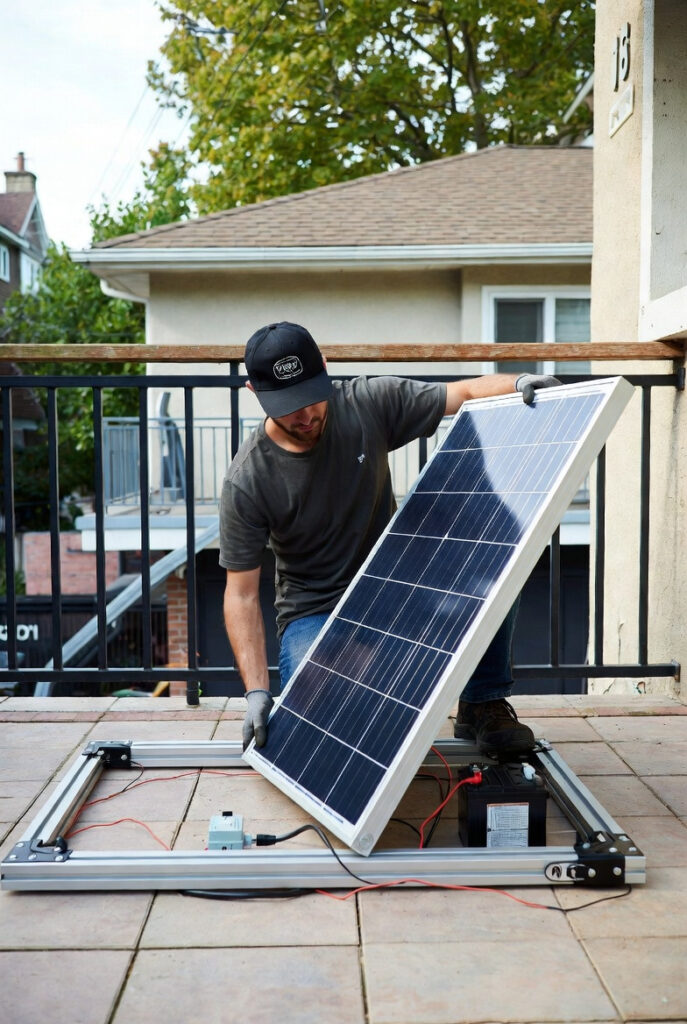
A portable power station in the 500–1000Wh range paired with one solar panel handles phones, LED lights, laptops, and small fans indefinitely. The Renogy 100W Solar Starter Kit is the cleanest entry point panel, charge controller, and mounting hardware in one box. Pair it with a small portable station for under $400.
What this covers:
- Phone and tablet charging – 24/7
- LED lighting – entire evening
- Laptop – 6–8 hours
- Small fan – overnight
What this does NOT cover:
- Refrigerator
- Electric kettle or toaster
- Space heater
Phase 1 is about learning your system and reducing grid dependency not replacing it entirely.
Phase 2: The Serious Setup ($500–$1,500)
Goal: Power essential appliances including a small fridge and significantly reduce your hydro bill.
What to add:
- Renogy 100W Solar Panel add a second panel or upgrade to 200W
- Dedicated LiFePO4 battery bank 100Ah minimum
- MPPT charge controller if not already included
- Pure sine wave inverter for AC loads
A properly sized Phase 2 setup covers lighting, device charging, fridge, and entertainment loads for a significant portion of your daily needs.
The Ontario math: Hydro rates run $0.12–$0.22/kWh depending on time of use. A Phase 2 system saving 5kWh per day saves $0.60–$1.10 per day roughly $200–$400 per year. That is real money compounding year over year against a one-time investment.
Phase 3: Full Independence ($3,000+)
Goal: Cover your entire daily load or go completely off-grid.
Size for your full load calculation see our How to Calculate Your Daily Energy Usage guide and build a system that handles your worst-case winter month in Ontario. Most people never need Phase 3. A well-executed Phase 2 covers 60–80% of typical household discretionary power use.
The 80/20 Rule of Off-Grid Power
In most homes 80% of electricity consumption comes from 20% of the appliances. Identify your biggest loads and either eliminate them or replace them with efficient alternatives.
The worst offenders for off-grid budgets:
- Electric space heaters (1500W) – replace with propane or wood
- Electric kettle (1200W) – use a stovetop kettle on propane
- Hair dryer (1800W) – air dry or use a 12V low-watt travel dryer
- Old refrigerator (400–800W actual) – replace with an efficient 12V fridge or chest freezer
Saving a watt is five times cheaper than generating one. A $20 LED bulb upgrade saves more over its lifetime than $100 of additional solar panel capacity. Audit your loads before you buy more panels.
The Ontario delivery charge reality: Hydro One bills include a fixed delivery charge regardless of usage. Cutting consumption by 50% does not cut your bill by 50%. But eliminating peak-time consumption by shifting loads to off-peak solar production targets the most expensive portion of your bill first.
Used Gear Strategy
Safe to buy used:
- Solar panels – test with a multimeter, buy from reputable sellers, look for less than 5 years old
- Inverters – test before buying, check for burn marks or heat damage
- Mounting hardware and wiring – inspect carefully, replace any damaged sections
NEVER buy used:
- Lead-acid batteries their true condition is invisible. A used lead-acid battery might test at 12V but have 20% of its original capacity. You will not know until it fails at 2am in January.
- LiFePO4 batteries only buy used if you can verify cycle count data from the BMS. Without that data you are guessing.
The quality rule: Cheap is expensive if it breaks in a week. One quality component a Victron MPPT charge controller, properly rated wire, a quality BMS lasts a decade. Generic Amazon components might last one winter. Buy the best charge controller you can afford. Everything else can be phased in.
The DIY Battery Box Hack
Heated battery cabinets cost $200–$500. A heavy-duty cooler or insulated plastic bin costs $30–$60 and does the same job for Ontario winters.
Line a large cooler with foam insulation. Mount your battery bank inside. Add a small 12V heat mat rated for battery storage if temperatures regularly drop below -10°C. The cooler slows temperature loss dramatically a battery bank that would drop to -15°C overnight in an uninsulated shed stays at -2°C in a good cooler.
Cold batteries lose 20–30% capacity. Keeping them insulated costs almost nothing and recovers that capacity entirely.
Pre-Built vs DIY: The Real Cost Comparison
Two paths to a 1,000Wh capable system:
Pre-built solar generator: Anker SOLIX C1000 Gen 2 approximately $1,200 USD. Everything integrated. No wiring. Works out of the box. Limitations: fixed capacity, harder to expand, AC conversion losses.
DIY component build:
- 100W panel: $120
- 100Ah LiFePO4 battery: $200–$300
- MPPT controller: $60–$80
- 1,000W pure sine inverter: $80–$120
- Total: approximately $460–$620
More capability, expandable, repairable. Requires basic wiring knowledge.
The honest verdict: For beginners the pre-built wins on simplicity. For anyone comfortable with basic wiring the DIY build delivers more power per dollar and is easier to expand over time.
For inverter selection see our Pure Sine Wave vs Modified Sine Wave Inverter guide. For the full beginner path see How to Start Going Solar With Zero Experience.
Pro Tip – Your Step-One Challenge: Can you go 24 hours without using grid power for your gadgets? Charge your phone, run your lights, and power your laptop entirely from a portable battery or small solar setup for one full day. This exercise reveals your actual usage patterns better than any spreadsheet and it proves to yourself that off-grid power is not a fantasy. It is just electricity from a different source.
The Verdict
Living off-grid on a budget is not about sacrifice. It is about sequencing. Phase 1 proves the concept. Phase 2 makes it practical. Phase 3 makes it complete.
The readers who succeed are not the ones with the biggest budgets. They are the ones who start Phase 1 this weekend and learn the system before buying Phase 2.
Start small. Build deliberate
Disclosure: This article contains affiliate links. If you buy through them, GridFree Guide earns a small commission at no extra cost to you.
About the Author
Robert Bertrand spent 20 years as a service advisor in the automotive industry (Lexus and Nissan), where precision diagnostics, wiring integrity, and documentation standards were non-negotiable. He brings that same technical discipline to GridFree Guide, where he researches, tests, and documents off-grid solar systems for Ontario conditions. Based in Rockwood, Ontario, every article is built on verified specifications, manufacturer data, and the real-world climate constraints of Canadian off-grid living.
As an Amazon Associate I earn from qualifying purchases. This site also contains affiliate links to other products and services. GridFree Guide earns a small commission at no extra cost to you.