
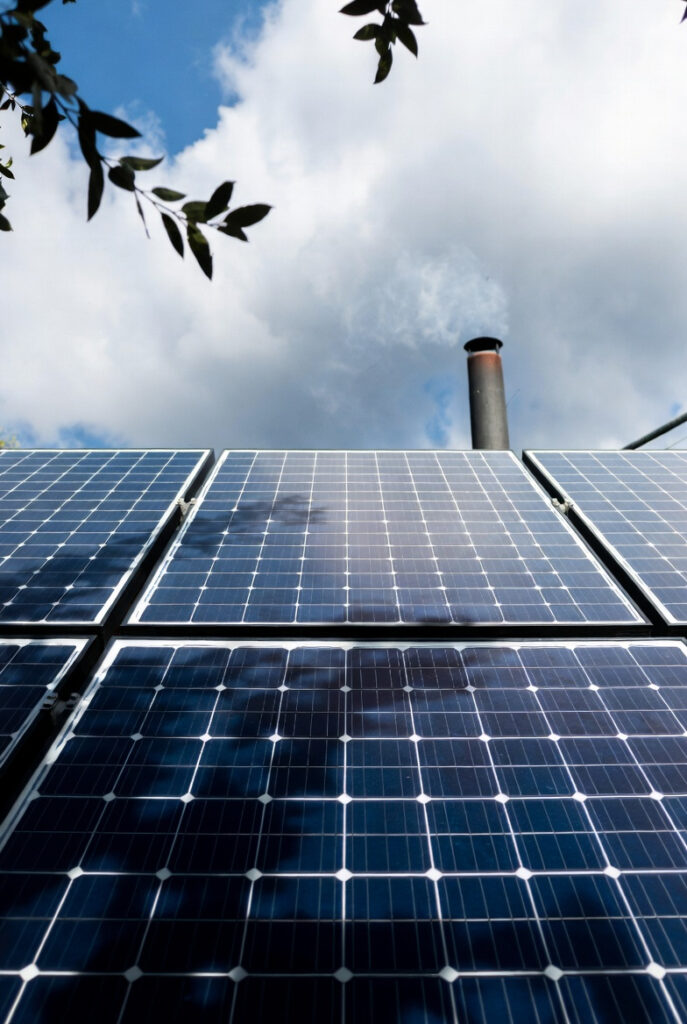
If you think your solar panels work at 100% all day you are in for a surprise. What affects solar panel output is not just one thing it is five things working against you simultaneously. Here is what is stealing your power and how to fix each one.
Think of it like engine horsepower. On paper the spec sheet says 300HP. But a clogged air filter, a pinched fuel line, and worn spark plugs mean you will never see that number at the wheels. Solar panels work the same way rated wattage assumes perfect conditions that almost never exist simultaneously.
What Affects Solar Panel Output? The Big Five
1. Shading The Silent Killer
Shading is the most destructive output killer and the most underestimated. A single shadow crossing one cell of one panel can trigger bypass diodes that effectively disconnect sections of the panel from the circuit. A shadow covering 5% of your panel surface can reduce output by 50–90% depending on where it falls.
Why it is so severe: Solar cells in a panel are wired in series. Each cell must pass its current to the next. When one cell is shaded it becomes a resistance rather than a source the bypass diode activates to route around it but takes a significant chunk of the panel’s output with it.
Real-world Ontario examples:
- A wire running across the panel face from a mounting bracket
- A vent pipe shadow that moves across the panel for 2 hours each afternoon
- A single tree branch touching the panel corner
- Bird droppings on one corner of the panel
Any of these can halve your production for hours. This is the most common cause of underperforming systems that otherwise look fine.
The fix: Conduct a shadow analysis at your mounting location at multiple times of day across all seasons before finalizing placement. Use the Starlink obstruction app or a sun tracker app pointed at your intended mounting position. Trim branches proactively.
How Shading Can Kill Your Entire Array
In a series-wired string of multiple panels one shaded panel drags down the output of the entire string not just itself. A 3-panel string producing 600W total can drop to 200W if one panel is partially shaded.
Modern solutions: Microinverters and power optimizers allow panel-level optimization so one shaded panel does not affect the rest of the string. For permanent rooftop installations with any shading risk these are worth the additional cost.
2. Angle and Orientation The Daily Thief
A panel pointed mostly south is not good enough in Canadian winters.
The Cosine Effect: The power a panel receives is proportional to the cosine of the angle between the sun’s rays and the panel surface. A panel perfectly perpendicular to the sun receives 100% of available irradiance. At 30 degrees off perpendicular it receives 87%. At 60 degrees off it receives 50%. Parallel to the sun essentially zero.
The Ontario winter reality: In Rockwood and Guelph the sun sits at approximately 20–25 degrees above the horizon at solar noon in December. A panel tilted at 30 degrees faces the sun at a poor angle all winter. To catch winter sun properly a panel needs to be tilted at approximately 60 degrees from horizontal much steeper than the standard summer-optimal 44 degrees.
The practical solution: Fixed year-round panels should be tilted at 44–45 degrees for balanced annual output. If you can adjust seasonally tilt to 60 degrees from October through February and back to 35–40 degrees from April through August. That seasonal adjustment increases winter production by 20–30%.
For the complete positioning guide see our How to Mount and Position Solar Panels guide.
3. Temperature The Hot Weather Paradox
On a hot July day panel surface temperature reaches 60–70°C. At -0.4% temperature coefficient per degree Celsius that is a 14–18% output reduction from heat alone. Your 200W panel produces approximately 164–172W on that day before any other factors are applied.
This compounds with other factors. A hot day with light haze, a minor shadow, and slightly suboptimal angle can easily push real output to 50–60% of rated.
For the full temperature coefficient breakdown see our Solar Panel Efficiency Explained guide.
4. Atmospheric Conditions The Invisible Thief
Four atmospheric conditions reducing solar output in Ontario:
Haze and humidity: Summer humidity creates atmospheric scatter. On hazy humid July days output can be 15–25% below a clear day at the same temperature.
Forest fire smoke: This has become a real factor in Ontario. Smoke events from northern Ontario and western Canada now regularly reduce solar irradiance by 20–40% for days or weeks at a time. The 2023 smoke events cut solar output across Ontario by over 30% for more than a week. Size your battery bank to survive extended low-production periods.
Cloud cover: Light cloud cover reduces output to 10–25% of rated. Heavy overcast drops to 5–10%. Diffuse light still produces some power but dramatically less than direct sun.
Winter sun angle: Ontario gets roughly 3–3.5 peak sun hours in December versus 5–5.5 in June. Size your system for the worst month.
5. Cable and Wiring Loss The Preventable Drain
Undersized or too-long cable runs act like a clogged pipe. Electricity flows through resistance and that resistance generates heat instead of delivering power to your battery.
The voltage drop math: A 10-metre run of undersized wire on a 20A circuit can lose 3–5% of power before it reaches the charge controller. Over a full day on a productive system that is meaningful lost energy happening silently with no visible indication.
The rule: Size your wire for the maximum current your panels can produce at minimum voltage. When in doubt go one gauge thicker. See our Solar Wire Gauge Guide for the full sizing table.
MC4 connector quality matters too. Corroded or poorly crimped MC4 connectors add resistance at every junction. Inspect connections annually and replace any showing corrosion or physical damage.
How to Actually See What Is Happening
You cannot fix what you cannot measure. A Renogy 500A Battery Monitor gives you real-time visibility into what your system is actually producing and consuming input watts from panels, output watts to loads, battery state of charge, and historical data.
Without a monitor you are guessing. With one you can see exactly when output drops, by how much, and correlate it to conditions shade appearing at 2pm, a cloudy afternoon, a hot July day. That data tells you where to focus your improvement efforts.
The Quick Fix Checklist
Before spending money on more panels or batteries run through this list first:
- Clean the panels – dust, grime, bird droppings, frost residue
- Check the tilt angle – optimized for the current season?
- Trim branches or obstructions – especially afternoon shadows
- Inspect MC4 connectors – look for corrosion or physical damage
- Check wire gauge – is your run length appropriate for your wire size?
- Install a battery monitor – you need data before you can diagnose
Most underperforming systems improve significantly with cleaning and tilt adjustment alone. Do the free fixes before buying more hardware.
Pro Tip: The most common diagnosis: panels underperforming because the owner set them up in spring when the sun was high and never adjusted the tilt for winter. A panel tilted at 30 degrees that worked well in May produces 30–40% less than it should in December in Ontario. Seasonal tilt adjustment costs nothing and takes 15 minutes. It is the highest-value maintenance task on any off-grid system.
The Verdict
What affects solar panel output? Shading, angle, heat, atmospheric conditions, and wiring losses all working simultaneously and all measurable. None of them are mysterious. All of them are addressable.
Clean the panels. Fix the tilt. Trim the branches. Install a monitor. Then size your system based on real measured output not spec sheet ratings.
Disclosure: This article contains affiliate links. If you buy through them, GridFree Guide earns a small commission at no extra cost to you.