
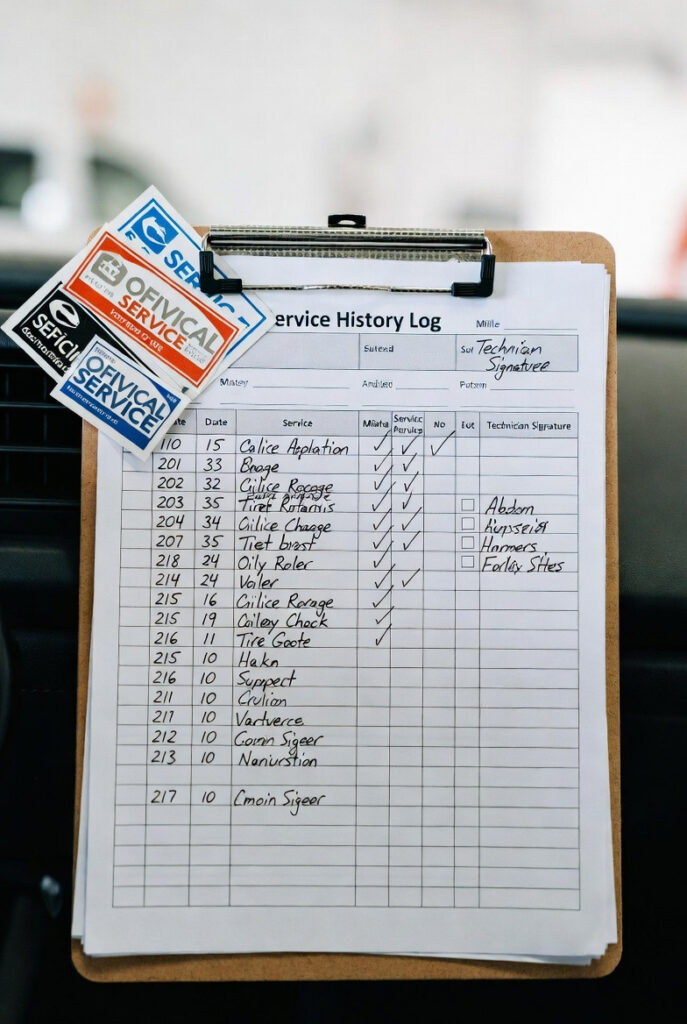
I have serviced cars that reached 400,000 kilometres without a single major failure. Every one of them had a complete service history oil changes logged, torque checks recorded, brake jobs documented. I have also serviced cars that looked fine on the outside and were disasters inside because nobody kept records. An off-grid solar system is a power plant. Off-grid solar maintenance is not optional it is the difference between a system you can trust at year 10 and one that surprises you in January. Before building the system worth maintaining understand how much solar power you actually need the system size determines the maintenance commitment.
Off-Grid Solar Maintenance: Why Documentation Is Not Optional
What goes wrong without a log: A battery bank that was performing at 98% capacity two years ago. Is it at 96% now or 88%? Without a log you do not know. A busbar bolt that was torqued to spec at commissioning. Has it shifted? Without a paint pen inspection record you do not know. A firmware version that was current in 2024. Is it still current? Without a firmware log you do not know. Off-grid solar maintenance documentation is the system memory that fills the gap between commissioning and the day something fails.
Why the automotive parallel applies: In the service bay a customer hands me a high-mileage vehicle with no service records. I do not know if the timing chain was serviced. I do not know if the battery was tested. I do not know if the brake fluid was flushed. I start from zero and test everything a 3-hour diagnostic job instead of a 30-minute inspection. In an off-grid system the equivalent is: I do not know the battery capacity trend, I do not know the last firmware version, I do not know if the heating pads activated last February when the temperature hit -28°C. A maintenance log answers all of these questions before I ask them.
When the full log protocol applies:
- Seasonal cabins – any system that is unmonitored for 4+ months per year
- Systems that will eventually be sold with the property
- Multi-battery banks – 200Ah or more – where capacity trend monitoring has measurable value
- Systems with Victron equipment – firmware updates are meaningful and trackable
When a simplified log is sufficient: A year-round occupied cabin with a small system 100Ah, one MPPT, a basic inverter where the owner monitors the Victron app daily. Annual SoH recording is still valuable. A full formal log with monthly entries is not necessary for a system with continuous daily human oversight.
The Annual October Inspection – The Core Log Entry
What the October inspection covers: As covered in our Busbar Torque Spec guide every October before the first hard frost is the correct timing for the annual torque and connection inspection. The maintenance log October entry records:
- Date of inspection
- Paint pen mark status on every busbar bolt – ALIGNED or SHIFTED – and action taken if shifted
- IR thermometer reading on every connection – temperature above ambient
- Any connections retorqued – which connection, torque applied, bolt size
- Battery terminal condition corrosion present or absent
- Cable jacket condition at all lug entry points, colour of strands visible at any access point
The importance of the paper trail: A paint pen mark that shifted between year 1 and year 2 inspection is a data point. If it shifted again between year 2 and year 3 that connection is systematically loosening it needs investigation beyond simple retorquing. A single annual inspection record does not reveal this. Three annual inspection records create the trend.
Capacity Trend Monitoring – The SoH Log
What State of Health means: The Victron SmartShunt 500A reports State of Health the current usable capacity of the battery bank expressed as a percentage of the original rated capacity. A 200Ah bank with a SoH of 98% has approximately 196Ah of usable capacity. A bank with SoH of 85% has 170Ah. The SoH trend over multiple years is the battery bank lifespan predictor and it is only visible if you record it annually.
The trend calculation:
- Year 1: 200Ah bank — SoH 99% — 198Ah usable
- Year 2: 200Ah bank — SoH 98% — 196Ah usable
- Year 4: 200Ah bank — SoH 96% — 192Ah usable
Degradation rate: approximately 1% per year. At this rate the bank reaches 80% SoH the conventional end-of-life threshold for LiFePO4 at approximately year 20. Without the log the owner has no data. With the log they know their bank has 16 more years of service life at the current degradation rate.
I reviewed a client’s 4-year SoH log during a spring inspection last month. Year 1: 99%. Year 2: 98.5%. Year 3: 97.8%. Year 4: 97.2%. Consistent 0.7% per year degradation. On track for 80% SoH at approximately year 28. The client asked if their battery was okay. I showed them the log. The data said: yes. Definitively. Four years of annual recordings turned a worried question into a confident answer. That peace of mind confirmed by data rather than a gut feeling is what off-grid solar maintenance documentation provides.
How to record SoH: The Victron SmartShunt reports SoH in the VictronConnect app accessible via Bluetooth. Record the SoH reading once per year during the October inspection. Five minutes. One data point. Over 10 years this becomes the most valuable document about the battery bank.
The Firmware Log – The Safety Patch Record
Why firmware matters: The Victron Cerbo GX and all connected Victron components MultiPlus-II, SmartSolar MPPT, SmartShunt receive firmware updates through the VRM portal and VictronConnect app. These updates address charging algorithm improvements, BMS communication bug fixes, protection threshold corrections, and occasionally safety-critical issues. A system running firmware from 2022 on a component that has received 8 updates since then is running unpatched code potential bugs, potential performance issues, potential safety gaps.
The firmware log format: Record for every Victron component at every October inspection:
- Component name
- Current firmware version (visible in VictronConnect app)
- Date checked
- Latest available firmware version
- Update applied: YES / NO
- Notes (reason for not updating if applicable)
The update procedure: Victron firmware updates are applied via VictronConnect over Bluetooth or via the Cerbo GX VRM Remote Update function. Never update firmware during active charging or discharging — apply updates during stable system state with no active loads. Record the firmware version before and after updating.
The Environment Log – The Temperature Record
What the environment log records: A wireless thermometer inside the battery enclosure as covered in our Battery Fortress guide — records real-time temperature. The environment log records the minimum and maximum temperatures reached inside the battery enclosure each month during winter operation.
| Month | Min Enclosure Temp | Max Enclosure Temp | Heating Pad Active? |
|---|---|---|---|
| October | +8°C | +22°C | No |
| November | +3°C | +15°C | Yes – 6 events |
| December | -1°C | +12°C | Yes – continuous |
| January | -4°C | +8°C | Yes – continuous |
| February | -2°C | +10°C | Yes – continuous |
| March | +2°C | +18°C | Yes – 12 events |
| April | +8°C | +24°C | No |
What this log reveals: If the January minimum is -4°C inside the enclosure the heating pad is not maintaining above 0°C the insulation is insufficient or the heating pad has failed. As covered in our Battery Heating Pad guide the 0°C threshold is the BMS charge lockout point. The environment log catches this before the charge lockout appears in VRM data as a symptom.
The Victron GlobalLink 520 data integration: For seasonal cabin owners the GlobalLink 520 provides remote SoC monitoring via cellular the VRM portal logs temperature and SoC data continuously. The annual maintenance log can pull this historical data from VRM rather than requiring manual recording. A 12-month VRM export provides the complete environment and SoC record for the log automatically.
The Maintenance Log Template
Annual entry – copy this format into your binder or Google Drive:
SYSTEM MAINTENANCE LOG – [PROPERTY NAME] Date: _______________ Inspector: _______________ System age: ___ years
Connection Inspection:
- All paint pen marks aligned: YES / NO
- Connections retorqued: YES / NO — which: _______________
- IR thermometer maximum reading above ambient: ___°C at _______________
- Cable jacket condition at lug entries: GOOD / DEGRADED — location: _______________
Battery Bank:
- SmartShunt SoH reading: ___%
- Usable capacity calculated: ___Ah of ___Ah rated
- BMS low temperature events this year: ___ events — minimum cell temp: ___°C
- Charging lockout events this year: ___ events
Firmware Status:
- Cerbo GX: v___ → updated to v___
- MultiPlus-II: v___ → updated to v___
- SmartSolar MPPT: v___ → updated to v___
- SmartShunt: v___ → updated to v___
Environment:
- Battery enclosure minimum temperature (winter): ___°C
- Battery enclosure maximum temperature (summer): ___°C
- Heating pad activation events: ___ (Oct-Apr)
Notes: _______________
Next inspection due: October _______________
Pro Tip: Store the maintenance log in two places a physical binder in the equipment room and a Google Drive folder shared with the property owner and any co-owners. When the property is sold include the physical binder with the cabin documents. A 5-year maintenance log handed to a buyer at closingas covered in our Solar System Labeling guide communicates more about the quality of the off-grid solar maintenance than any verbal description. It is the service history that justifies the asking price premium for a property with a documented off-grid system.
The Verdict
Off-grid solar maintenance documentation is not a bureaucratic exercise. It is the system memory that makes year 10 predictable instead of surprising.
Start the log tonight with the data you have:
- Record the current SmartShunt SoH reading for your year-zero baseline
- Check every paint pen mark and record ALIGNED or SHIFTED
- Check the current firmware versions on every Victron component
- Record the minimum and maximum temperatures from the last winter
- Set a calendar reminder for October the annual inspection date
The 400,000km engine did not maintain itself. Neither will your power plant.
Disclosure: This article contains affiliate links. If you buy through them, GridFree Guide earns a small commission at no extra cost to you.
Questions? Drop them below.
Pingback: Off-Grid Commissioning Checklist: The 100-Point Standard