
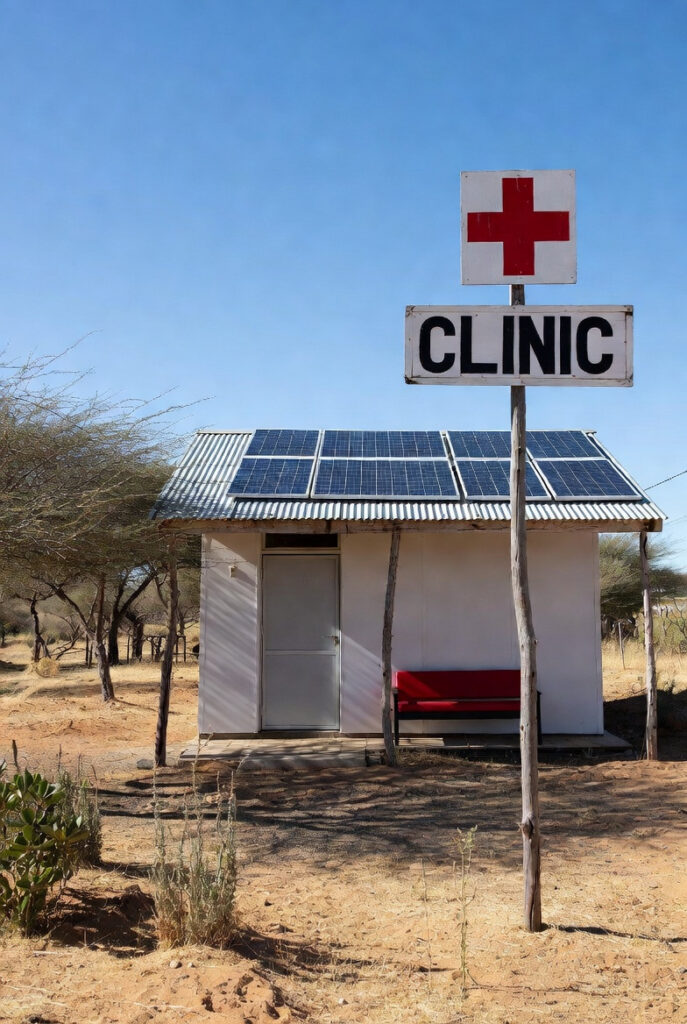
Solar power for medical clinics is a different engineering problem from any other off-grid application. I was asked to review the power system design for a remote clinic north of Sudbury that was serving a fly-in community. The clinic had a standard residential chest freezer modified for vaccine storage running on a 3kWh battery bank with a 400W solar array. The system had been sized for the summer load. In January the battery bank was regularly dropping to 15 to 20% state of charge overnight. The clinic staff were manually monitoring vaccine temperatures every two hours through the night shift. The vaccines in storage represented approximately $45,000 in replacement value. The power system protecting that $45,000 cold chain had cost $1,800 to build. The correct system for that applicationa WHO-qualified solar direct drive refrigerator with ice-bank technology, a properly sized winter array, and a cellular temperature alarm would have cost $6,000 to $8,000. The cost of a single cold chain failure from a power event would have exceeded $45,000. The $6,000 system was not the expensive option. For the cold climate solar production standard that explains why the system failed in January while performing adequately in summer, the cold climate guide covers the Ontario winter derate factors.
Why Solar Power for Medical Clinics Requires Triple Redundancy, Not Single Backup
The three redundancy layers for a medical facility are the primary solar-plus-storage system, the WHO SDD refrigerator ice bank as passive cold chain backup, and a portable backup power station as a third layer for critical loads during system maintenance. A diesel generator fails when the fuel runs out or when it cannot be started in cold weather. A battery bank fails when it is deeply discharged in January. The WHO SDD ice bank is passive thermal redundancy that does not depend on any electrical system to maintain cold chain temperature for 35 to 72 hours. The EcoFlow DELTA Pro 3 provides a portable 4,096Wh third layer with expandability to 48kWh for emergency power for vaccine refrigeration and oxygen concentrators during planned system maintenance or unexpected inverter failure. For the system sizing hub that determines the primary solar-plus-storage specification, the hub covers the load calculation foundation.
Solar Power for Medical Clinics: The Cold Chain, Oxygen and Load Shedding Standard
A WHO-qualified solar direct drive refrigerator runs its compressor directly from the solar array during daylight hours. No battery in the cold chain circuit means fewer points of failure. The ice bank freezes during production hours and provides 35 to 72 hours of holdover cooling with no power input. This maintains vaccine temperatures between 2°C and 8°C, or minus 15°C to minus 25°C for frozen vaccines and certain biologics. Every door opening during the holdover period reduces the autonomy window by approximately 30 to 45 minutes. Clinical staff training on door discipline is as important as the equipment specification. A cellular temperature logger at $50 to $150 with SMS alert capability is mandatory alongside the SDD unit.
Critical Circuit Isolation: Load Shedding Before the Battery Reaches 40% SoC
The tiered load shedding standard for a medical facility ensures that critical circuits remain powered when non-essential loads are shed. The transfer switch architecture enables the automatic load shedding sequence. The sub-panel wiring separates critical from non-critical circuits at the panel level.
| Tier | Loads | SoC Threshold |
|---|---|---|
| 1 | Vaccine cold chain, oxygen concentrators, emergency lighting, communications | Always on |
| 2 | Administrative computers, non-patient area heating, kitchen appliances | Shed at 40% SoC |
| 3 | Air conditioning, non-essential lighting, charging stations | Shed at 30% SoC |
The bottom 30% of battery capacity is reserved exclusively for cold chain and life-support loads and is never drawn down during normal operation. The residential ATS standard triggers at 20 to 25% SoC that is too late for a medical facility and stresses the battery bank. A programmable relay or microgrid controller with configurable SoC thresholds is required to implement this standard correctly.
The Oxygen Concentrator Standard: Pure Sine Wave and High Surge Rating
I learned the hard way what dirty power does to a medical-grade oxygen concentrator. A clinic in a remote Ontario community had installed a 2,000W modified sine wave inverter to power a 5LPM oxygen concentrator during outages. The concentrator ran for approximately three weeks before the internal compressor motor began producing an audible harmonic vibration. The service technician confirmed that the motor windings were showing early signs of heat damage consistent with sustained harmonic distortion from a non-pure-sine-wave power source. The concentrator was under warranty but continued operation on modified sine wave power would void the warranty and could result in motor failure within six months. The replacement inverter was a 3,000W pure sine wave unit with a 9,000W surge rating. The concentrator has run without issue since.
A medical oxygen concentrator is a precision inductive motor that requires clean power. A 5LPM unit draws approximately 150 to 300W running and 600 to 900W on startup surge. A 10LPM unit draws 300 to 500W running and 1,200 to 1,800W on startup. The Victron MultiPlus-II pure sine wave inverter-charger meets the clean power requirement for medical-grade inductive loads. Size the inverter for the combined surge of all concentrators that may start simultaneously, not just the running wattage. For the full inductive load surge sizing standard that covers the low-frequency inverter requirement for motor loads, the workshop solar guide covers the mechanism.
Remote Temperature Telemetry: The Solar Power for Medical Clinics Monitoring Standard
The WHO and UNICEF Expanded Programme on Immunisation requires electronic temperature monitoring with alarm capability for all vaccine storage equipment at the facility level. The cellular logger specification includes continuous logging at 5-minute intervals, configurable alert thresholds at 2°C and 8°C, and SMS or push notification to clinical staff phones within 60 seconds of a threshold breach. In a fly-in community without cellular coverage, a Starlink-connected temperature monitoring system provides the same alert capability over satellite data connection. For the DC-native Starlink power standard that keeps the monitoring system live during power events, the Starlink guide covers the POE bypass that eliminates inverter overhead from the communications circuit. The cost calculation is clear: a $150 cellular logger catches a cold chain breach in 60 seconds. A missed breach on a $45,000 vaccine shipment takes three weeks to replace. The math is not close.
NEC and CEC: What the Codes Say About Solar Power for Medical Clinics
NEC 517 covers health care facilities and establishes the essential electrical system requirements for hospitals and clinics. NEC 517.25 requires that battery systems serving life-safety and critical branches in health care facilities provide power for a minimum of 90 minutes under full load. NEC 517.30 covers the essential electrical system for hospitals and requires that the system include a life-safety branch, a critical branch, and an equipment branch, each with defined load categories and automatic transfer capability. For a remote clinic not classified as a hospital under NEC 517, the system designer should apply the NEC 517 principles as the engineering standard even if not legally required. NEC 700 covers emergency systems and applies to any facility providing emergency medical services.
In Ontario, medical clinics and health care facilities are subject to the Ontario Building Code and the Health Protection and Promotion Act in addition to the CEC. The CEC requires that health care facilities have an emergency power system capable of maintaining life-safety systems during a utility power failure. CEC Section 46 covers emergency systems and requires that the transfer to emergency power occur within 10 seconds of utility failure for life-safety loads. An off-grid solar-plus-storage system serving a remote clinic must be designed to meet CEC Section 46 transfer time requirements for the life-safety branch. The system design must be stamped by a licensed professional engineer in Ontario and submitted to the local authority having jurisdiction for approval before commissioning.
Pro Tip: Test the load shedding sequence before the first patient arrives. Drop the battery bank to 38% SoC on a planned test day and verify that the automatic transfer shed the Tier 2 loads without touching the cold chain or oxygen circuits. If the sequence fails on a test day, you find out. If it fails on a January night with a patient on oxygen, you do not get a second chance.
The Verdict
Solar power for medical clinics built to the life-support standard keeps the cold chain intact, the oxygen flowing, and the clinical staff focused on patients rather than power systems.
- Specify a WHO pre-qualified Solar Direct Drive refrigerator with ice-bank technology for all vaccine and medication cold chain storage. The ice bank provides 35 to 72 hours of passive cold chain protection that no battery bank can match.
- Set the load shedding threshold at 40% SoC for non-essential loads and reserve the bottom 30% of battery capacity exclusively for cold chain and oxygen concentrator circuits. Never let the critical branch share the bottom third of the bank with non-essential loads.
- Install a cellular or satellite-connected temperature logger on every medical refrigerator with SMS alert capability. A 60-second notification is the difference between a saved shipment and a three-week supply interruption.
In the shop, we do not compromise on brake fluid. In the clinic, we do not compromise on the power running the cold chain.
This post contains affiliate links. If you purchase through our links, we may earn a small commission at no extra cost to you.