
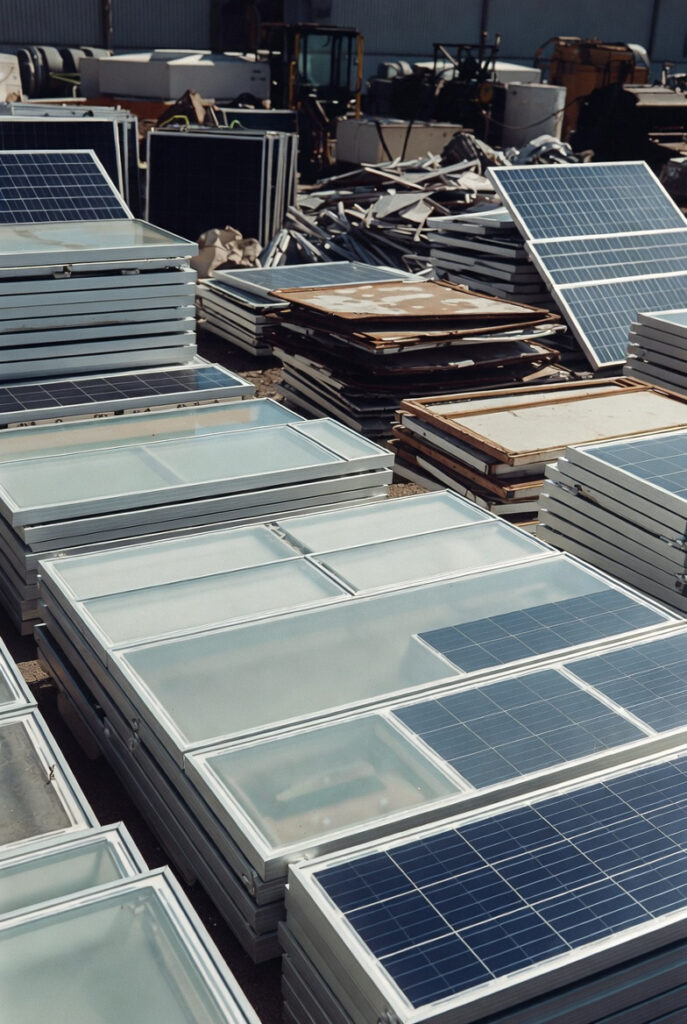
Sure, solar is clean while it runs but what happens when those panels wear out? Aren’t you just trading one waste problem for another? It is a fair question. Here is the honest answer: solar panel recycling is more developed than most people realize and the materials in your panels are genuinely valuable.
Think of it like a core charge on a car battery. When you return the old battery the store gives you money back because the lead inside is worth recovering. Solar panels work the same way the materials inside are not garbage. They are raw materials for the next generation of infrastructure.
Solar Panel Recycling: What’s Actually Inside a Panel
Before understanding recycling it helps to understand what you are recycling. A standard silicon solar panel breaks down approximately as:
- Glass: ~75% by weight – tempered solar glass, highly recoverable
- Aluminum frame: ~10% by weight – high-value aluminum alloy, infinitely recyclable
- Silicon cells: ~5% by weight – semiconductor-grade silicon, recoverable
- Copper wiring: ~3% by weight – high-purity copper, valuable commodity
- Silver: ~0.1% by weight – the most financially valuable component per gram
- Plastics and encapsulant: ~7% by weight – the most challenging component
The silver recovery reality information most recycling guides miss: Each solar panel contains approximately 0.1–0.2 grams of silver used in the cell contacts. That sounds tiny but across millions of panels it represents a significant silver resource. Specialized recyclers use mechanical processes not chemical baths to extract high-purity silver from panel cells. The silver recovery alone often makes the recycling process financially self-sustaining.
The 90%+ recyclability claim in context: The glass, aluminum, copper, and silicon represent approximately 93% of panel weight. All four are well-established recycling commodities with existing industrial infrastructure. The remaining ~7% plastics and encapsulant materials are the genuine challenge most current processes either landfill or thermally treat these components.
Ontario’s 2026 Recycling Laws: What Homeowners Need to Know
Ontario’s regulatory landscape for solar panel end-of-life changed significantly as of January 1, 2026.
The Extended Producer Responsibility (EPR) framework: Ontario’s updated EPR regulations now require solar panel manufacturers and importers to fund and manage end-of-life collection and recycling for the panels they sell. This shifts the recycling cost burden from homeowners to producers the companies that profit from selling panels are now responsible for their end-of-life management.
What this means practically for Ontario homeowners:
- You should not pay significant fees to recycle end-of-life panels
- Manufacturers must provide accessible collection points or take-back programs
- Contact your panel manufacturer directly for their take-back program details
What solar panels are NOT: Solar panels do not go in the blue box. Ontario’s Blue Box program was fully overhauled in 2023 -2026 and solar panels are classified as electronics and e-waste not blue box material. They must go to a designated e-waste depot or manufacturer take-back program.
The landfill reality: Dumping solar panels in a landfill is becoming increasingly illegal in Ontario as e-waste regulations tighten. The materials inside particularly lead solder in older panels and various semiconductor compounds are classified as hazardous when landfilled. Do not treat end-of-life panels as regular garbage.
For current Ontario collection locations see the Resource Productivity and Recovery Authority they maintain the most current e-waste depot directory.
The Second Life Market
A panel that has degraded to 70–75% of its rated output is not useful for a home system sized for 100% output. It is perfectly useful for dozens of other applications:
- Ice fishing huts a 140W panel from a “dead” 200W panel more than covers lighting and a small heater
- Remote gate openers and security cameras minimal power draw, degraded panels work perfectly
- Seasonal cabins with modest power needs
- Off-grid signage and lighting
- Agricultural applications water pumps, electric fencing, remote monitoring
The second life market in practice: Used solar panels sell for $20 – 80 CAD on Kijiji and Facebook Marketplace regularly. A 30-year-old panel producing 150W is genuinely useful equipment for someone building their first small system on a budget. The panel is not waste it is a lower-tier product with a new customer.
Before listing or buying used panels: Test output with a multimeter or clamp meter. Inspect glass for cracks or delamination. Check the junction box for moisture ingress. A panel that passes basic inspection is worth selling or buying. A panel with cracked glass or severe delamination is end-of-life and should go to recycling.
The Recycling Roadmap: Three Steps
If your panels are damaged by a storm or reach genuine end-of-life:
- Contact the manufacturer first Under Ontario’s EPR framework manufacturers are responsible for take-back. Call or email your panel manufacturer and ask about their take-back program. Keep your original purchase documentation it helps verify eligibility.
- Check the RPRA depot directory If manufacturer take-back is not available the RPRA maintains a current directory of e-waste collection depots across Ontario. Many municipalities also accept solar panels at household hazardous waste events.
- Consider the second life market first Before recycling assess whether the panel still has useful output. A panel at 70%+ output is not recycling material it is a second-hand product with real value. Test it. List it. Let someone else get years of useful production from it before it reaches true end-of-life.
Pro Tip: If you need to transport damaged or end-of-life panels to a depot handle them carefully. Cracked solar glass is sharp and the cells contain trace amounts of semiconductor compounds. Use heavy work gloves and wrap cracked panels in a tarp or cardboard before loading. A panel that has shattered from hail or impact should be treated like broken safety glass it will not shatter explosively but the edges are hazardous.
The Verdict
Solar panel recycling is not a solved problem the plastics and encapsulant materials remain genuinely challenging. But it is a much better situation than most skeptics assume. The glass, aluminum, copper, and silver represent 90%+ of panel weight and all are recoverable commodities with existing industrial infrastructure.
Ontario’s 2026 EPR regulations shift the financial burden to manufacturers. The second life market gives degraded panels years of additional useful service. And when true end-of-life arrives the RPRA depot network provides a legitimate disposal pathway that keeps hazardous materials out of landfill.
Your old solar array is not a waste problem waiting to happen. It is a mineral deposit with a recycling pathway and real residual value.
Disclosure: This article contains affiliate links. If you buy through them, GridFree Guide earns a small commission at no extra cost to you.