
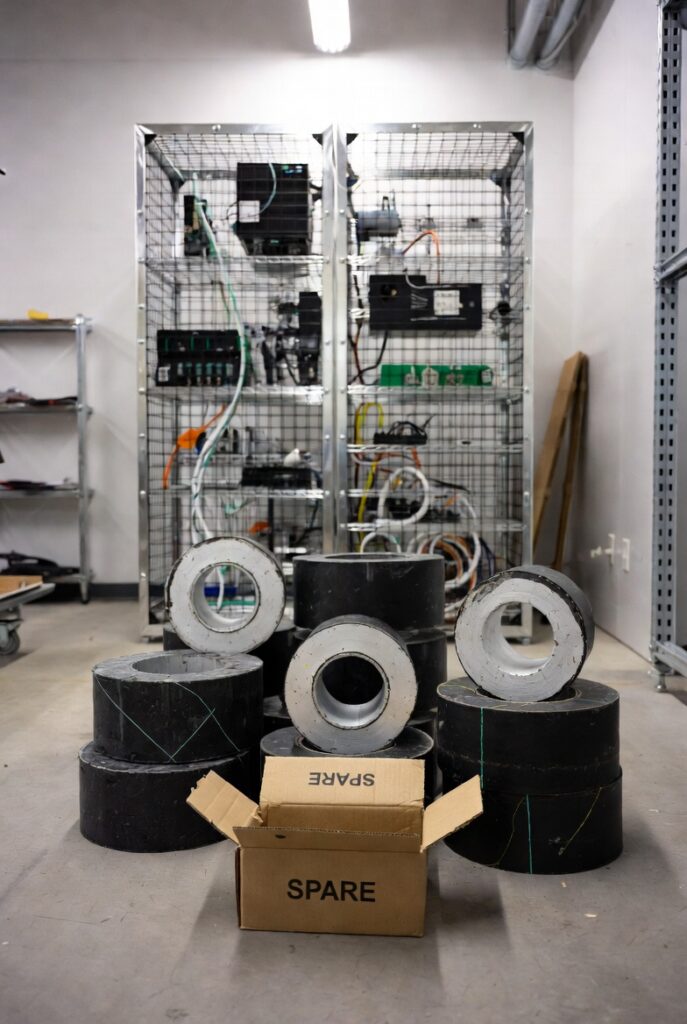
Solar emp protection is not about building a bunker or wrapping everything in aluminum foil. It is about understanding that your $15,000 investment has a vulnerability measured in nanoseconds that standard surge protectors cannot address. I helped a property owner near Huntsville in Muskoka District, Ontario rebuild his system after a severe lightning storm in summer 2025. His surge protectors had tripped correctly. His grounding system was properly installed. However, his MPPT charge controller and inverter control board were both destroyed.
I examined the damage with him. His Victron MPPT 150/100 showed no external damage but would not power on. His MultiPlus-II inverter powered on but displayed communication errors and would not sync. The control board had suffered damage to the MOSFET driver circuits. His standard surge protectors had a response time of 25 nanoseconds. The initial transient spike lasted less than 5 nanoseconds. By the time the SPDs clamped, the pulse had already passed through. His replacement costs totalled $2,400 for the MPPT and $890 for the inverter control board. The total loss was $3,290 from a single event his surge protection was too slow to catch.
I helped him rebuild with proper solar emp protection. We installed a dedicated EMP shield device at the combiner box with sub-nanosecond response time. We added ferrite cores to every cable entering the equipment enclosure. We replaced his 60-foot PVC conduit run with rigid metal conduit that acts as a continuous shield. The upgrade cost $680 in materials. His system now has layered protection against both lightning and faster transients. The $680 investment protects the $15,000 system. For the equipment grounding that completes the protection circuit, The Off-Grid Grounding Standard covers the full specification.
Why Solar EMP Protection Requires Nanosecond Response Time
Solar emp protection requires nanosecond response because the most damaging pulse phase strikes faster than standard devices can react. Standard SPDs use metal oxide varistors with response times of 25 to 50 nanoseconds. The E1 phase of an EMP event peaks and decays within 5 to 10 nanoseconds. The voltage spike passes through before the SPD clamps.
The Huntsville owner’s $3,290 loss demonstrates this timing gap perfectly. His protection was correctly installed and functioning. The transient was simply faster than his devices could respond. His SPDs did their job on the slower portion of the event.
Solar emp protection addresses this gap with sub-nanosecond TVS devices that shunt voltage before standard SPDs even begin to react. The faster devices handle the leading edge. The standard SPDs handle the trailing energy. Together they provide complete coverage across the timing spectrum.
The Three Phases of EMP: Understanding E1, E2, and E3
A high-altitude electromagnetic pulse has three distinct phases with different characteristics and different protection requirements. E1 is the nanosecond kill shot. It strikes within 5 to 10 nanoseconds and destroys semiconductor junctions in logic boards and MOSFET drivers. The fast rise time overwhelms standard protection.
E2 is similar to lightning in timing and characteristics. It lasts microseconds to milliseconds. Standard SPDs handle E2 effectively because the timing matches their response capability. Most surge protection is designed for this phase.
E3 is the slow ground current that affects infrastructure. It lasts seconds to minutes and damages long transmission lines and transformers. Off-grid systems are largely immune to E3 because they have no grid connection. Understanding these phases helps prioritize protection investments toward E1, which standard equipment cannot handle.
The Nanosecond Kill Shot: Why Standard SPDs Fail
Standard surge protectors fail against E1 because of physics, not quality. Metal oxide varistors require 25 to 50 nanoseconds to begin clamping voltage. The E1 pulse peaks in 5 nanoseconds and decays within 10 nanoseconds. The damaging energy passes through before clamping begins.
Specialized TVS diodes and EMP shield devices respond in under 1 nanosecond. They shunt the voltage spike to ground before it reaches sensitive electronics. The speed difference is not incremental. It is the difference between protection and destruction.
The Huntsville owner’s 25-nanosecond SPDs did exactly what they were designed to do. They clamped the slower E2-equivalent portion of the transient. They could not catch the leading edge that destroyed his equipment. A Victron SmartShunt helps track system health and confirms protection is functioning after events.
Ferrite Cores: The High-Frequency Filter Layer
Ferrite cores act as low-pass filters that choke high-frequency energy before it reaches equipment. The ferrite material absorbs electromagnetic energy above certain frequencies and converts it to heat. Snapping ferrite cores onto DC and AC cables creates a passive filter layer that requires no power and has no response time limitation.
The filtering happens at the speed of electromagnetic propagation. High-quality ferrite cores like FT-240-31 toroids handle the frequencies associated with EMP transients. They work passively without any electronics that could themselves be damaged.
Installing ferrite cores costs $40 to $80 for a complete system. They add protection without replacing existing surge devices. The Huntsville rebuild included ferrite cores on every cable entering the equipment enclosure. The passive nature means they work regardless of power state or device condition.
Shielded Conduit: Metal vs PVC for Wire Runs
Wire runs act as antennas that collect electromagnetic energy during transient events. A 100-foot wire run can collect thousands of volts of induced potential. PVC conduit provides zero shielding against this induction. The wire inside remains fully exposed to electromagnetic fields.
Rigid metal conduit creates a continuous shield around the wire run. The metal absorbs and grounds induced currents before they reach the wire inside. EMT or rigid steel conduit costs 2 to 3 times more than PVC but provides genuine protection.
The Huntsville rebuild replaced 60 feet of PVC with rigid metal conduit at approximately $180 in materials. The shielding prevents antenna collection along the entire run. Metal conduit is standard practice in environments where electromagnetic interference is a concern.
The Faraday Spares Strategy: Recovery Capability
I visited a property owner near Gravenhurst in Muskoka District, Ontario in fall 2025 who had taken solar emp protection seriously from the start. He showed me his equipment shed where his main system operated. Then he showed me his “insurance policy” in the corner. A galvanized steel trash can with a tight-fitting lid sat on a rubber mat. Copper tape sealed every seam where the lid met the body. Inside, wrapped in anti-static bags, sat a spare MPPT charge controller and a small 2kW inverter.
He explained his reasoning clearly. His main system cost $18,000 to build. A catastrophic event that destroyed his electronics would leave him without power for weeks while ordering replacements. Rural Ontario delivery times can stretch to 10 to 14 days for specialty equipment. His spare Victron MPPT 100/50 cost $380 and his backup inverter cost $420. For $800 in equipment plus $45 for the galvanized can and copper tape, he has a backup system that can restore basic power within hours of any event. The spares rotate into service every 2 years so they remain tested and functional.
His solar emp protection strategy taught me something important about resilience thinking. The goal is not just surviving the event but recovering quickly afterward. His main system has all the frontline protection including EMP shields, ferrite cores, and metal conduit. His spare equipment provides the fallback if frontline protection fails. The $845 total investment in spares and Faraday storage represents less than 5% of his system cost. It buys recovery capability that no amount of frontline protection can guarantee. For the expandable system design that accommodates backup equipment, The Expandable Solar System Standard covers the architecture.
Grounding Geometry: Short Straight Leads to Earth
EMP protection is only as good as the path to ground. Voltage spikes need a low-impedance route to earth. Long ground wires with bends and loops create inductance that resists fast transients. The pulse can jump off the wire and into equipment instead of following the ground path.
Short straight leads minimize inductance and maximize transient flow to earth. The ground wire from EMP protection devices to the grounding electrode should be under 10 feet with no 90-degree bends. Gradual curves are acceptable if sharp corners cannot be avoided.
The grounding electrode connection must be clean and tight. Corrosion or loose connections create resistance that impedes transient flow. For the grounding electrode system that anchors all protection, The Inverter Grounding Standard covers the bonding requirements.
The Solar EMP Protection Layers: From Frontline to Fallback
The solar emp protection strategy uses four layers working together for defense in depth. Layer one is the sub-nanosecond EMP shield at the combiner box. This device handles the fastest transients that standard SPDs cannot catch. Layer two is ferrite cores on all cables entering the equipment enclosure. These passive filters choke high-frequency energy without power or response time limitations.
Layer three is metal conduit that shields wire runs from antenna collection. The continuous metal sheath prevents induced voltage from reaching the conductors inside. Layer four is Faraday-stored spares that provide recovery capability if all frontline protection fails.
Each layer addresses a different vulnerability in the system. Together they create defense in depth that no single measure can provide. No single layer provides complete protection. The combination provides practical resilience for reasonable investment.
Planning Your Solar EMP Protection: Investment vs Risk
Planning your solar emp protection starts with honest risk assessment. The probability of a significant EMP event is low but consequences are high. A property owner with a $15,000 system faces potential total loss of electronics including charge controller, inverter, and monitoring equipment.
Minimum protection with ferrite cores and proper grounding costs $200 to $400. Full protection with EMP shield, ferrite cores, metal conduit, and Faraday spares costs $1,200 to $2,000. The investment scales with risk tolerance and system value.
The Huntsville owner’s $3,290 loss exceeded the cost of full protection he could have installed beforehand. The Gravenhurst owner’s $845 in spares provides recovery insurance regardless of event type. Your solar emp protection investment depends on your risk tolerance and recovery time requirements. For Canadian emergency preparedness context, reference Natural Resources Canada.
Minimum Viable vs Full Standard: Choosing Your Protection Level
The solar emp protection approach offers two levels depending on budget and risk tolerance. The minimum viable level provides filtering and recovery without specialized devices. The full standard provides layered defense against all transient types.
| Protection Level | Key Components | Cost | Coverage |
|---|---|---|---|
| Minimum Viable | Ferrite cores + grounding + spare MPPT | $200-$400 | High-frequency filtering + recovery |
| Full Standard | EMP shield + ferrites + metal conduit + Faraday spares | $1,200-$2,000 | Layered defense + rapid recovery |
The minimum viable solar emp protection includes ferrite cores on all cables, proper grounding with short straight leads, and Faraday-stored spare charge controller. It costs $200 to $400. It provides high-frequency filtering and recovery capability without specialized devices or conduit replacement.
The full solar emp protection standard includes dedicated EMP shield at combiner box, ferrite cores on all cables, rigid metal conduit replacing PVC runs, proper grounding geometry, and Faraday-stored spare MPPT and inverter. It costs $1,200 to $2,000. It provides layered defense against all transient types and rapid recovery capability. Both approaches improve resilience over unprotected systems. The difference is response speed and recovery capability. For the budget system that needs affordable protection, The Budget Off-Grid System Standard covers cost-effective builds.
Frequently Asked Questions
Q: Does solar emp protection really matter for off-grid systems?
A: Solar emp protection matters because off-grid systems have no grid connection to restore power after equipment failure. A grid-connected home loses power during an EMP event but regains it when the grid recovers. An off-grid property with destroyed electronics has no power until replacement equipment arrives. Rural Ontario delivery times of 10 to 14 days mean weeks without power. The $200 to $2,000 investment in solar emp protection protects a $10,000 to $30,000 system investment.
Q: Can ferrite cores provide adequate solar emp protection alone?
A: Ferrite cores provide one layer of solar emp protection but not complete coverage. They filter high-frequency transients effectively but cannot stop the initial voltage spike that destroys semiconductors. Ferrite cores work best as part of a layered system including sub-nanosecond devices at entry points and Faraday-stored spares for recovery. The $40 to $80 investment in ferrite cores is worthwhile as part of comprehensive protection but insufficient as the only measure.
Q: Will a metal trash can really work for solar emp protection storage?
A: A galvanized steel trash can with proper sealing provides effective Faraday protection for stored electronics. The metal body blocks electromagnetic fields. Copper tape sealing all seams where the lid meets body prevents field penetration through gaps. The can should sit on a rubber mat to isolate it from ground. Equipment inside should be wrapped in anti-static bags. The Gravenhurst owner’s $45 investment in can and tape provides genuine Faraday storage for his $800 in spare equipment. Solar emp protection storage does not require expensive commercial enclosures.
Pro Tip: Your solar emp protection is only as strong as its weakest layer. The EMP shield at the combiner box handles sub-nanosecond threats. The ferrite cores filter high-frequency transients. The metal conduit prevents antenna collection. The Faraday spares provide recovery if everything else fails. Each layer addresses a different vulnerability. Skipping one layer leaves a gap that other layers cannot cover. The Huntsville owner had good surge protection but no nanosecond-speed devices. His solar emp protection had a timing gap that cost him $3,290. Install all four layers and test the system annually.
Verdict
- The Huntsville Solar EMP Protection Standard. The property owner’s $3,290 loss from destroyed MPPT and inverter control board occurred because his 25-nanosecond SPDs could not catch a 5-nanosecond transient. His rebuild with sub-nanosecond devices, ferrite cores, and metal conduit cost $680. The $680 investment now protects his $15,000 system from fast transients that standard protection cannot address.
- The Gravenhurst Faraday Spares Standard. The property owner’s $845 investment in spare MPPT, backup inverter, and galvanized Faraday storage provides recovery capability within hours of any event. His main system cost $18,000. Rural Ontario delivery times of 10 to 14 days make spare equipment essential for resilience. The spares rotate into service every 2 years to remain tested and functional.
- The Four-Layer Defense Standard. Sub-nanosecond EMP shield, ferrite cores, metal conduit, and Faraday spares each address different vulnerabilities. No single layer provides complete protection. The combination costs $1,200 to $2,000 for full standard or $200 to $400 for minimum viable. Both approaches improve resilience over unprotected systems.
This build is engineered within the 48V DC Safety Ceiling. Diagnostic logic is based on 20+ years of technical service experience. All structural and electrical installations must be verified by a Licensed Professional and comply with your Local AHJ.
This article contains affiliate links. If you purchase through these links, I earn a small commission at no extra cost to you.
Questions? Drop them below.