
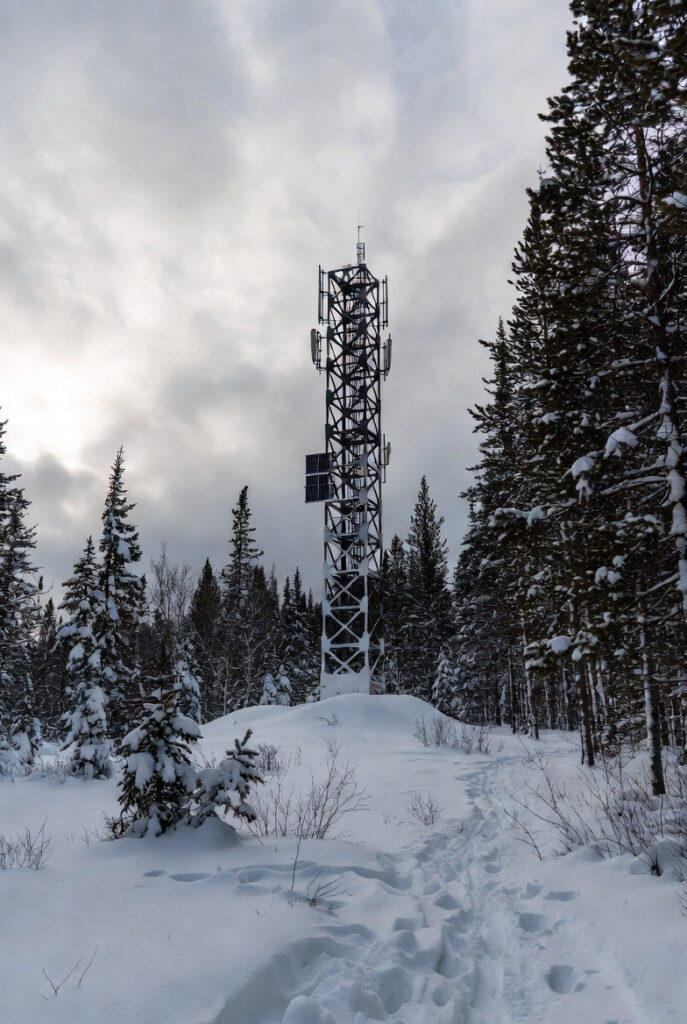
Remote telecom solar failures in northern Ontario January are not gradual. They are a single phone call from a forestry camp supervisor at 2 AM telling you the repeater has been dark for 6 hours and the crew cannot reach the evacuation coordinator. I was asked to review the power system at a 900MHz repeater and cellular gateway installation on a Canadian Shield ridgeline 34 kilometres northeast of Hearst in Cochrane District, Ontario that a regional forestry contractor was using as the primary communication link for a 12-person winter harvesting camp. The tower ran a 400W solar array on two fixed aluminium racks at 30-degree tilt on the south face of the tower structure, a bank of four 6V flooded deep cycle marine batteries wired in a 24V 400Ah series-parallel configuration, and a Morningstar TriStar PWM charge controller. The system had been installed in September and performed adequately through October and November.
On January 14 the overnight low at the Hearst Environment Canada station was minus 37°C. By 6 AM the forestry camp supervisor reported no cellular signal and no 900MHz radio contact with the tower. The site caretaker reached the tower by snowmobile at 11:40 AM. The battery enclosure surface temperature measured minus 29°C with an infrared thermometer. At minus 29°C the sulphuric acid electrolyte in the flooded deep cycle cells had reached its freezing point threshold and stopped producing usable voltage. The PWM controller showed a battery voltage of 14.3V with zero load, a false surface voltage from the partial freeze rather than true SoC. The repeater went dark at approximately 3 AM when the available capacity dropped below the repeater’s minimum operating voltage threshold. The helicopter service call to transport a licensed technician from Timmins cost $2,640. The replacement batteries cost $880. The forestry camp was without primary communication for 17 hours and 40 minutes.
I redesigned the power system replacing the flooded deep cycle bank with a 200Ah 24V self-heating LFP bank housed in a sealed stainless steel enclosure with a 50W silicone heating pad on the floor. The self-heating LFP cells have an integrated PCB heating element that draws 15W from the battery to warm the cell electrodes to 5°C before the charge controller temperature sensor permits charging. Vertical bifacial panels replaced the 30-degree tilted array, eliminating snow accumulation and capturing reflected albedo from the snow-covered Shield rock below. In two full winters since the redesign including a January cold snap that reached minus 38°C at the Hearst station the tower has not required a single unscheduled service visit. The LFP bank has never triggered the low-voltage alarm. The redesign hardware cost $3,840 and eliminated the annual helicopter service call cost of $2,640. For the radio repeater solar tower architecture and grounding standard that covers the same tower-mounted power system principle for active SAR communications, Article 223 covers the full specification. For the full system sizing hub that covers the load calculation foundation, the hub covers the numbers.
Why a Remote Telecom Solar Tower Goes Dark at Minus 35°C
A flooded deep cycle marine battery at minus 29°C reaches the sulphuric acid electrolyte freezing threshold and stops producing usable voltage. A PWM charge controller reads the surface voltage of a partially frozen flooded battery as 14.3V, a false reading that masks the true zero usable capacity. As a result the charge controller reports normal operation while the repeater draws down the last available ampere-hours and goes dark with no alarm until the communication link fails. A self-heating LFP bank prevents this failure mode entirely because the integrated PCB heating element warms the cell core to 5°C before the charge gate opens regardless of ambient temperature.
The Victron SmartShunt provides 99.9% accurate coulomb-counting SoC to the Cerbo GX dashboard rather than relying on the voltage-based false reading that a frozen flooded battery produces. For the fire tower solar Arctic-pack LFP self-heating standard that covers the same below-zero charge inhibit and self-heating protocol for unmanned boreal installations, Article 228 covers the full specification.
| Battery Type | Minimum Operating Temperature | False Voltage Risk |
|---|---|---|
| Flooded deep cycle marine | Freezes at minus 27°C to minus 32°C | High – PWM reads 14.3V false surface voltage while cells produce zero usable capacity |
| Standard LFP unheated | Charge lockout below 0°C | Low – accurate BMS reporting but zero charge acceptance overnight |
| Self-heating LFP | Full operation to minus 40°C | None – integrated heater warms cells to 5°C before charge gate opens |
The Vertical Bifacial Array and Snow Albedo Production
A standard 30-degree tilted monofacial panel at a northern Ontario remote tower site accumulates snow after each snowfall event and can lose 3 to 7 consecutive production days per accumulation. However, a vertical bifacial panel mounted flush to the tower face at 70 to 90 degrees sheds all snowfall within minutes because the vertical surface angle prevents snow adhesion entirely. In addition the rear bifacial cell surface captures upward-reflected irradiance from the snow-covered ground below, where Canadian Shield snow albedo runs 0.60 to 0.85 depending on snow age. As a result a vertical bifacial panel in a northern Ontario winter produces 30 to 45% more energy than a standard 30-degree tilted monofacial installation at the same nominal wattage because it eliminates both snow accumulation losses and recovers the albedo gain simultaneously.
For the weather station solar vertical cylindrical module and albedo harvest standard that covers the same zero-accumulation mounting and albedo capture principle for exposed ridge installations, Article 222 covers the full specification.
The Self-Heating LFP Bank and Freeze Prevention
Standard LFP cells suspend charging below 0°C to prevent lithium plating on the graphite anode. At minus 35°C an unheated LFP bank has been in charge lockout for the entire overnight period. As a result the LFP bank cannot accept the first morning solar production window and the daily energy deficit accumulates until the bank reaches minimum operating voltage. However, a Battle Born heated LFP module draws 15W from the battery to warm the cell electrodes from the ambient overnight minimum to 5°C within 8 to 15 minutes of the first morning solar input.
The energy cost of the self-heating cycle is 2 to 4Wh per event at minus 20°C and 6 to 10Wh at minus 35°C, representing less than 1% of the annual bank throughput. As a result the self-heating LFP bank captures every available solar production window regardless of overnight ambient temperature. For the helipad solar lighting Arctic-pack LFP cold-start standard that covers the same self-heating protocol for unmanned remote installations in northern Ontario, Article 230 covers the full specification.
The Cerbo GX Remote Monitoring and Pre-Depletion Alert
Remote telecom solar monitoring failures are not dramatic. They are a slow drift on the VRM dashboard that crosses a threshold at 3 AM in February and nobody notices until the tower has been dark for 4 hours. I was reviewing the VRM portal data for a remote cellular gateway installation on a limestone ridge 28 kilometres south of Kapuskasing in Cochrane District, Ontario that a regional wireless internet service provider was operating as a fixed broadband backhaul node for three remote communities. The gateway drew 22W continuous for the radio and 8W for the router, totalling 720Wh per day.
On February 8 at 11:22 PM the VRM portal generated an automatic alert to my phone: battery SoC had crossed below 25% and the discharge rate was 2.1A continuous with zero solar input. I reviewed the historical production data on the VRM portal from my desk in Rockwood. The array had produced zero output for 6 consecutive days. A 6-day zero-production period in February at a site producing 300W on a 7-hour winter day indicated either panel shading or physical obstruction. I contacted the nearest community member 12 kilometres from the site who drove to the tower the next morning and found that a spruce tree had split and fallen across the panel face, shading the entire array completely.
The tree was cleared in 40 minutes with a chainsaw. The array resumed full production at 9:14 AM on February 9 and the battery recovered to 78% SoC by 2 PM. The gateway had not gone dark. The VRM alert had caught the slow depletion event with 18 hours of reserve remaining before the gateway reached its minimum operating voltage. Without the VRM alert the site would have gone dark on February 10 and the helicopter service call to identify the obstruction would have required the same transport from Timmins at $2,640. The Victron Cerbo GX monitoring infrastructure including the GX LTE modem and 12 months of M2M IoT SIM data costs approximately $680, less than 26% of a single helicopter service call. For the flood monitoring solar Victron VRM remote monitoring standard that covers the same remote pre-depletion alert principle for critical infrastructure sites, Article 229 covers the full specification.
The Remote Telecom Solar System: Minimum Viable vs Full Outpost Standard
The decision follows whether the site has road or snowmobile access for annual service, whether the site is in a minus 35°C cold zone, and whether 6-month autonomous operation is required.
The minimum viable remote telecom solar system for a single 900MHz repeater or cellular gateway at a northern Ontario Shield site with annual service access includes a 200W vertical bifacial panel, a 100Ah 24V self-heating LFP bank, a Victron MPPT 100/30 charge controller, and a Victron SmartShunt for local SoC monitoring. Capital cost runs $2,400 to $3,600. It provides continuous repeater operation through a full northern Ontario winter without battery freeze or snow accumulation production loss.
The full outpost standard for an unmanned 6-month autonomy installation with remote monitoring and pre-depletion alerting includes a 400W vertical bifacial array, a 200Ah 24V self-heating LFP bank, Victron MPPT 100/30, Cerbo GX with GX LTE 4G modem and VRM portal monitoring, Victron SmartShunt, and stainless steel heated enclosure. Capital cost runs $4,800 to $6,800. It provides zero unscheduled service visits through a full northern Ontario winter with automatic pre-depletion alerts before the site goes dark.
NEC and CEC: What the Codes Say About Remote Telecom Solar
NEC 690 governs the PV source circuits of any remote telecom solar installation. The vertical bifacial array, MPPT charge controller, and LFP battery bank are subject to NEC 690 overcurrent protection and disconnecting means requirements. The remote communication tower structure is subject to NEC 810 for antenna and tower grounding requirements. The battery enclosure heating system is a load circuit subject to NEC 310 conductor temperature rating requirements at the enclosure ambient temperature. Contact the NFPA for current NEC 690 and NEC 810 requirements applicable to remote solar-powered communication tower installations in Ontario and across North America.
In Canada, remote communication tower solar installations are subject to CEC Section 64 for the PV source circuits. The IEEE 1562 Guide for Array and Battery Sizing in Stand-Alone PV Systems provides the industry-standard methodology for sizing the vertical bifacial array and self-heating LFP bank for the specific site latitude, winter insolation, and autonomy requirement. Tower-mounted hardware must comply with local wind load ratings established by the structural engineer of record for the tower structure. Contact Innovation, Science and Economic Development Canada for the current radio tower licensing and ISED technical standards applicable to 900MHz repeater and cellular gateway installations on remote Crown land in Ontario before commissioning any new communication tower site.
Pro Tip: Before sizing the self-heating LFP bank for a remote telecom site, calculate the worst-case daily self-heating energy budget for the expected minimum overnight temperature and add it to the daily load before sizing the array. I have sized remote tower arrays for the radio load and forgotten the self-heating draw, then found the site running a 180Wh per day deficit in January because the heating events were consuming 90Wh per day that I had not accounted for. At 34 degrees north latitude with a 7-hour winter solar day and a 300W bifacial array the math closes easily. At a site with 4 hours of usable winter production the heating draw becomes a meaningful fraction of the daily budget. Calculate it before you order the panels.
The Verdict
A remote telecom solar system built to the outpost standard means the Hearst ridgeline forestry camp repeater never goes dark for 17 hours 40 minutes because a flooded deep cycle bank froze at minus 29°C and a $2,640 helicopter charter was the only way to restore communication for 12 harvesting crew members, and the Kapuskasing backhaul gateway stays live for three remote communities because a VRM alert at 11:22 PM on February 8 caught a fallen spruce tree with 18 hours of reserve remaining and a community member with a chainsaw solved it by 9:14 AM the next morning.
- Replace every flooded deep cycle battery at every remote northern Ontario tower site before the first January cold snap. The Hearst ridgeline bank froze at minus 29°C, produced 14.3V false surface voltage, and gave zero warning before the repeater went dark for 17 hours 40 minutes. A self-heating LFP bank costs $3,840 installed. The helicopter service call it eliminates costs $2,640 per event. The payback is the first winter.
- Mount the panels vertical and bifacial before commissioning any remote tower site above 48 degrees north latitude. A 30-degree tilted panel loses 3 to 7 production days per snowfall event. A vertical bifacial panel sheds every snowfall immediately and captures 30 to 45% more winter energy from ground albedo simultaneously. The panel orientation is a design decision that costs nothing extra and recovers the winter production window that a tilted array loses to snow.
- Install the Cerbo GX with GX LTE modem and configure a 25% SoC alert before commissioning any unmanned site where a service call costs more than $500. The Kapuskasing VRM alert provided 18 hours of intervention window before the gateway went dark. The monitoring infrastructure costs $680. One prevented helicopter charter pays for it 3.9 times over.
In the shop, we do not send a technician to a vehicle we cannot diagnose remotely. At the remote tower, we do not commission a site we cannot monitor from Rockwood.
Frequently Asked Questions
Q: Why do flooded deep cycle marine batteries fail at remote telecom solar sites in northern Ontario winters? A: Flooded deep cycle batteries use sulphuric acid electrolyte that reaches its freezing threshold at minus 27°C to minus 32°C depending on state of charge. A partially discharged bank can freeze at temperatures well above minus 30°C. When the electrolyte freezes the cells stop producing usable voltage while the charge controller reads a false surface voltage and reports normal operation. The repeater draws down the last available capacity and goes dark with no warning.
Q: How does vertical bifacial panel mounting improve winter production at a remote tower site? A: A 30-degree tilted panel accumulates snow after each snowfall event and can lose 3 to 7 consecutive production days per accumulation. A vertical bifacial panel at 70 to 90 degrees sheds all snow immediately due to gravity and captures reflected albedo from the snow-covered ground on the rear cell surface. The combined effect produces 30 to 45% more winter energy than a standard tilted monofacial installation at the same nominal wattage.
Q: How does the Cerbo GX VRM alert system prevent an unscheduled service call at a remote tower site? A: The Cerbo GX transmits battery SoC, production, and temperature data to the VRM portal every 15 minutes via the GX LTE 4G modem. The site manager configures an automatic alert when SoC crosses below 25%. This provides notification with 12 to 24 hours of reserve remaining before the site goes dark, sufficient time to arrange a local service visit rather than an emergency helicopter charter. The monitoring infrastructure costs $680, less than 26% of one helicopter service call.
Questions? Drop them below.
Master Tech Advisory: This build is engineered within the 48V DC Safety Ceiling. Diagnostic logic is based on 20+ years of technical service experience. All structural and electrical installations must be verified by a Licensed Professional and comply with your Local Authority Having Jurisdiction (AHJ).
This post contains affiliate links. If you purchase through our links, we may earn a small commission at no extra cost to you.