
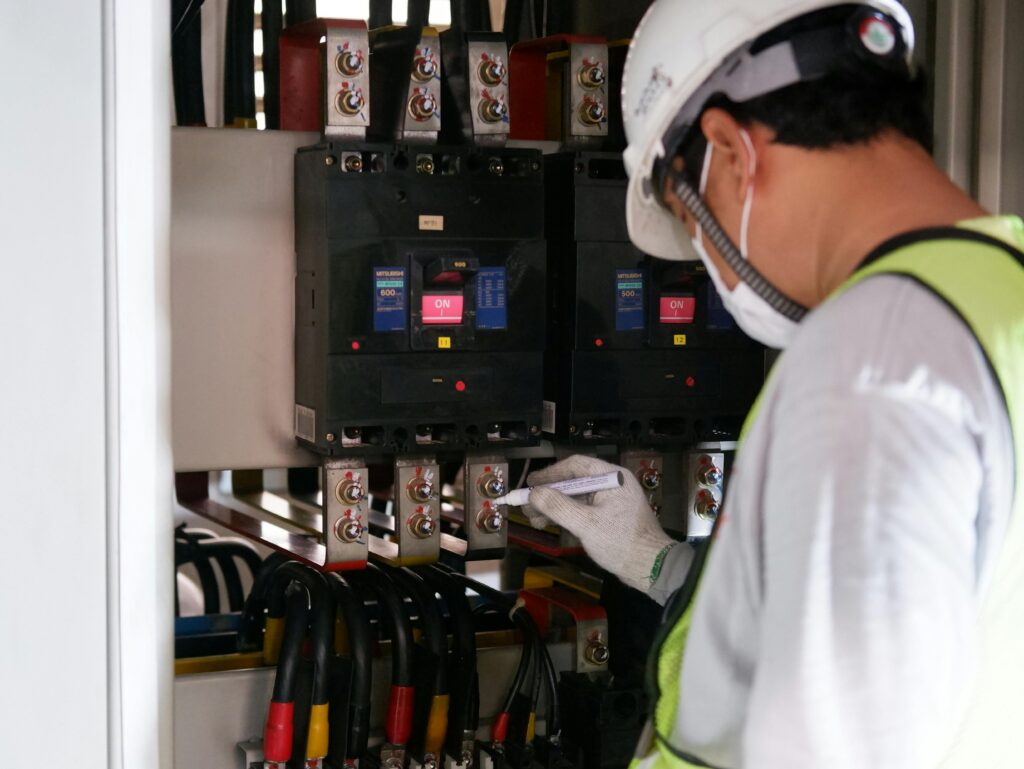
Off-grid sub panel wiring is where most DIY Fortress builds either get done right or get dangerous fast. I had a client call me after their inverter kept tripping every time the well pump kicked on. They had wired the inverter output directly into a breaker space in the main panel and connected four circuits to it. The inverter was fighting the utility feed, the pump surge was pulling it over its limit, and the neutral was bonded twice. Three problems in one panel. The fix was not complicated but it required pulling those four circuits out of the main panel entirely and landing them in a dedicated sub-panel with an isolated neutral bar and a proper feeder breaker sized to the inverter output. Two hours of work. It should have been done at commissioning. For the what and why behind critical load sub-panels, see Article 56. This article covers the how.
Off-Grid Sub Panel Wiring Standard: Why Isolation Is Not Optional
The backfeed problem is real. An inverter output connected to a main panel breaker space with no isolation creates a path for solar power to reach the utility grid during an outage. This is illegal and fatal for line workers. The solution is physical isolation: the critical load sub-panel is fed only from the inverter output, never from the utility simultaneously, enforced by the mechanical interlock. For transfer switch selection as an alternative isolation method, see the transfer switch guide.
To determine which circuits belong in the sub-panel, list the must-run loads: fridge, well pump, Starlink, lights, CPAP. Total their wattages and verify the inverter can handle the sum including surge. For a full system sizing calculation, the system sizing hub covers the load math that determines what the inverter actually needs to carry.
How to Wire an Off-Grid Sub Panel: The Circuit Relocation Standard
Off-grid sub panel wiring begins with de-energising the main panel and confirming it is dead at every terminal with a meter before touching anything. Once confirmed dead, identify each critical load circuit by its breaker label and trace the wire run back into the panel. The hot, neutral, and ground for each circuit must be pulled out of the main panel completely and landed in the sub-panel on the load side terminals. There is no shortcut here. If the existing wire is too short to reach the sub-panel cleanly, install a junction box at a fixed, accessible location and make the splice there. A wire stretched to make it fit is a termination under mechanical stress. Terminations under mechanical stress fail under load, in the dark, in January.
Once the circuits are relocated, install the feeder cable from the Victron MultiPlus-II inverter output to the sub-panel main breaker. The feeder breaker sizing calculation follows in the next section. Before energising anything, verify that the neutral bar and ground bar in the sub-panel are isolated from each other. That verification step is not optional and not skippable.
The 125% Feeder Breaker Rule: Sizing the Off-Grid Sub Panel Feed
NEC 690.8 requires that the feeder breaker protecting the sub-panel from the inverter output be rated at no less than 125% of the inverter maximum continuous output current. The feeder breaker protects the wire, not the inverter.
For a Victron MultiPlus-II 3000VA at 120V: 3,000W divided by 120V equals 25A continuous. Multiply by 1.25 and the minimum breaker rating is 31.25A. Round up to a 35A breaker.
For a 5,000W inverter at 240V: 5,000W divided by 240V equals 20.8A continuous. Multiply by 1.25 and the minimum is 26A. Use a 30A double-pole breaker.
Undersizing this breaker means the feeder trips under sustained load before the inverter reaches its own protection threshold. The inverter then appears to be faulting when the actual problem is an undersized feeder breaker. That is a misdiagnosis that wastes hours and sometimes leads to an inverter replacement that was never needed.
The Neutral-Ground Bond: The Number One Off-Grid Sub Panel Wiring Mistake
In the shop we have a phrase for the mistake: double-bonded. A GS350 came in with an intermittent chassis voltage reading. The technician found a ground strap added after a previous repair that was creating a ground loop through the body. Same principle applies in an off-grid sub panel wiring installation. When the inverter bonds neutral to ground internally in inverter mode, and the sub-panel also bonds them at its own bar, the result is a ground loop that puts voltage on every grounded surface in the sub-panel circuit. I have measured 8 to 12V on what should be a dead ground conductor in a double-bonded installation. That voltage does not trip a breaker. It waits.
The rule is simple: in a correctly wired off-grid sub-panel, the neutral bar and the ground bar are isolated from each other. The inverter handles the bond. The sub-panel does not. An isolated busbar installed as the neutral bar confirms the isolation is mechanical, not just a wiring assumption. For the full grounding standard that this sub-panel wiring plugs into, the off-grid system grounding guide covers the earth path requirements.
Pro Tip: Before you energise the sub-panel, put a meter on the neutral bar and the ground bar and verify they read open circuit to each other. If they read continuity, stop. The bond is in the wrong place.
The Mechanical Interlock: The Lockout-Tagout Standard
A mechanical interlock is a physical device that prevents two breakers from being closed simultaneously. In the sub-panel, the inverter feeder breaker and the grid bypass breaker are interlocked so only one can be closed at a time. When the inverter goes in for service, the interlock allows grid power to feed the critical loads without any possibility of the inverter output being live at the same time. It is not a transfer switch. It is simpler, cheaper, and purely mechanical. The seasonal maintenance schedule covers the inspection intervals that identify when the inverter needs a day in the shop. The interlock makes that maintenance possible without shutting down the critical loads entirely.
NEC and CEC: What the Electrical Codes Say About Off-Grid Sub Panel Wiring
NEC 690.8 governs PV system output circuit sizing and requires the 125% continuous load multiplier on feeder protection. NEC 250.142 prohibits the use of the neutral conductor as a ground conductor on the load side of the service disconnect, which is why the sub-panel neutral and ground bars must be isolated from each other. NEC 702 covers optional standby systems and provides guidance on the interconnection requirements for backup power sources feeding existing panel circuits. A sub-panel installation that meets NEC 690.8, 250.142, and 702 is code-compliant. One that bonds neutral to ground at the sub-panel bar or omits the mechanical interlock is not.
CEC Rule 64-064 requires that PV systems be equipped with disconnecting means that isolate the PV source from all other wiring. CEC Section 10-210 covers grounding and bonding requirements and requires that neutral conductors not serve as grounding conductors on the load side of the service entrance. In Ontario, any modification to a home’s electrical panel including the addition of a critical load sub-panel requires a homeowner permit or a licensed electrical contractor and an ESA inspection. The work described in this article is inspectable work. Pull the permit.
The Verdict
Off-grid sub panel wiring done correctly isolates the critical loads, protects the line workers, and gives the Fortress a maintenance path that does not require shutting everything down.
- Pull the circuits completely out of the main panel and land them cleanly in the sub-panel. Use a junction box if the wire is short. Never stretch a termination to make it fit.
- Size the feeder breaker at 125% of the inverter continuous output current. For a 3,000W inverter at 120V that is a minimum 35A breaker.
- Isolate the neutral and ground bars in the sub-panel and verify open circuit between them before energising. The inverter handles the bond. The sub-panel does not.
In the shop, we do not work on live circuits. In the Fortress, the mechanical interlock is your lockout-tagout. Pull it before you open the panel.
This post contains affiliate links. If you purchase through our links, we may earn a small commission at no extra cost to you.
Questions? Drop them below.