
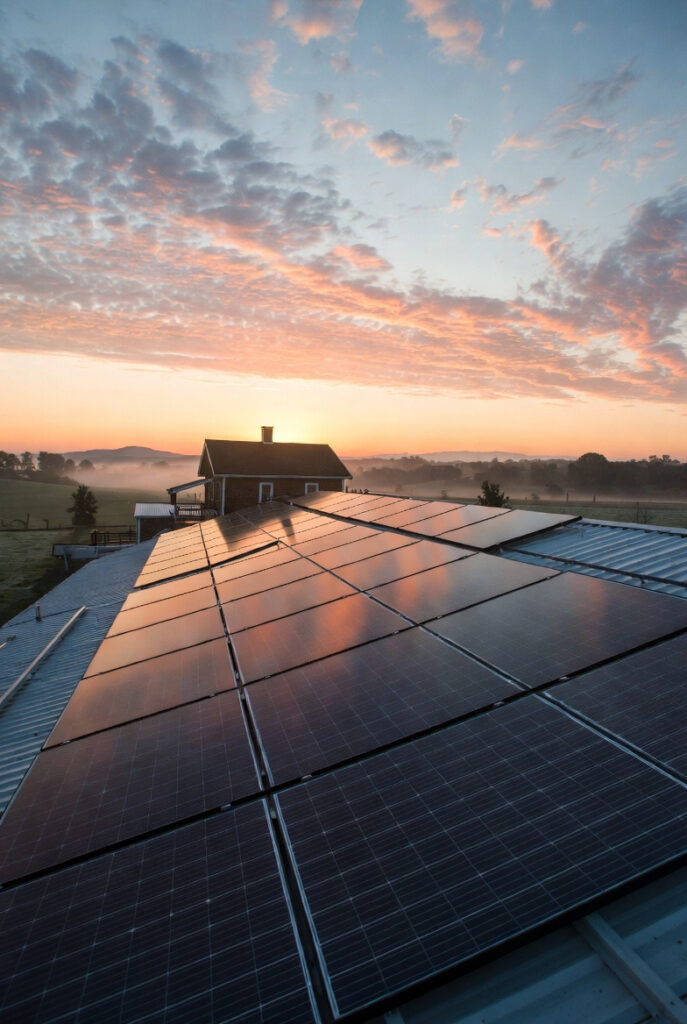
Off-grid energy independence is not a product you buy. It is a standard you build to. I know ship day. In the service bay, ship day is the moment a complex rebuild is finished and you turn the key for the first time. The engine either runs or it doesn’t. The work is either right or it isn’t. You are about to find out. There is no performance in that moment. There is only the result of every decision you made in the hours before it. GridFree Guide has had 149 ship days before this one. Every article was a torque check, a voltage test, a wire run, a code section verified. Article 150 is the key turn. The Fortress is ready or it isn’t. After 149 standards, it is ready. Make sure your system is sized for what you need it to do before you build. Every standard in this series assumes the foundation is correct.
What Off-Grid Energy Independence Actually Means
Off-grid energy independence is not a political statement. It is an engineering decision. The grid is a single point of failure that you do not control. When the substation in Rockwood fails at 3am during an ice storm, every home connected to it loses power simultaneously. The food spoils. The heat stops. The well pump goes silent. These are not inconveniences. In an Ontario winter they are emergencies.
The Fortress is the engineering answer to that single point of failure. It does not make you immune to bad weather. It makes bad weather a weather event instead of an emergency. The ice storm is still happening. Your lights are still on. Your freezer is still running. Your well pump cycles at 6am without hesitation. Nobody in the house notices until you mention it at breakfast. That was the first morning my own Fortress ran through a grid outage without interruption. The neighbours lost power. We did not. Not because I was lucky. Because I built something that does not depend on the grid to function.
Off-grid energy independence at that level is not about the panels or the batteries. It is about the commissioning checklist that was completed before the system was declared operational. It is about the maintenance schedule that means the spring torque check happened before the fault could develop. It is about the grounding electrode that was tested for resistance before the first winter. Those are the things that make the lights stay on. Not the brand on the panel.
The Three Pillars of Off-Grid Energy Independence
The first pillar is sovereignty. When the sun hits your panels you are generating your own fuel. You are not a customer waiting for delivery. You are the utility. The grid is a convenience you choose to use when it is available and an irrelevance when it is not. Sovereignty is not ideological. It is practical. It means the ice storm at 3am is a weather event, not an emergency. The journey to that sovereignty begins with something as simple as a Renogy 100W solar starter kit and ends with a system that runs your well pump, your freezer, and your heat through a Rockwood January without asking the grid for anything.
The second pillar is resilience. The Fortress built to the standards in Articles 136 through 149 is not a hobby build. It has a commissioning record. It has a maintenance log that documents every spring torque check and every fall heater verification. The Victron MultiPlus-II at the centre of that system was installed to manufacturer specification, torqued to the inverter terminal torque standard, and verified with a thermal scan during the burn-in. A licensed electrician would recognise the commissioning documentation as professional work. An insurance adjuster would accept the maintenance log as evidence of proper care. That is not a power system built from YouTube videos and hope. That is infrastructure.
The third pillar is knowledge. You do not just own the gear. After 149 articles, you understand the chemistry of why LiFePO4 cannot charge below 0°C. You understand the physics of why DC voltage drop scales with current squared and why a 20-foot run in 2/0 AWG will starve an inverter that a 20-foot run in 4/0 AWG will not. You understand the code requirement behind every torque specification, every grounding electrode depth, and every rapid shutdown label location. That knowledge does not belong to a utility company or a licensed electrician. It belongs to you. It compounds with every maintenance visit, every thermal scan, every spring torque check that finds a terminal that walked two Nm over a winter. You are the Master Tech of your own power plant. That is the third pillar and it is the one that cannot be purchased.
The Ensemble That Built It
This series was not built alone. Cyrene planned the content calendar, identified the gaps, and sent the briefs. Ariel wrote 149 articles to a standard that kept climbing. Ara kept the tone honest and the writing human. Robert approved every word, published every article, and held the standard from Article 1 to Article 150. The Fortress is a collaborative build in the same way that every complex repair in a professional service bay is a collaborative build: one person does the work but the standards, the tools, and the knowledge come from everyone who contributed to making those standards worth following.
149 articles. One ensemble. One standard. The Fortress is open.
The best way to ensure your off-grid system remains reliable is to treat it like professional infrastructure. Schedule the visits. Log the findings. Build the knowledge. The Fortress that is still running cleanly in year 10 is not the one with the best components. It is the one with the best service history.
The Verdict
Off-grid energy independence is not the destination. It is the standard you commit to maintaining.
You built it. Now keep it:
- Run the spring maintenance visit every April: torque check, terminal lift and corrosion inspection, full-load thermal audit, ground resistance retest. Log everything. The Fortress that lasts a decade looks like a maintenance log, not a repair log.
- Run the fall maintenance visit every October: heatsink blowout, battery heater verification, string fuse inspection, rapid shutdown function test. Get it done before the first frost. The fault you find in October costs an afternoon. The fault you find in January costs a winter.
- Keep building the knowledge. Every article in this series links to every other article for a reason. The grounding standard connects to the bonding standard connects to the generator bonding danger connects to the commissioning checklist. The Fortress is a system, not a collection of components. Understand it as a system and it will serve you for a decade.
In the shop, ship day is not the end. It is the beginning of the service history. Your Fortress has had its ship day. Now write the history.
Disclosure: This post contains affiliate links. If you purchase through our links, we may earn a small commission at no extra cost to you.
Questions? Drop them below.