
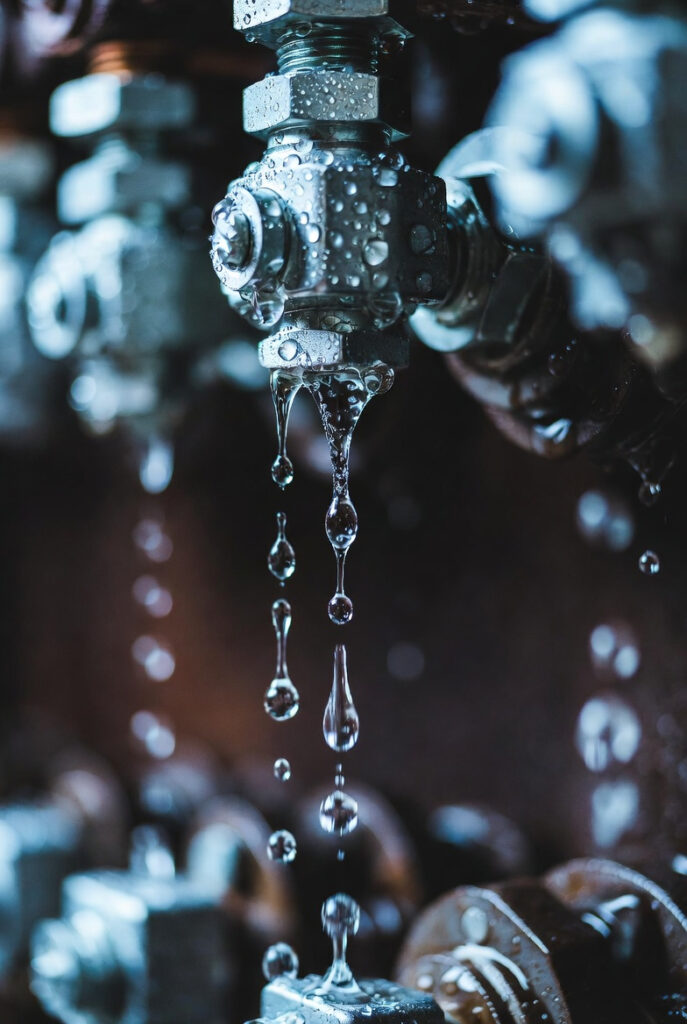
Every battery cable in your off-grid system is a straw. The micro-gaps between the copper strands act as capillary tubes they wick moisture upward against gravity when conditions are right. In a Rockwood cabin equipment room in October with temperatures dropping and condensation forming on every surface those capillary tubes are drawing moisture directly into any lug barrel that faces upward. The battery cable lug orientation that looked neat on commissioning day is slowly filling with water from the inside. In five years the copper will be black. In eight years the insulation will be brittle. Gravity works in one direction. Make it work for the connection instead of against it. Before building your cable runs understand how much solar power you actually need the system current determines which cables carry the most risk from connection degradation.
Battery Cable Lug Orientation: The Capillary Action Mechanism
What capillary action is: Capillary action is the tendency of a liquid to flow through narrow spaces against gravity driven by surface tension and the adhesive force between the liquid and the tube walls. In a copper wire bundle the micro-gaps between individual strands are capillary tubes small enough that water surface tension overcomes gravity and wicks the water upward through the gap network.
Why copper strand bundles are capillary highways: A WindyNation 4/0 AWG battery cable has approximately 1,232 individual copper strands each approximately 0.25mm in diameter. The gaps between strands are approximately 0.05-0.1mm well within the capillary action range for water at room temperature. Water droplets forming on the cable jacket surface do not need to force their way into the lug the capillary network inside the cable wicks them upward automatically. As covered in our Wire Gauge guide fine-stranded welding cable has far more individual strands than standard THHN and therefore far more capillary pathways.
The condensation trigger: A Rockwood cabin equipment room in October: outdoor temperature dropping to 5°C overnight while the battery bank maintains 15°C interior. The dew point of the equipment room air is approximately 10°C. As the room cools below 10°C which it does at night with the door closed water vapor condenses on every surface. The cable jackets cool below dew point. Condensation forms on the jacket surface. The capillary network inside the cable draws this condensation toward the lug barrel and if the battery cable lug orientation places the barrel at the top the moisture travels upward into the barrel and accumulates there.
The accumulation timeline:
- Year 1-2: Moisture enters lug barrel thin copper oxide layer begins forming on strand surfaces inside the barrel
- Year 3-4: Copper oxide layer thickens contact resistance measurably increasing
- Year 5-6: Strand surfaces black with copper oxide resistance significantly above nominal IR thermometer shows elevated lug temperature under load
- Year 7-8: Copper strands brittle from oxide penetration cable insulation at lug entry point degraded from sustained heat
I pulled the heat shrink off a 4/0 AWG battery negative cable on a system inspection last year a Rockwood build that was 6 years old. The battery cable lug orientation had been top-entry the cable came from overhead and entered the lug from the top. The outside of the heat shrink looked perfect. Inside: black copper. Not surface tarnish uniformly black throughout the entire lug barrel. The crimp was mechanically sound. We measured the connection resistance: 4.7 milliohms above nominal. At 200A that single connection was generating 188 watts of heat. We cut 6 inches off the cable to find clean copper. As covered in our Tinned Copper guide tinned copper provides significantly better resistance to this failure mode but even tinned copper does not eliminate the risk of top-entry battery cable lug orientation in a humid Ontario equipment room.
The Drip Loop Principle – Gravity as Moisture Management
What a drip loop is: A drip loop is a deliberate downward curve in a cable run that ensures moisture running along the cable surface reaches the lowest point of the curve and drips off rather than following the cable into a connector or lug barrel. The principle is identical to the drip loops used in outdoor electrical cable entries any cable entering a building or connector from above should have a downward loop below the entry point so gravity intercepts the moisture before it reaches the connection.
The bottom-entry rule: On vertical busbars, battery terminals, and any connection where a cable approaches from above the correct battery cable lug orientation is bottom-entry the cable approaches from below the terminal and enters the lug from the bottom. Any moisture on the cable jacket runs downward away from the lug barrel and drips off the lowest point of the cable run. The lug barrel faces downward. Gravity works for the connection.
When bottom-entry is not possible: If a cable must approach from above ceiling runs, overhead cable trays the drip loop technique maintains the bottom-entry orientation while accommodating the overhead approach. Route the cable past the terminal, curve it downward below the terminal height, then curve it back upward to enter the lug from below. The lowest point of the drip loop below the terminal is where moisture accumulates and drips off. The lug barrel sees only dry cable.
I was routing a ceiling-entry cable on a client build last autumn and the client asked why I was adding extra cable length for what looked like an unnecessary loop. I showed him where the moisture would go without the loop straight into the Victron Lynx Distributor busbar lug barrel. Then I showed him the drip loop the lowest point of the cable hanging about 4 inches below the busbar. Any condensation that forms on that cable jacket will run to the bottom of that loop and drip off onto the equipment room floor. Not into the lug. He asked me to add drip loops to every ceiling-entry cable in the build. Every single one. Good client.
The Dielectric Grease Standard – The Chemical Barrier
What dielectric grease does: Dielectric grease silicone-based, electrically non-conductive, hydrophobic applied to the exposed copper strands at the lug entry point before heat shrink application fills the void volume between strands. When the adhesive-lined heat shrink is applied over the dielectric grease the grease is compressed into the strand gaps displacing any air and potential moisture pathways with a chemically inert waterproof sealant. The capillary network that would otherwise wick moisture into the lug barrel is physically filled with a material that water cannot displace.
The application procedure:
- Complete the hydraulic hex crimp as covered in our Battery Cable Crimping guide
- Apply a thin ring of dielectric grease around the exposed copper strands at the lug barrel entry where the cable jacket ends and the strands enter the barrel
- Slide the adhesive-lined heat shrink over the assembly immediately before the grease migrates
- Apply heat the adhesive flows, the grease is compressed into the strand gaps, the combined seal is waterproof
- Orient the lug correctly bottom-entry so gravity reinforces the seal
Why dielectric grease is not a substitute for correct orientation: Dielectric grease provides additional protection but does not replace correct battery cable lug orientation. Over 25 years of Ontario humidity cycling the adhesive seal and grease seal are subject to mechanical stress from thermal cycling. Correct orientation ensures that even if the seal degrades moisture still has gravity working against ingress rather than for it.
NEC 110.12 and CEC Section 2 – The Workmanlike Manner Standard
NEC 110.12: National Electrical Code Section 110.12 requires that electrical equipment be installed in a neat and workmanlike manner. Section 110.12(A) specifically requires protection from deteriorating agencies conditions including moisture, excessive temperatures, and corrosive agents. A battery cable lug orientation that allows moisture ingress and promotes copper corrosion violates NEC 110.12(A) it is an installation not protected from deteriorating agencies.
CEC Section 2 – Canada: The Canadian Electrical Code Section 2 equivalent workmanlike manner requirement states that electrical equipment shall be installed in a manner that maintains the integrity of electrical connections for the lifetime of the installation. A top-entry lug orientation in an unconditioned Ontario cabin equipment room does not maintain connection integrity for the lifetime of the installation. It fails the CEC Section 2 standard.
The practical interpretation: Both codes require that the installer consider the installation environment and make decisions that protect connections from that environment. In a Rockwood cabin equipment room the installer must consider: condensation cycling occurs. Capillary action is real. Battery cable lug orientation is a design decision that either works with these physical realities or against them. The code requires working with them. As covered in our Battery Fortress guide the enclosure protects the battery lug orientation protects the connections inside it.
The Complete Lug Orientation Checklist
- Lug barrel faces downward or horizontally – never upward
- Cable approaches lug from below or horizontally – never from above without a drip loop
- If cable must enter from above: drip loop installed – lowest point of loop minimum 3 inches below lug entry height
- Dielectric grease applied to strand entry point before heat shrink
- Adhesive-lined dual-wall heat shrink applied immediately after grease as covered in our Heat Shrink guide
- Victron SmartShunt 500A negative cable lug verify bottom-entry orientation this carries full system current
- All battery terminal connections verify lug barrels do not face upward cable routing adjustment required if needed
Quick Reference – Battery Cable Lug Orientation Standards
| Condition | Correct Orientation | Moisture Behavior |
|---|---|---|
| Vertical busbar – cable below | Bottom-entry lug | Moisture drips off cable – away from lug |
| Vertical busbar – cable above | Drip loop + bottom-entry | Moisture drips off loop low point |
| Horizontal busbar | Horizontal entry preferred | No gravity drainage issue |
| Battery terminal – top of battery | Loop cable below terminal height | Moisture drips off loop |
| Outdoor/unconditioned space | Bottom-entry mandatory | Maximum moisture exposure |
| Indoor/conditioned space | Bottom-entry preferred | Lower risk – same standard |
Pro Tip: Use self-amalgamating tape as an additional moisture seal over the adhesive-lined heat shrink on any connection in an unconditioned space outdoor battery enclosures, unheated equipment rooms, any location where the heat shrink seal is subject to mechanical stress from cable movement. Self-amalgamating tape bonds to itself without adhesive it creates a continuous rubber seal over the heat shrink that has no seams or adhesive interfaces to fail under thermal cycling. Apply it in a spiral wrap from cable jacket to lug barrel with 50% overlap. In a Rockwood cabin where the equipment room sees -30°C to +35°C temperature cycles the self-amalgamating tape outer layer is the 25-year insurance on the inner heat shrink seal.
The Verdict
Battery cable lug orientation is a 30-second decision at installation that determines whether your connections are still low-resistance at year 10 or are generating 188 watts of heat from copper oxide at year 6.
Three orientation criteria before sealing any connection:
- Lug barrel faces downward or horizontal never upward
- Cable approaches from below or drip loop installed if from above
- Dielectric grease applied to strand entry before heat shrink
Think like a plumber. Never let gravity drain toward the joint.
Disclosure: This article contains affiliate links. If you buy through them, GridFree Guide earns a small commission at no extra cost to you.
Questions? Drop them below.