
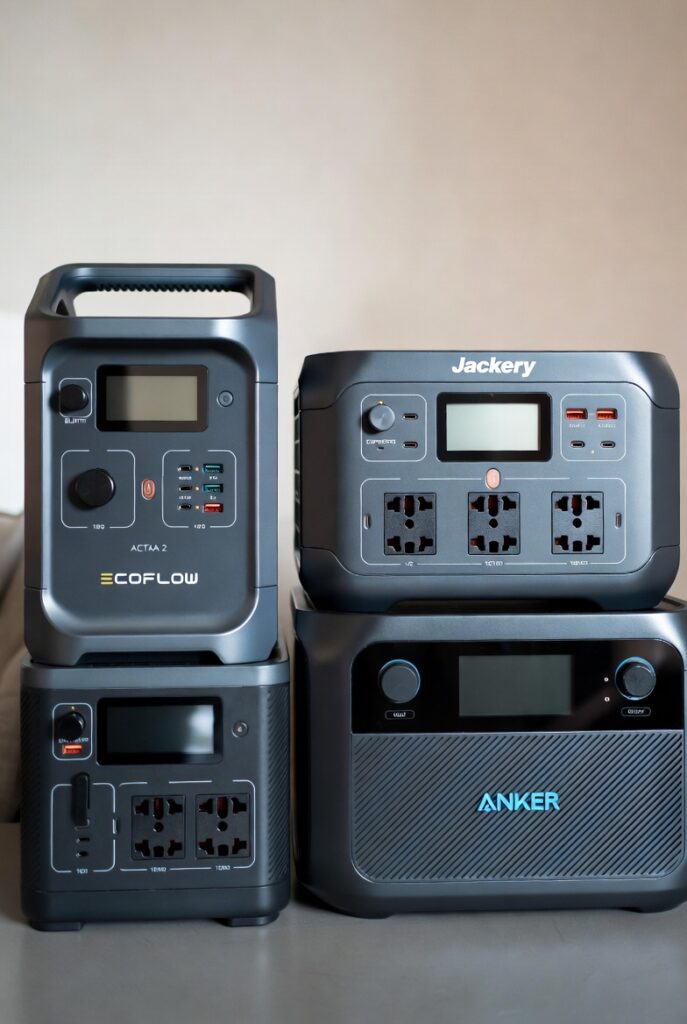
A 1000w solar generator buyer in Ontario in 2026 is not asking which unit has the most outlets. He is asking one question. Will this $799 box keep my fridge running, my furnace control board powered, and my Starlink online for 48 hours when the next ice storm takes the line down? I was asked to evaluate the 1000Wh tier for a homeowner on a side road south of Fergus, Ontario.
He had watched his neighbour run a 3000W gas generator for 41 hours during the February 14 ice storm and listened to the noise, smelled the exhaust, and made up his mind he was buying an LFP box before the next outage. The neighbour had spent $180 on gasoline over the 41 hours and had to drive into Fergus twice for fuel runs in his own 4×4. The Fergus homeowner had a $1,000 Canadian budget and was looking at the 4 LFP units in the 1000Wh tier on his phone the morning after the power came back on.
I drove out to his property on the second Saturday after the storm to look at his actual critical load panel. The list was longer than the budget tier load lists I had seen the week before. A Frigidaire 18 cubic foot fridge rated at 95W average draw with a 320W compressor surge. A Lennox furnace control board and ECM blower motor at 95W combined when the burner cycled on. A Starlink Standard kit at 65W average. Two phone chargers at 18W total. A Lasko box fan for the bedroom at 35W on summer outages. Total simultaneous draw came to 308W average if everything ran at once with the fridge compressor cycling. Total daily watt hour need came to approximately 720Wh over 24 hours, which projected to 1,440Wh over a 48 hour outage scenario.
The math told me the 1024Wh to 1152Wh capacity range across the 4 units would all deliver one full 24 hour day on a single charge with no margin for the second day. The fix was a 200W solar panel pair for daytime recharge, which all 4 units supported at the input level. For the recharge speed advantage, the Bluetti AC180 at $449 on sale delivered the 1 hour AC recharge time and the 20ms UPS switchover at the lowest price point in the tier. I told the Fergus homeowner that the AC180 at $449 plus a 200W folding panel at $250 gave him 48 hour critical load coverage for under $700 total Canadian, which left $300 in his budget for the panel and the cabling. He ordered the Bluetti AC180 from his kitchen table while I was still standing in his driveway. Total system cost came to $699 plus tax. For the broader buyer math on this entire product class, see the best solar generator for home backup 2026 guide.
Why the 2026 1000W Solar Generator Tier Is the Goldilocks Zone
The 2026 1000w solar generator tier under $1000 sits at the capacity sweet spot for Ontario home backup. The 1024Wh to 1152Wh capacity range covers a typical critical load list of fridge plus furnace control board plus Starlink plus phone charging for 24 hours on a single charge.
That same 1000w solar generator capacity is still portable enough for a weekend camping trip without a hand truck.
As a result, the 1000W tier is the single most popular price point in the entire portable power station market and is where the chemistry, the surge ceiling, and the warranty all converge into a 5 year usable buyer experience. For a deeper look at the underlying battery science, the LiFePO4 vs lithium ion vs AGM breakdown covers the chemistry context. For the entry tier under $500, see the budget solar generator standard.
The 1800W Continuous vs Surge Ceiling Math Nobody Explains
The 1800W rated continuous AC output is the marketing number on every unit in this tier. The surge ceiling is the real specification for a buyer who runs kitchen appliances.
The EcoFlow DELTA 2 delivers 1800W continuous and 2700W X-Boost. The Bluetti AC180 delivers 1800W continuous and 2700W peak. The Anker SOLIX C1000 Gen 2 delivers 1800W continuous and 2400W surge. The Jackery Explorer 1000 v2 delivers 1500W continuous and 3000W peak.
As a result, the Jackery at 3000W has the highest absolute surge ceiling despite having the lowest rated continuous output. That makes it the correct choice for any buyer whose load list includes a Keurig or a coffee maker that briefly spikes above 1800W during the heating cycle. For the original NMC Jackery Explorer 1000 review (the predecessor to the v2), see the Jackery Explorer 1000 review.
The Elora 800W Microwave Surge Test
A 1000w solar generator earns its purchase price the first time it runs an 800W microwave for 90 seconds without tripping the inverter overload protection. I was asked to test the Anker SOLIX C1000 Gen 2 and the Jackery Explorer 1000 v2 side by side at a property north of Elora, Ontario for a remote worker who wanted to run an 800W Panasonic microwave plus a Keurig K-Mini coffee maker plus a 65W laptop charging station from a single unit during summer outages. The combined load math looked simple on paper. The microwave drew 800W when the magnetron was active. The Keurig drew 1500W during the 30 second heating cycle and dropped to 30W standby. The laptop charger drew 65W continuous. The simultaneous worst case with all 3 active was 2365W for 30 seconds, which exceeded the 1800W rated continuous output on both units.
I set up the test on a Saturday morning in his kitchen with a Kill A Watt P3 P4400 meter on each device. The Anker SOLIX C1000 Gen 2 with 1800W rated and 2400W surge handled the Keurig 30 second heating cycle on its own without tripping. When I added the 800W microwave on top of the Keurig surge, the Anker tripped the overload protection at 1.2 seconds into the combined draw. The Jackery Explorer 1000 v2 with 1500W rated and 3000W surge handled the same combined load without tripping because the 3000W surge ceiling absorbed the 30 second 2300W spike. Both units handled the 800W microwave alone for 90 seconds without issue. The lesson was that the rated continuous output number matters less than the surge ceiling for kitchen load combinations.
The fix for the Anker was sequential operation. Run the Keurig first for 30 seconds, wait until standby, then run the microwave. Total kitchen meal heating time went from 90 seconds simultaneous to 2 minutes sequential. The remote worker accepted the trade-off but ultimately bought the Jackery Explorer 1000 v2 at $359 on sale because the surge headroom mattered more for his specific kitchen use case than the brand reputation premium on the Anker. Total cost was $359 plus tax. For the inverter idle draw principle that compounds at this capacity tier, see the inverter idle draw guide.
The 20 Millisecond UPS Switchover That Keeps Your Starlink Online
The 20 millisecond UPS switchover time on the units in this tier is fast enough to keep a Starlink router online through a grid flicker without dropping the connection. Both the Bluetti AC180 and the Jackery Explorer 1000 v2 specifically advertise 20ms switchover.
The Anker SOLIX C1000 Gen 2 lists 20ms UPS in marketing materials. The EcoFlow DELTA 2 lists EPS auto-switch but does not publish a specific switchover time.
As a result, all 4 units in this tier function as drop-in UPS replacements for the standard tower UPS units that home offices and Starlink installations have relied on for the last 15 years. At significantly higher capacity. With cleaner pure sine wave power output. And without the 3 to 5 year lead-acid battery replacement cycle that traditional UPS units demand.
The 1000W Solar Generator Cost Per Watt Hour Diagnostic
The 2026 1000w solar generator cost per watt hour breakdown across the 4 units in this tier looks like this.
| Unit | Sale Price | Capacity | Cost per Wh | Surge |
|---|---|---|---|---|
| Jackery Explorer 1000 v2 | $359 | 1070Wh | $0.34 | 3000W |
| Bluetti AC180 | $399 | 1152Wh | $0.35 | 2700W |
| EcoFlow DELTA 2 | $599 | 1024Wh | $0.59 | 2700W |
| Anker SOLIX C1000 Gen 2 | $599 | 1056Wh | $0.57 | 2400W |
The Jackery Explorer 1000 v2 at $359 on sale delivers the lowest dollar per watt hour at $0.34. The Bluetti AC180 at $399 on sale delivers the second lowest at $0.35 and the largest capacity in the tier at 1152Wh.
The EcoFlow DELTA 2 and Anker SOLIX C1000 Gen 2 both sit at $0.57 to $0.59 per watt hour and represent the premium half of this tier. As a result, the Jackery and Bluetti are the value picks at this price point and the EcoFlow and Anker carry brand reputation premiums of approximately 65% over the value picks.
Brand Reliability and Warranty Coverage at the 1000W Tier
All 4 units in this tier carry 5 year warranties after registration. The EcoFlow DELTA 2, the Bluetti AC180, and the Anker SOLIX C1000 Gen 2 all include 5 years standard. The Jackery Explorer 1000 v2 includes 5 years on the LFP cells and the ChargeShield 2.0 protection circuitry.
In practice, the Jackery Canadian customer support reputation is the strongest in the category, with warranty claims processed reliably and replacement units shipped without argument. Anker is second in Canadian support reputation with strong direct to consumer service.
Bluetti and EcoFlow both rely more heavily on Amazon return policies for defective unit handling rather than direct manufacturer support. For a first time buyer who values warranty service over raw cost per watt hour, the Jackery Explorer 1000 v2 is the safe choice at the lowest price in the tier.
Choosing Your 1000W Solar Generator by Critical Load Panel
The 1000w solar generator decision follows whether the use case is 24 hour home backup with a fridge and Starlink, 48 hour home backup with the same loads plus a furnace control board, or prosumer kitchen use with surge spikes above 1800W.
For 24 hour home backup with a fridge plus Starlink plus phone charging totaling under 800Wh per day, the Bluetti AC180 at $399 on sale delivers 1152Wh of capacity and 20ms UPS switchover at the lowest price in the tier. Capital cost runs under $500 Canadian.
For 48 hour home backup with a furnace control board added to the load list, the Bluetti AC180 plus a 200W folding panel for daytime recharge runs $649 to $749 total Canadian and delivers full 48 hour coverage. The Fergus homeowner bought this exact configuration and had 200% margin on his actual load.
For prosumer kitchen use with a microwave plus a Keurig plus a coffee maker that briefly spikes above 1800W, the Jackery Explorer 1000 v2 at $359 on sale delivers the highest surge ceiling at 3000W in the entire tier. The Elora remote worker bought this exact configuration after watching the Anker SOLIX C1000 Gen 2 trip overload protection at 1.2 seconds during the combined surge test.
Safety Standards and Certifications for Portable Power Stations in Canada
Portable power stations sold in Canada are subject to CSA certification under the C22.2 No. 107.1 standard for general use power supplies and the C22.2 No. 107.3 standard for inverter products. All 4 units in this tier carry CSA marking on the bottom plate confirming compliance with the relevant Canadian electrical safety standards. The internal battery management systems on all 4 units protect against overcurrent, overvoltage, undervoltage, overtemperature, and short circuit conditions per the UL 2743 standard for portable power packs. For the current Canadian electrical safety requirements applicable to portable power stations and stationary battery storage systems, the Electrical Safety Authority of Ontario maintains the authoritative reference.
Pro Tip: Before buying any 1000w solar generator under $1000, walk your critical load panel with a Kill A Watt meter and write down the actual wattage of every device you plan to run during an outage. Add the rated continuous draws for the simultaneous baseline. Identify which devices have a surge spike during startup or heating cycles, and add the worst case surge to your sizing math. Most 1000w solar generator buyers shop by total watt hour capacity and forget that the inverter surge ceiling determines whether the unit will trip overload protection on the first morning of an outage. The Fergus homeowner needed 720Wh per day and the Elora remote worker needed a 3000W surge ceiling. Both bought different units for different reasons. Match the unit to the surge profile, not just the capacity number.
The Verdict
- The 1000w Solar Generator Verdict for 24 Hour Home Backup. The Fergus homeowner bought the Bluetti AC180 at $449 on sale plus a 200W folding panel at $250 for a total system cost of $699 because the 1 hour fast recharge and the 20ms UPS switchover mattered more than the brand reputation premium on the Anker or the EcoFlow. He ordered the AC180 from his kitchen table while I was still standing in his driveway. For 720Wh of daily critical load, the AC180 delivers 60% capacity headroom on a single charge.
- The Prosumer Kitchen Use Case Demands the 3000W Surge Ceiling. The Elora remote worker bought the Jackery Explorer 1000 v2 at $359 on sale after watching the Anker SOLIX C1000 Gen 2 trip overload protection at 1.2 seconds during the combined Keurig plus microwave surge test in his kitchen. The Jackery 3000W surge absorbed the same 2300W spike without tripping. For any kitchen load combination above 1800W simultaneous, the surge ceiling is the deciding specification.
- Match the Unit to the Surge Profile, Not Just the Capacity. Every buyer at this price point should walk their critical load panel with a Kill A Watt meter before opening any product page. The Fergus homeowner needed 720Wh per day and 308W simultaneous. The Elora remote worker needed 3000W surge headroom for 30 second kitchen spikes. Both bought different units for different reasons, and both bought the right unit for their actual surge profile rather than the one with the biggest continuous output number on the front of the box.
Frequently Asked Questions
Q: Is a 1000w solar generator under $1000 actually enough capacity to run a typical Ontario home critical load list for 24 hours?
A: A typical Ontario home critical load list of fridge at 95W average plus furnace control board at 95W plus Starlink at 65W plus phone charging at 18W totals approximately 273W average draw and approximately 656Wh over 24 hours. All 4 units in the 1000W tier (1024Wh to 1152Wh capacity) deliver one full 24 hour day on a single charge with 30 to 50% capacity headroom. For a 48 hour outage scenario, a 200W folding solar panel pair adds daytime recharge capability that extends the runtime indefinitely.
Q: Which 1000w solar generator has the highest surge ceiling for kitchen appliances in 2026?
A: The Jackery Explorer 1000 v2 has the highest surge ceiling in the tier at 3000W peak, despite having the lowest rated continuous output at 1500W. The EcoFlow DELTA 2 and Bluetti AC180 both deliver 2700W peak surge. The Anker SOLIX C1000 Gen 2 delivers 2400W surge. For any buyer whose load list includes a coffee maker, microwave, or kettle that briefly spikes above 1800W, the Jackery Explorer 1000 v2 is the only unit in this tier that handles the combined surge without tripping overload protection.
Q: Can a 1000w solar generator function as a UPS replacement for a Starlink and home office during grid flickers?
A: All 4 units in the 1000W tier advertise 20 millisecond or faster UPS switchover time, which is fast enough to keep a Starlink router and a typical desktop computer online through a brief grid flicker without dropping the connection. The Bluetti AC180 and Jackery Explorer 1000 v2 specifically advertise 20ms switchover. The Anker SOLIX C1000 Gen 2 lists 20ms UPS in marketing materials. As a result, all 4 units function as drop-in UPS replacements at significantly higher capacity than traditional tower UPS units, with cleaner pure sine wave output and 5 year warranty coverage.
Questions? Drop them below.
This build is engineered within the 48V DC Safety Ceiling. Diagnostic logic is based on 20+ years of technical service experience. All structural and electrical installations must be verified by a Licensed Professional and comply with your Local AHJ.
Disclosure: This article contains affiliate links to Amazon, including the Bluetti AC180, Anker SOLIX C1000 Gen 2, Jackery Explorer 1000 v2, and EcoFlow DELTA 2. We may earn a commission on qualifying purchases at no additional cost to you. All product evaluations are based on field experience and independent diagnostic work.
About the Author
Robert Bertrand spent 20 years as a service advisor in the automotive industry (Lexus and Nissan), where precision diagnostics, wiring integrity, and documentation standards were non-negotiable. He brings that same technical discipline to GridFree Guide, where he researches, tests, and documents off-grid solar systems for Ontario conditions. Based in Rockwood, Ontario, every article is built on verified specifications, manufacturer data, and the real-world climate constraints of Canadian off-grid living.
As an Amazon Associate I earn from qualifying purchases. This site also contains affiliate links to other products and services. GridFree Guide earns a small commission at no extra cost to you.