
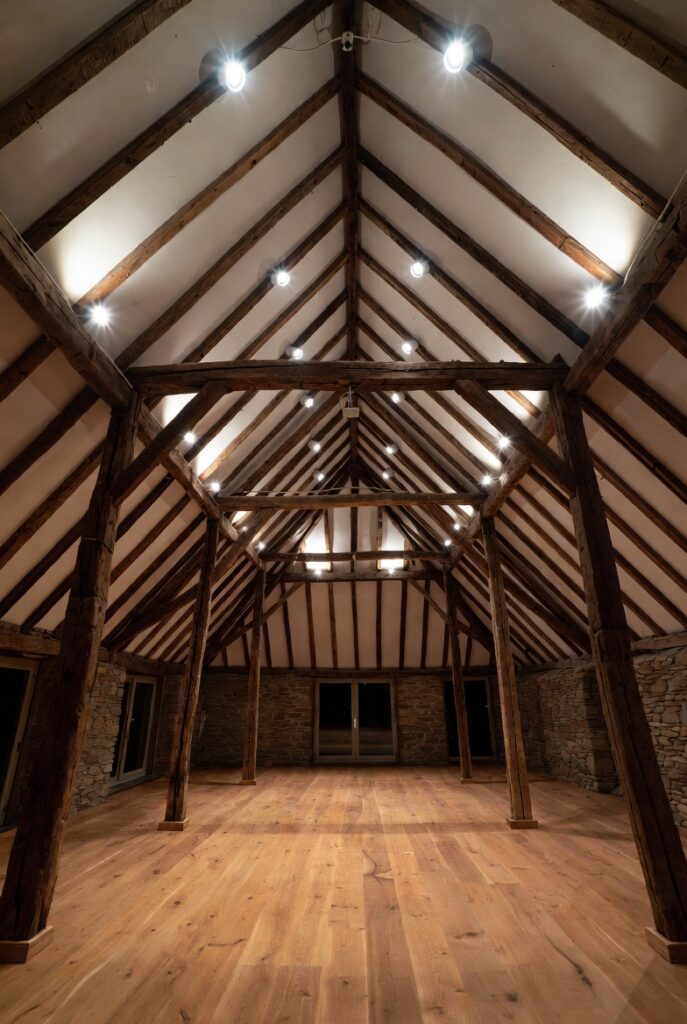
DC-native lighting eliminates the conversion overhead that forces your inverter to run 24 hours a day for a few watts of light. I helped a property owner near Bracebridge in Muskoka District, Ontario diagnose an efficiency problem in winter 2025. His 3kW inverter ran continuously even when his only load was 40 watts of LED lighting. His inverter’s idle draw was 28W just to stay awake. His dc-native lighting opportunity was invisible because he assumed LED bulbs were already efficient. His 28W idle load running 24 hours consumed 672Wh daily just to power his inverter overhead.
I examined his system and calculated the true cost. His 40W of AC LED lighting used 40Wh per hour when on. His inverter used 28Wh per hour whether lights were on or off. His lights ran 6 hours nightly consuming 240Wh. His inverter ran 24 hours consuming 672Wh. His lighting overhead was consuming nearly 3x more energy than his actual lights. His dc-native lighting would have eliminated the inverter requirement entirely for evening illumination.
I helped him install a 24V dc-native lighting system throughout his cabin. We wired 24V LED puck lights and strip lighting directly from his battery bank through a dedicated DC fuse block. His inverter now enters sleep mode from 10pm to 6am. His nightly consumption dropped from 912Wh to 180Wh. His total cost was $680 for fixtures, wiring, and fuse block. His dc-native lighting now runs directly from batteries with zero conversion loss. For a general overview of off-grid lighting options, The Off-Grid Lighting Standard covers the fundamentals.
Why DC-Native Lighting Eliminates Inverter Overhead Entirely
DC-native lighting eliminates inverter overhead because the lighting circuit runs directly from battery voltage without conversion. The Bracebridge owner’s inverter consumed 672Wh daily just in idle load. His dc-native lighting bypasses the inverter entirely.
His inverter now sleeps from 10pm to 6am when no AC loads require power. His baseline consumption dropped 20-30% from this single change.
Inverter sleep mode is only possible when no AC loads remain active. DC-native lighting removes the largest overnight AC dependency for most off-grid homes.
The Inverter Idle Load Problem: 672Wh Daily Just to Stay Awake
The inverter idle load problem exists because inverters must stay powered to provide instant AC availability. A typical 3kW inverter draws 20W to 30W just idling with no load. The Bracebridge owner’s inverter drew 28W continuously.
Over 24 hours, that idle draw consumed 672Wh. His actual lighting used only 240Wh nightly.
His inverter overhead was consuming nearly 3x his lighting consumption. Eliminating AC dependency for lighting eliminates the overhead entirely.
The 24V Voltage Advantage: 4x Less Loss Than 12V Systems
The 24V voltage advantage comes from basic electrical physics. Power equals voltage times current. For the same wattage, 24V uses half the current of 12V.
Voltage drop is proportional to current and wire resistance. Cutting current in half cuts voltage drop in half for the same wire gauge.
The Gravenhurst owner’s 12V system lost 1.2V on 65 feet. His 24V replacement loses only 0.3V on the same run. 24V is the only choice for whole-home distribution.
Voltage Drop Math: Why 65-Foot Runs Dim at 12V
I was troubleshooting dim lights with a property owner near Gravenhurst in Muskoka District, Ontario in fall 2025. His 12V LED strips in the far bedroom were noticeably dimmer than the strips near the battery room. His total wire run was 65 feet from fuse block to fixture. His 18AWG wire seemed adequate for the 2A load. His dc-native lighting was installed correctly but suffering from voltage drop he did not anticipate.
I examined his installation and calculated the voltage loss. His 65-foot run of 18AWG at 2A dropped 1.2V on a 12V system. His LEDs received 10.8V instead of 12V. That 10% voltage drop reduced his brightness by approximately 25% at the end of run. His dc-native lighting worked but performed poorly at distance. His 12V system was the wrong voltage choice for whole-home distribution.
I helped him upgrade to 24V throughout. We replaced his 12V strips with 24V equivalents and rewired from a 24V tap on his battery bank. The same 65-foot run of 18AWG at 1A now drops only 0.3V on 24V. His end-of-run voltage is 23.7V representing only 1.25% loss. His brightness is now uniform throughout the cabin. His total cost was $420 for new fixtures and rewiring. His dc-native lighting now delivers 100% lumen maintenance at any distance in his home. For the load management that prioritizes lighting circuits, The Load Management Standard covers the automation.
Luminous Efficacy: Buying by Lumens Per Watt Not Wattage
Luminous efficacy measures how efficiently a fixture converts electricity to visible light. The unit is lumens per watt (lm/W). Cheap LEDs deliver approximately 100 lm/W.
High-performance fixtures achieve 165+ lm/W using multi-lens arrays without resistor waste. The Bracebridge owner’s new fixtures deliver 170 lm/W compared to his old AC LEDs at 110 lm/W.
He gets 800 lumens from 4.7W instead of 7.3W. Buy by efficacy, not by wattage, for maximum efficiency.
IEC TS 62257-200:2026: Matching Production Voltage to Distribution
IEC TS 62257-200:2026 mandates needs-driven design matching production voltage to distribution voltage. A 24V or 48V battery bank should feed loads at matching voltage without conversion steps. Every DC-DC conversion loses 5% to 15% efficiency.
Every DC-AC conversion loses 10% to 15% additional. The Bracebridge owner’s 48V bank feeds a 48V-to-24V converter at 95% efficiency for lighting. His old AC path lost 15% in the inverter.
Reference Natural Resources Canada for energy efficiency standards and off-grid system design principles.
Centralized DC Fusing: Class 2 Protection for Every Circuit
Centralized DC fusing protects each lighting circuit individually against overcurrent and thermal events. A Blue Sea fuse block provides dedicated terminals for each circuit. Each lighting circuit receives a 3A to 5A fuse sized for the fixture load.
Never tap lighting directly from battery terminals without fuse protection. The Bracebridge owner’s fuse block provides 6 protected circuits for his whole-home lighting.
UL1310 Class 2 power units provide additional safety certification for low-voltage lighting installations.
Wire Gauge Standards: The 16AWG Whole-Home Minimum
Wire gauge standards ensure voltage drop stays within acceptable limits for brightness uniformity. For runs under 10 feet, 20AWG is acceptable for low-current fixtures. For runs of 10 to 30 feet, 18AWG is the minimum standard.
For whole-home grids with runs up to 50 feet, 16AWG ensures zero visible dimming. The Gravenhurst owner upgraded to 16AWG throughout when converting to 24V.
His voltage drop on the longest run is now under 2%. Use voltage drop calculators to verify wire gauge before installation.
CRI and Color Temperature: 90+ at 3000K for Biological Health
CRI (Color Rendering Index) measures color accuracy under artificial light. CRI 90+ is required for living spaces where accurate color perception matters. Color temperature measured in Kelvin affects biological rhythms.
5000K daylight disrupts melatonin production and sleep cycles. 3000K warm white supports natural circadian function.
The Gravenhurst owner installed CRI 95 fixtures at 3000K throughout. His cabin feels warm and comfortable while supporting healthy sleep patterns.
The DC-Native Lighting Strategy: 24V Systems and High Efficacy
The dc-native lighting strategy combines 24V distribution with high-efficacy fixtures for maximum efficiency. 24V eliminates voltage drop problems on whole-home runs. High-efficacy fixtures at 165+ lm/W minimize battery drain per lumen. Centralized fusing protects every circuit independently.
A Victron SmartShunt tracks lighting consumption and confirms inverter sleep savings. The monitoring verifies efficiency improvements in real time.
The Bracebridge owner’s complete strategy saves 732Wh nightly compared to his previous AC lighting. His dc-native lighting provides illumination that is physically impossible to beat for efficiency.
Planning Your DC-Native Lighting System: Components and Costs
Planning your dc-native lighting system starts with mapping fixture locations and calculating wire runs. Identify the longest run to determine voltage (12V vs 24V) and wire gauge requirements. The Bracebridge owner’s 45-foot maximum run required 24V with 16AWG.
The Gravenhurst owner’s 65-foot run confirmed 24V as mandatory for his installation. Your dc-native lighting investment pays back through inverter sleep savings within the first winter.
The efficiency gain compounds with every evening of operation throughout the year.
Minimum Viable vs Full Standard: Choosing Your Efficiency Level
The dc-native lighting approach offers two efficiency levels depending on your wire runs and performance requirements. The minimum viable level works for small installations with short runs. The full standard delivers whole-home coverage with uniform brightness.
| Efficiency Level | Key Components | Cost | Nightly Savings |
|---|---|---|---|
| Minimum Viable | 12V fixtures + basic fuse + 18AWG | $200-$400 | 300-400 Wh |
| Full Standard | 24V 165+ lm/W + fuse block + 16AWG + CRI 90+ | $600-$1,200 | 500-700 Wh |
Both dc-native lighting approaches enable inverter sleep mode. The difference is voltage drop compensation and fixture efficiency. Properties with runs over 20 feet should invest in the full standard for uniform brightness.
Frequently Asked Questions
Q: How much energy does dc-native lighting save compared to AC LED bulbs?
A: DC-native lighting saves 500Wh to 700Wh nightly by eliminating inverter idle load. The Bracebridge owner’s 3kW inverter consumed 672Wh daily just staying awake for his AC lighting. His dc-native lighting system allows inverter sleep from 10pm to 6am. His nightly consumption dropped from 912Wh to 180Wh. DC-native lighting eliminates the conversion overhead that forces 24-hour inverter operation.
Q: Why does dc-native lighting require 24V instead of 12V for whole-home systems?
A: DC-native lighting requires 24V for whole-home systems because 12V loses 4x more energy to voltage drop on long runs. The Gravenhurst owner’s 65-foot 12V run lost 1.2V representing 10% voltage drop and 25% brightness reduction. His 24V replacement loses only 0.3V on the same run. DC-native lighting at 24V ensures uniform brightness throughout the home regardless of wire distance.
Q: What luminous efficacy should dc-native lighting fixtures achieve in 2026?
A: DC-native lighting fixtures should achieve 165+ lumens per watt (lm/W) in 2026. Cheap LEDs deliver approximately 100 lm/W. High-performance fixtures using multi-lens arrays achieve 170+ lm/W without resistor waste. The Bracebridge owner’s new fixtures deliver 800 lumens from 4.7W instead of 7.3W. DC-native lighting at high efficacy compounds savings with every fixture installed.
Pro Tip: Your dc-native lighting should run at 24V for any installation with runs over 20 feet. The Gravenhurst owner’s 12V system lost 25% brightness on his 65-foot run to the far bedroom. His dc-native lighting upgrade to 24V now delivers uniform brightness throughout with only 1.25% voltage drop. The wire gauge stays the same. The current drops by half. The voltage drop drops by 4x. Always choose 24V for whole-home distribution.
Verdict
- The Inverter Sleep DC-Native Lighting Standard. The Bracebridge owner’s 3kW inverter consumed 672Wh daily in idle load just to power 40W of AC LED lighting through the night. His $680 dc-native lighting system with 24V fixtures and dedicated fuse block dropped nightly consumption from 912Wh to 180Wh. His dc-native lighting enables inverter sleep from 10pm to 6am, saving 732Wh every night.
- The 24V Voltage Drop Standard. The Gravenhurst owner’s 12V system lost 1.2V on his 65-foot run, reducing brightness by 25% in the far bedroom. His $420 upgrade to 24V with the same wire gauge drops only 0.3V representing 1.25% loss. His dc-native lighting now delivers uniform brightness throughout the cabin regardless of distance from the fuse block.
- The High-Efficacy Fixture Standard. High-performance dc-native lighting fixtures achieve 165+ lumens per watt compared to 100 lm/W from cheap LEDs. The Bracebridge owner’s 170 lm/W fixtures deliver 800 lumens from 4.7W instead of 7.3W. The efficacy improvement compounds with every fixture, reducing battery drain per lumen of illumination.
This build is engineered within the 48V DC Safety Ceiling. Diagnostic logic is based on 20+ years of technical service experience. All structural and electrical installations must be verified by a Licensed Professional and comply with your Local AHJ.
Questions? Drop them below.
About the Author
Robert Bertrand spent 20 years as a service advisor in the automotive industry (Lexus and Nissan), where precision diagnostics, wiring integrity, and documentation standards were non-negotiable. He brings that same technical discipline to GridFree Guide, where he researches, tests, and documents off-grid solar systems for Ontario conditions. Based in Rockwood, Ontario, every article is built on verified specifications, manufacturer data, and the real-world climate constraints of Canadian off-grid living.
As an Amazon Associate I earn from qualifying purchases. This site also contains affiliate links to other products and services. GridFree Guide earns a small commission at no extra cost to you.