
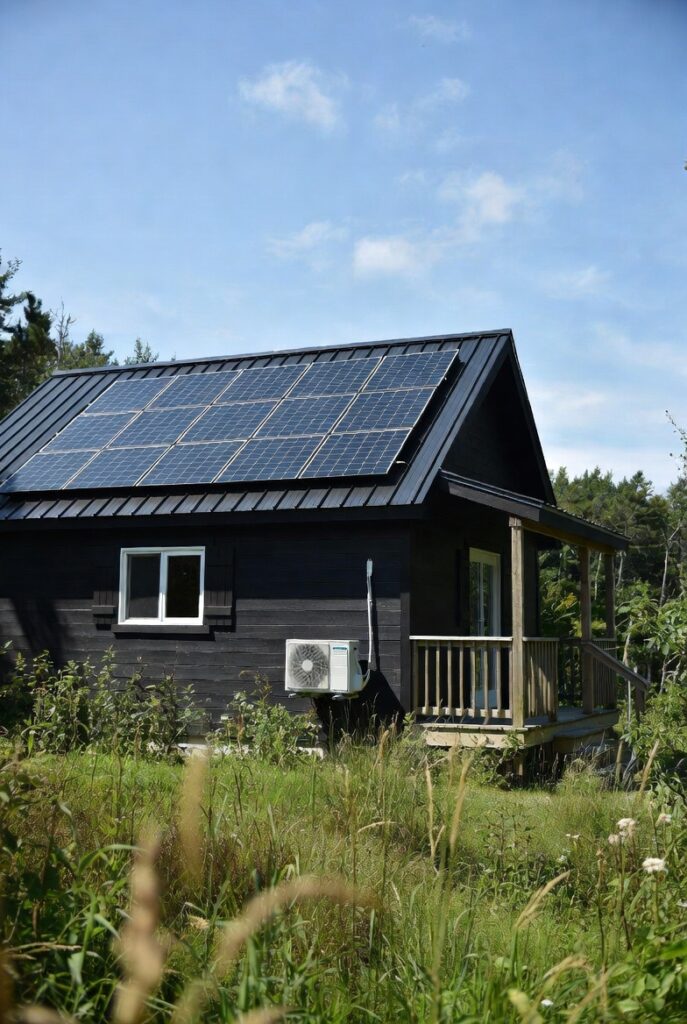
Off-grid ac is the load that breaks most undersized systems during the first summer heatwave. I helped a property owner near Gravenhurst in Muskoka District, Ontario diagnose a cooling failure in July 2025. His 12,000 BTU mini-split ran fine in the morning. By 2pm on hot days, his inverter shut down on thermal protection. His cabin reached 38°C inside by 4pm. His family retreated to the lake until evening when the inverter cooled enough to restart.
I measured his system performance through a full hot day. His mini-split drew 1,100W continuously at peak cooling. His inverter efficiency dropped from 92% at moderate load to 84% at sustained high load due to internal heating. The conversion losses were stacking. His solar panels produced DC. His inverter converted to AC. The mini-split’s internal inverter converted back to DC to drive the compressor. He was losing 18% of his solar harvest to double conversion before a single BTU reached the room.
I helped him install a DC-native hybrid mini-split the following month. The new unit accepts up to 380V DC directly from solar panels through a dedicated input on the outdoor unit. Its internal MPPT uses solar power first and only pulls from the AC grid connection when panel production drops. His compressor now runs directly on solar DC during sunny hours with zero inverter involvement. His cooling capacity increased by 22% because the conversion losses disappeared. His inverter no longer overheats. The installation cost $2,400 for the unit plus $380 for the dedicated panel run. His off-grid ac now runs on pure solar from 9am to 5pm on clear days. For the battery bank that powers evening cooling loads, The Budget Off-Grid System Standard covers the sizing.
Why Off-Grid AC Creates Double Conversion Losses
Off-grid ac creates double conversion losses because standard mini-splits expect AC power but drive DC motors. Solar panels produce DC. Your inverter converts to AC with 8% to 12% loss. The mini-split’s internal inverter converts back to DC with another 5% to 8% loss. Total loss runs 15% to 20% before cooling begins.
The Gravenhurst owner’s 18% loss was typical for this configuration. His 1,100W cooling load actually required 1,340W from his panels after conversion losses. On marginal solar days, this difference determines whether the system sustains cooling or shuts down.
The double conversion also generates waste heat that compounds the cooling challenge. The inverter runs hotter under sustained load. The efficiency drops further as temperature rises. The system works harder to achieve less cooling output.
The Double Conversion Problem: DC to AC to DC Again
The double conversion problem exists because of how mini-split technology evolved. Residential mini-splits were designed for grid power at 120V or 240V AC. Inside the outdoor unit, an inverter board converts AC to variable-frequency DC to drive the compressor at different speeds. The compressor itself uses a brushless DC motor.
Solar panels produce DC power directly. Converting to AC and back to DC wastes energy at every step. The conversion also generates heat that must be dissipated from the equipment enclosure.
In hot weather, this waste heat compounds the cooling challenge further. The inverter runs hotter under sustained cooling demand. The efficiency drops as internal temperatures rise. The system works harder to achieve less cooling output per watt consumed.
The Off-Grid AC Advantage: DC-Native Mini-Split Technology
The off-grid ac advantage of DC-native technology eliminates the double conversion entirely during sunny hours. Units like the EG4 12K accept direct DC input from solar panels up to 380V through a dedicated port on the outdoor unit. The internal MPPT controller manages the solar input directly. No external inverter is involved.
The compressor runs on solar DC through the unit’s native drive circuitry. The efficiency gain is immediate and measurable. The Gravenhurst owner’s 22% capacity increase came directly from eliminating conversion losses.
His panels now power cooling without any intermediate conversion during peak production hours. The same solar harvest produces more cooling output. The inverter stress disappears during sunny hours when cooling demand is highest.
EER2 vs SEER2: Which Rating Matters for Solar Cooling
SEER2 measures seasonal average efficiency across varying temperatures and part-load conditions. It rewards units that perform well during mild weather when cooling demand is low. EER2 measures efficiency at 95°F outdoor temperature at full compressor load. For solar cooling applications, EER2 matters more.
Your system faces maximum stress during heat waves when you need cooling most. A unit with SEER2 of 20 but EER2 of 10 will disappoint when temperatures peak. The high seasonal rating masks poor performance under load.
Look for EER2 ratings above 12 for serious off-grid applications. Reference Natural Resources Canada for Canadian energy efficiency standards and rating explanations. The EER2 rating predicts real-world performance on the hottest days.
BLDC Compressors: Zero Surge Current Startup
Brushless DC compressors eliminate the startup surge that plagued older air conditioning technology. Traditional induction motors draw 3x to 5x running current during startup to overcome static friction. A 1,000W compressor might demand 4,000W for the first second.
BLDC compressors ramp up under electronic control over 3 to 5 seconds. A 1,000W rated compressor draws approximately 1,200W during startup. This soft-start characteristic means no breaker trips and no voltage sags.
The technology that enables variable-speed efficiency also enables gentle startup. Modern mini-splits are inherently off-grid friendly because of their drive technology. No additional soft-start devices are required.
Direct Panel Input: Bypassing the Inverter Entirely
DC-native mini-splits accept direct solar panel connection through a dedicated input port. The typical configuration connects 3 to 4 panels in series producing 120V to 380V DC. The unit’s internal MPPT manages the solar array independently from your main charge controller.
A Victron MPPT 100/50 handles your main battery charging while dedicated panels feed the mini-split directly. The outdoor unit prioritizes solar input and only draws from the AC connection when panel production falls below cooling demand.
On clear summer days, the unit runs entirely on dedicated solar with zero battery or inverter involvement. The system design creates two parallel solar paths: one for storage and one for immediate cooling consumption.
Pre-Cooling and Thermal Mass: Your House as Cold Storage
I was monitoring a property owner’s system near Huntsville in Muskoka District, Ontario during a heat dome in August 2025. His DC-native mini-split was performing well during daylight hours. However, his evening battery drain was still problematic. His family preferred the cabin cool for sleeping, which meant running the mini-split from 8pm until midnight. His 15kWh battery bank dropped from 90% to 45% SOC every night during hot spells. He was concerned about the deep cycling shortening his battery life.
We programmed the mini-split to run at maximum cooling from 1pm to 5pm when solar production peaked. The unit dropped the cabin temperature to 20°C using 100% solar power. His log walls, concrete floor, and furniture absorbed the cold. By sunset, the cabin had stored significant thermal energy. We then set the mini-split to minimum fan-only mode from 5pm to 10pm. The stored thermal mass kept the cabin under 24°C through the evening without compressor cycling.
His overnight battery drain dropped from 45% to 18% after implementing the strategy. The pre-cooling used solar power that would have otherwise been curtailed. The thermal mass released stored cooling through the evening when electricity cost battery capacity. His off-grid ac strategy shifted from fighting his battery limits to working with his solar abundance. A Victron Cerbo GX tracks system performance and confirms pre-cooling is shifting load correctly. For the expandable system that accommodates seasonal cooling loads, The Expandable Solar System Standard covers the design.
Ontario Winter Capability: Heat Pump Mode to Minus 15°C
Modern DC-native mini-splits provide heating capability down to minus 15°C in heat pump mode. The same compressor that provides cooling in summer extracts heat from outdoor air in winter. At minus 15°C, efficiency drops but the unit still produces useful heat.
This capability makes the mini-split a secondary heat source during shoulder seasons when temperatures hover around freezing. The unit supplements your primary heating system during October, November, March, and April.
Full Ontario winters below minus 20°C require backup heating, but the mini-split reduces primary fuel consumption during transitional months. The year-round utility improves the return on investment beyond summer cooling alone.
Planning Your Off-Grid AC System: Sizing and Strategy
Planning your off-grid ac system starts with matching cooling capacity to cabin size and insulation quality. A well-insulated 1,000 square foot cabin typically needs 12,000 to 18,000 BTU. A poorly insulated cabin may need 24,000 BTU or more.
The DC input capacity determines how many dedicated panels you need. A 12K unit typically accepts 1,200W to 1,500W of direct solar input. Three to four 400W panels provide adequate input for most conditions.
A Victron SmartShunt monitors battery state and confirms the DC-native unit is reducing inverter load. Your off-grid ac sizing should account for both peak cooling demand and available panel mounting space for the dedicated solar run.
Minimum Viable vs Full Standard: Choosing Your Cooling Level
The off-grid ac approach offers two levels depending on budget and existing equipment. The minimum viable level keeps existing equipment with load-shifting strategy. The full standard converts to DC-native technology.
| System Level | Key Components | Cost | Efficiency Gain |
|---|---|---|---|
| Minimum Viable | Existing unit + pre-cooling schedule | $0-$400 | Load shifting only |
| Full Standard | DC-native unit + dedicated panels + strategy | $2,500-$4,000 | 15-20% + inverter bypass |
The minimum viable off-grid ac includes keeping existing standard mini-split with pre-cooling schedule during solar peak hours. It costs $0 to $400 if soft-start needed. It reduces inverter stress and shifts load to production hours but does not eliminate conversion losses.
The full off-grid ac standard includes DC-native hybrid mini-split with internal MPPT, dedicated solar panel run, pre-cooling schedule, and sizing for Ontario heat loads. It costs $2,500 to $4,000. It eliminates conversion losses during sunny hours, bypasses inverter during peak production, and provides heat pump capability to minus 15°C. Both approaches improve summer comfort. The difference is conversion efficiency and inverter stress. For the budget system that accommodates cooling loads through inverter, The Budget Off-Grid System Standard covers the electrical sizing.
Frequently Asked Questions
Q: Can I run a standard mini-split on off-grid ac power?
A: You can run a standard mini-split on off-grid ac power if your inverter can handle the continuous load and your battery bank can sustain it. A 12,000 BTU unit draws 800W to 1,200W continuously during cooling. The conversion losses of 15% to 20% reduce effective cooling capacity. Pre-cooling during solar peak hours helps shift load away from battery. However, DC-native units eliminate conversion losses and bypass the inverter entirely during sunny hours.
Q: How many solar panels do I need for off-grid ac cooling?
A: DC-native mini-splits typically accept 1,200W to 1,500W of direct solar input through the dedicated DC port. Three to four 400W panels provide adequate input for a 12,000 BTU unit. These panels connect directly to the outdoor unit, separate from your main battery charging array. For off-grid ac through a standard inverter, you need additional panel capacity to cover the 15% to 20% conversion losses plus battery charging during cooling hours.
Q: Will a DC-native mini-split work in Ontario winters for off-grid ac heating?
A: Modern DC-native units provide heat pump heating down to minus 15°C in heat pump mode. This covers shoulder seasons in Ontario when temperatures hover around freezing. Full Ontario winters regularly drop below minus 20°C, which exceeds heat pump capability. The unit supplements your primary heating during October, November, March, and April. Year-round off-grid ac and heating capability improves the return on investment beyond summer cooling alone.
Pro Tip: Your off-grid ac system should run on solar during the hours you need cooling most. Pre-cool from 1pm to 5pm when production peaks and temperatures climb. Let your house store cold in its thermal mass. Reduce compressor cycling after sunset when cooling costs battery capacity. The Huntsville owner’s overnight battery drain dropped from 45% to 18% after implementing this strategy. His off-grid ac shifted from draining batteries to harvesting surplus solar. The pre-cooling schedule costs nothing except the knowledge to program it.
Verdict
- The Gravenhurst Off-Grid AC Standard. The property owner’s inverter shut down on thermal protection every hot afternoon because his standard mini-split created 18% conversion losses. Installing a DC-native hybrid unit cost $2,780 total. His cooling capacity increased by 22%. The unit runs on pure solar from 9am to 5pm on clear days with zero inverter involvement.
- The EER2 Selection Standard. SEER2 measures seasonal average efficiency across mild conditions. EER2 measures performance at 95°F under full load. For off-grid cooling, EER2 above 12 matters more than high SEER2 ratings because your system faces maximum stress during heat waves when you need cooling most.
- The Huntsville Thermal Mass Standard. The property owner’s overnight battery drain dropped from 45% to 18% after implementing pre-cooling from 1pm to 5pm. His log walls and concrete floor stored thermal energy during solar peak hours. The thermal mass released stored cooling through the evening without compressor cycling. The strategy costs nothing except the knowledge to program it.
This build is engineered within the 48V DC Safety Ceiling. Diagnostic logic is based on 20+ years of technical service experience. All structural and electrical installations must be verified by a Licensed Professional and comply with your Local AHJ.
Questions? Drop them below.
About the Author
Robert Bertrand spent 20 years as a service advisor in the automotive industry (Lexus and Nissan), where precision diagnostics, wiring integrity, and documentation standards were non-negotiable. He brings that same technical discipline to GridFree Guide, where he researches, tests, and documents off-grid solar systems for Ontario conditions. Based in Rockwood, Ontario, every article is built on verified specifications, manufacturer data, and the real-world climate constraints of Canadian off-grid living.
As an Amazon Associate I earn from qualifying purchases. This site also contains affiliate links to other products and services. GridFree Guide earns a small commission at no extra cost to you.