
Disclosure: This post contains affiliate links. If you purchase through our links, we may earn a small commission at no extra cost to you.
Equipment room rodent exclusion is the perimeter standard that determines whether your Fortress stays a power plant or becomes a winter hotel for local wildlife. I have diagnosed the vehicle version of this failure: a customer’s GS350 came in with an intermittent no-start that took three hours to trace because the fault appeared and disappeared with temperature. When I found it, a mouse had built a nest directly on top of the engine control module. Insulation stripped from six wires. Two shorted against each other. Repair bill: $1,840. The customer had parked in a garage that had no mice. It had one mouse. One was enough. Your off-grid equipment room runs warm electronics, operates quietly, and is sheltered from Rockwood winter wind. From a field mouse’s perspective in October it is a five-star address. Equipment room rodent exclusion is what removes the vacancy sign before the season changes. Article 136 armors the cable runs. This article patches the room those cables lead to. Make sure your system is sized and built correctly before hardening the perimeter; the exclusion standard protects a quality installation.
Why Equipment Room Rodent Exclusion Requires More Than Cable Armor
The rodent proof solar wiring standard covers the cable runs: stainless braided sleeving on exposed conductors, capsaicin tape at entry points, liquid-tight conduit at wall penetrations. That standard is the fuel line armor. It protects the conductors between the array and the equipment room. It does not protect the equipment room itself.
A mouse that cannot chew through stainless sleeving on a cable run will follow that cable to where it enters the building and look for the gap at the wall penetration. A mouse that is deterred at every conduit entry will walk along the base of the building until it finds the gap under the equipment room door. The cable armor sends the mouse looking for another entry point. Equipment room rodent exclusion is what ensures there is no other entry point to find.
The inverter ventilation guide covers the airflow standard that the exclusion hardware must not impair. The inverter dust protection guide covers the filtration standard for intake vents. Both of those standards require open ventilation paths. Equipment room rodent exclusion protects those paths with hardware cloth rather than blocking them. The airflow continues. The mouse does not.
The Equipment Room Rodent Exclusion Three-Layer Perimeter
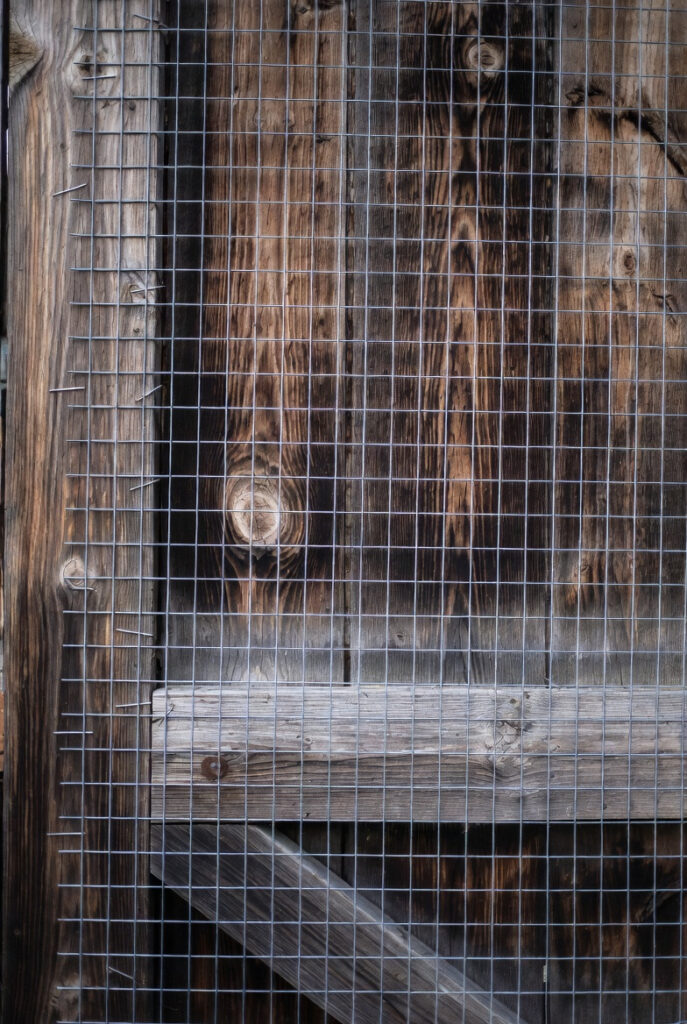
The first layer is the ventilation opening shield. Every air intake and exhaust opening in the equipment room, including the low intake vent and the high exhaust opening required by the ventilation standard, must be covered with quarter-inch galvanised hardware cloth. Standard fibreglass window screen is not acceptable; a red squirrel can breach it in under 60 seconds. Quarter-inch hardware cloth with 6mm mesh openings has a wire diameter of approximately 0.9mm and cannot be chewed through by any common Ontario rodent. Cut the hardware cloth to overlap the opening by at least 25mm on all sides and fasten it with stainless screws directly through the cloth into the framing. The mesh opening of 6mm excludes deer mice, which can pass through openings as small as 6.4mm at maturity.
The second layer is the wall penetration seal. Every conduit, pipe, or cable bundle that passes through the equipment room wall requires a two-layer seal: stainless steel wool packed tightly into the gap first, then spray foam applied over the steel wool. Standard expanding spray foam alone is not a rodent deterrent; a mouse can chew through it in under two minutes. The stainless steel wool is the mechanical barrier. The spray foam is the air and moisture seal. Neither alone is sufficient. Together they create a penetration seal that will not be breached. Apply this two-layer seal to every penetration in the equipment room envelope regardless of size; a gap that looks too small is large enough.
The third layer is the threshold guard. A standard interior door with a 12mm gap at the threshold is not a rodent barrier. A heavy-duty aluminium door sweep with a rubber gasket, fitted so that the gasket compresses against the threshold with the door closed and no light is visible underneath, reduces the gap to under 5mm. If light is visible under the door, a mouse can enter. Install the door sweep and check it quarterly; rubber gaskets compress and wear over time.
Internal Cabinet Sealing: The Equipment Room Rodent Exclusion Inner Layer
Even with a fully hardened perimeter, the equipment enclosures inside the room require their own sealing layer. A Victron MultiPlus-II cabinet with an unsealed cable entry port at the base is a separate invitation inside the already-defended room.
I opened an inverter cabinet during a fall inspection outside Rockwood and found a partially constructed nest between the MultiPlus-II and the cabinet wall: dried grass, insulation fragments, and chewed pieces of the foam weatherstrip from the cabinet door seal. No wires had been reached yet. Three days old based on the material freshness. The mouse had entered through a 19mm gap where the DC cable bundle passed through the cabinet base plate without a gland fitting. That one gap was the entire problem. I installed a brass cable gland on the bundle, covered the ventilation grille with 6mm hardware cloth, and added a door sweep to the equipment room entry door. Four-week follow-up: zero new activity. One gap. One seal. Done.
Seal every cable entry port in every equipment enclosure with a brass or stainless cable gland rated for the cable bundle diameter. For ports that cannot accept a gland, use fire-retardant duct seal putty packed around the cable bundle until no gap remains. Fire-retardant putty is the correct material for enclosure interior use; standard spray foam inside an enclosure running at operating temperature is not appropriate. If a nest is found inside an enclosure, remove it wearing gloves, clean all accessible surfaces with isopropyl alcohol, re-terminate any conductor whose jacket was breached using a ratcheting crimper and a fresh lug, and perform a full thermal audit under load per the thermal audit guide before returning the system to normal service.
NEC and CEC: What the Electrical Codes Actually Say
NEC 110.13 requires that electrical equipment be mounted in a manner suitable for its installation environment and that the environment not impair the equipment’s rated protection. A standard IP21-rated inverter installed in a barn where rodents have access to the equipment enclosure is operating outside its rated environmental specification. The hardware cloth, penetration seals, and cabinet glands described in this article are what make a barn installation environment suitable for IP21-rated equipment. NEC 110.3(b) requires that equipment be installed in accordance with its listing and labeling instructions; the Victron MultiPlus-II installation manual’s requirement for a clean, protected installation environment implies an enclosure that has been hardened against the foreseeable environmental hazards of the installation location.
CEC Section 2-024 requires that electrical equipment be protected from mechanical injury and from the action of the elements. In Ontario’s rural townships including the Rockwood area, field mice, red squirrels, and chipmunks are foreseeable elements in any barn or outbuilding installation. The CEC Section 2-024 protection requirement is not satisfied by cable armor alone if the equipment room itself provides unobstructed access to the enclosures housing the protected equipment. The equipment room rodent exclusion standard described in this article represents the complete implementation of the CEC Section 2-024 requirement for the wildlife element at a rural Ontario off-grid installation.
Quick Reference – Equipment Room Rodent Exclusion Standard
| Entry Point | Seal Method | Standard | Check Frequency |
|---|---|---|---|
| Ventilation openings | Quarter-inch galvanised hardware cloth, 6mm mesh, stainless fasteners | 6mm maximum mesh opening, 25mm overlap all sides | Every October and April |
| Wall penetrations | Stainless steel wool packed tight, then spray foam over wool | No visible gap after sealing | Every October and April |
| Equipment room door | Heavy-duty aluminium door sweep with rubber gasket | No light visible under door when closed | Quarterly; replace gasket annually |
| Cabinet cable entry ports | Brass or stainless cable gland rated for bundle diameter | Gap sealed to within cable jacket | Every October and April |
| Cabinet ventilation grilles | 6mm hardware cloth over existing grille | 6mm maximum mesh opening | Every October and April |
| Unsealed cabinet ports | Fire-retardant duct seal putty | No gap around cable bundle | Every October and April |
Place a snap trap on the equipment room floor near each cabinet base in October and check it weekly through March. A triggered trap with a catch is the earliest possible confirmation that your perimeter has a gap you have not found yet. A trap that runs all winter without a catch is confirmation the exclusion standard is holding. The trap costs $3. The information it provides is worth considerably more than $3. Log the check dates alongside the monthly SOC checks in the maintenance record. If a trap catches a mouse, find the gap before setting the trap again.
The Verdict
Equipment room rodent exclusion is the perimeter defense that Article 136 cable armor alone cannot provide. One article armors the fuel line. This one patches the tank.
Before the first October frost:
- Install quarter-inch galvanised hardware cloth over every ventilation opening and apply the two-layer steel wool and spray foam seal at every wall penetration; these two measures close the most common entry points that cable armor does not address
- Install a heavy-duty door sweep and seal every cabinet cable entry port with a brass gland or fire-retardant duct seal putty; the inner layer of cabinet sealing is what protects the control boards even if something gets past the perimeter
- Inspect every enclosure interior before the heating season begins wearing gloves; evidence found in October costs an afternoon, evidence found in February after a nest has been building for four months costs a repair bill and a thermal audit
One gap. One mouse. One nest. Seal the gaps before October. The mouse is already looking.
Questions? Drop them below.
About the Author
Robert Bertrand spent 20 years as a service advisor in the automotive industry (Lexus and Nissan), where precision diagnostics, wiring integrity, and documentation standards were non-negotiable. He brings that same technical discipline to GridFree Guide, where he researches, tests, and documents off-grid solar systems for Ontario conditions. Based in Rockwood, Ontario, every article is built on verified specifications, manufacturer data, and the real-world climate constraints of Canadian off-grid living.
As an Amazon Associate I earn from qualifying purchases. This site also contains affiliate links to other products and services. GridFree Guide earns a small commission at no extra cost to you.