
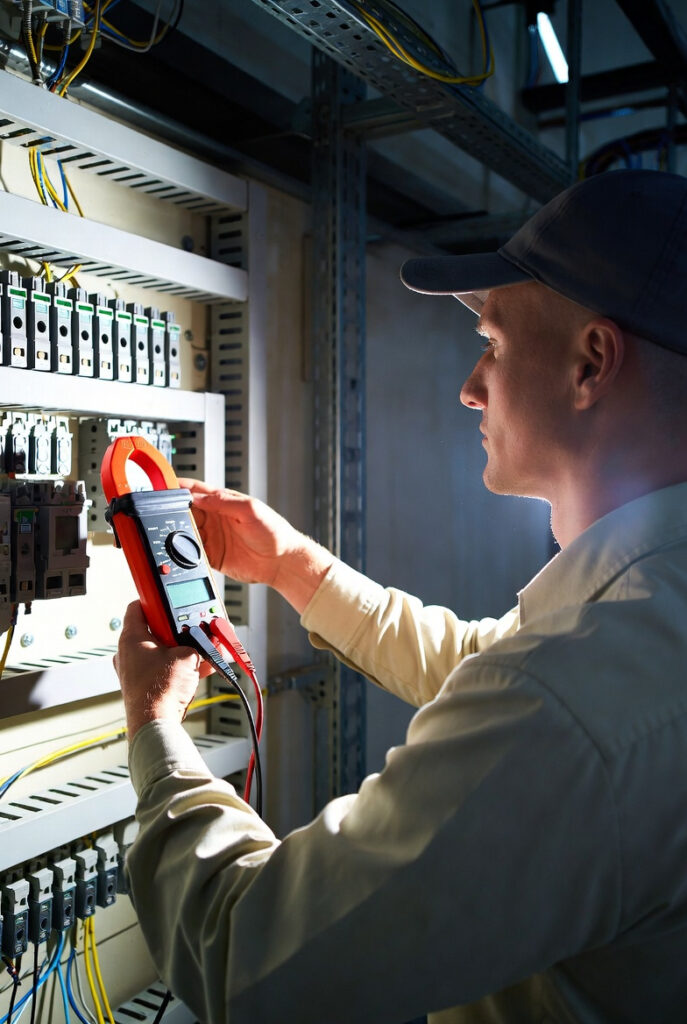
An off-grid burn-in test is the road test that happens while you are still in the car park, not on the motorway. I do not pull a repaired car out of the service bay without a road test. You idle the engine, check operating temperatures, and then take it on a graduated test: gentle acceleration, hold at highway speed, then a hard pull to redline. The first hard acceleration tells you more about the quality of the repair than an hour of idling in the bay. A transmission that shifts clean at 40 km/h in a parking lot will slip on the on-ramp under hard load, and that is when the comeback happens. In your off-grid Fortress the parallel is exact. A system idling at 200W with stable voltage and cool busbars looks perfect. The moment you push the Victron MultiPlus-II to 2,400W with a microwave and a well pump running simultaneously, everything the idle concealed becomes visible. The off-grid burn-in test is the 30 minutes that tells you whether your Fortress is ready for the first Rockwood winter or whether it has a fault that needs to be found now, while you are standing next to it with a multimeter. Make sure your system is sized for the loads you are about to run before beginning; the test is only valid at realistic operating loads.
Why the Off-Grid Burn-In Test Finds What the Commissioning Checklist Cannot
The commissioning checklist is a cold-circuit inspection followed by a sequential power-up. It verifies that the installation is correct at ambient temperature with no sustained load. It is the necessary condition for energisation. It is not sufficient to declare the system ready for winter operation.
Two categories of fault are invisible at commissioning and visible only under sustained load. The first is thermal expansion faults. When a high-current connection heats up for the first time under full load, the metal expands. The first heat cycle produces the largest dimensional change the connection will ever experience because the components are starting from their machined room-temperature dimensions. A connection that was at exactly 12 Nm during the commissioning torque check may be fractionally below 12 Nm after the first full heat cycle as the contact surfaces seat against each other. This fractional back-off is invisible on the commissioning checklist. It appears as a thermal hot spot at the 20-minute full-load mark of the burn-in.
The second category is infant mortality. Electronic components that are going to fail due to manufacturing defects, marginal connections, or installation errors fail in the first hours of operation under load. This is a documented reliability phenomenon. A component that survives the first 24 hours of operation under rated conditions will typically survive its full rated service life. The burn-in is the controlled environment in which infant mortality failures happen while you can respond, not in the middle of a January storm when you cannot. The inverter terminal torque guide covers the torque standard that prevents the most common commissioning fault. The burn-in is what verifies that standard has held through the first real thermal cycle.
The Off-Grid Burn-In Test Protocol: Four Stages in Thirty Minutes
The burn-in follows a graduated load schedule with a thermal scan at the end of each stage. Have the IR thermometer, the multimeter, and the emergency shut-off accessible before beginning. Have a second person present if possible.
Stage 1 runs from 0 to 5 minutes at base load: lights, phone chargers, and a router, approximately 100-200W. The Victron SmartShunt 500A should show stable current draw matching the connected loads. The inverter display should show stable AC voltage. The battery terminal voltage under this load should be within 0.5V of the open-circuit voltage recorded during commissioning. Log all three readings before advancing to Stage 2.
Stage 2 runs from 5 to 15 minutes at medium load: add a television or a desktop computer, approximately 400-600W total. At the 10-minute mark, perform the first thermal scan. Scan the battery terminals, the busbar lugs, the inverter DC input terminals, and the main fuse. Apply the Delta-T standard from the thermal audit guide: any connection reading more than 10°C above adjacent similar components requires investigation before advancing to Stage 3.
Stage 3 runs from 15 to 25 minutes at heavy load: add a microwave at full power or an electric kettle, approximately 1,500-2,000W total. The inverter fans should engage within 60 seconds of the heavy load being added. The Victron Cerbo GX dashboard will display inverter temperature in real time; watch for any temperature rise that exceeds the solar inverter ventilation thresholds established during installation. At the 20-minute mark, perform the second thermal scan.
I was running the first burn-in on a freshly commissioned system outside Rockwood. The cold-circuit check was clean and the sequential power-up was clean. The system idled at base load without any issues for 10 minutes. I added a microwave at full power to bring the system to 2,400W and ran through Stage 3. At the 20-minute thermal scan, one 4/0 lug on the negative busbar was reading 28°C above the adjacent lugs. Not hot enough to smell. Not hot enough to trip the breaker. Visible only because the IR thermometer was in my hand and I was looking. Shut the system down. Re-torqued the terminal; it had backed off fractionally during the first heat cycle. Re-ran Stage 3 from the beginning. Clean on the second run. The burn-in found what the commissioning checklist could not: the first real thermal event under real load.
Stage 4 is a 5-minute sustained hold at full Stage 3 load. Log battery terminal voltage, inverter input terminal voltage, AC output voltage, SmartShunt current, and Cerbo GX inverter temperature. These numbers are the commissioning baseline. File them with the commissioning record from Article 147. Every future diagnostic comparison starts here.
What to Do When the Burn-In Finds a Fault
A fault during the burn-in is a success condition. It means the fault was found in a controlled environment rather than at 2am in February when the inverter trips offline and the pipes start to freeze. The correct response is the same every time.
Shut down immediately using the main battery breaker or the master kill switch. Do not attempt to diagnose the fault while the system is energised. Allow everything to cool completely. Identify the hot connection using the IR thermometer reading from the thermal scan that triggered the shutdown. Inspect that connection: check the lug for a cold-weld crimp, check the terminal torque, check the contact surface for corrosion or misalignment. Re-terminate as required per the inverter terminal torque guide and the crimping standard. Re-run the full burn-in from Stage 1 after the repair. The burn-in is not complete until all four stages run clean.
If the fault is thermal throttling rather than a hot connection, the inverter is reducing output to protect itself from heat. This indicates a ventilation problem, not a wiring problem. Review the clearance and airflow standards from the ventilation guide before re-running the burn-in.
NEC and CEC: What the Electrical Codes Actually Say
NEC 110.3 requires that equipment be installed and used in accordance with any instructions included in its listing or labeling. For residential off-grid inverters, the installation manual universally requires a burn-in period or first-run operational test under load before the system is considered commissioned. The burn-in protocol described in this article is the practical implementation of that manufacturer requirement within the NEC 110.3 framework. NEC 690.4 requires that PV systems be installed by qualified persons and that the installation be completed in accordance with applicable requirements; a system that has not been load-tested cannot be considered fully installed under this standard.
CEC Section 64-064 requires that PV systems be commissioned in accordance with the manufacturer’s instructions. Every major off-grid inverter manufacturer includes a first-run load test requirement in its commissioning documentation. The burn-in satisfies this requirement when completed, documented, and filed with the commissioning record alongside the cold-circuit checklist from Article 147. In Ontario, a residential off-grid installation that has been cold-circuit checked, sequentially powered up, and burn-in tested at full load represents the complete commissioning standard required by CEC Section 64-064.
Quick Reference – Off-Grid Burn-In Test Stage Schedule
| Stage | Duration | Load Level | Key Monitoring Points |
|---|---|---|---|
| Stage 1 — Base load | 0-5 minutes | 100-200W: lights, chargers, router | SmartShunt current stability, inverter AC voltage, battery terminal voltage |
| Stage 2 — Medium load | 5-15 minutes | 400-600W: add TV or computer | First thermal scan at 10 minutes; Delta-T standard applies |
| Stage 3 — Heavy load | 15-25 minutes | 1,500-2,000W: add microwave or kettle | Inverter fans engaged, Cerbo GX temperature display, second thermal scan at 20 minutes |
| Stage 4 — Sustained hold | 25-30 minutes | Full Stage 3 load maintained | Log all voltages, current, and temperatures as commissioning baseline |
| Fault response | Any stage | Shut down immediately | Cool completely, inspect and re-terminate, re-run from Stage 1 |
| Pass condition | Stage 4 complete | All stages clean | No thermal events over Delta-T threshold, voltages stable, no error codes |
Run the burn-in on a clear sunny day when the solar array is producing close to full rated output. This puts the maximum charging current through the MPPT terminals and the combiner box at the same time the inverter is under full load, stressing both the charging side and the discharge side of the system simultaneously. A fault that only appears when charging and discharging are running together at full power is invisible during a cloudy-day or nighttime burn-in. The full-sun, full-load burn-in is the most complete stress test the system will experience in a controlled environment. If it passes this test, it is ready for winter.
The Verdict
An off-grid burn-in test is not optional after commissioning. It is the 30 minutes that proves the Fortress is ready for the first real winter or reveals the fault that would have found you instead.
Before declaring the system operational:
- Run all four burn-in stages in sequence with a thermal scan at the end of Stages 2 and 3, stopping at any stage where a Delta-T fault, a thermal throttle event, or an error code is observed until the fault is resolved and the full burn-in is re-run from Stage 1
- Log battery terminal voltage, inverter input terminal voltage, AC output voltage, SmartShunt current draw, and Cerbo GX inverter temperature at Stage 4 full load and file these numbers as the permanent commissioning baseline
- If the burn-in runs clean through all four stages, sign and date the burn-in log alongside the commissioning checklist and consider the Fortress verified for operational use
In the shop we do not hand the keys back until the road test is done. In the Fortress, the burn-in is the road test. Run it before the first storm, not after.
Disclosure: This post contains affiliate links. If you purchase through our links, we may earn a small commission at no extra cost to you.
Questions? Drop them below.
About the Author
Robert Bertrand spent 20 years as a service advisor in the automotive industry (Lexus and Nissan), where precision diagnostics, wiring integrity, and documentation standards were non-negotiable. He brings that same technical discipline to GridFree Guide, where he researches, tests, and documents off-grid solar systems for Ontario conditions. Based in Rockwood, Ontario, every article is built on verified specifications, manufacturer data, and the real-world climate constraints of Canadian off-grid living.
As an Amazon Associate I earn from qualifying purchases. This site also contains affiliate links to other products and services. GridFree Guide earns a small commission at no extra cost to you.