
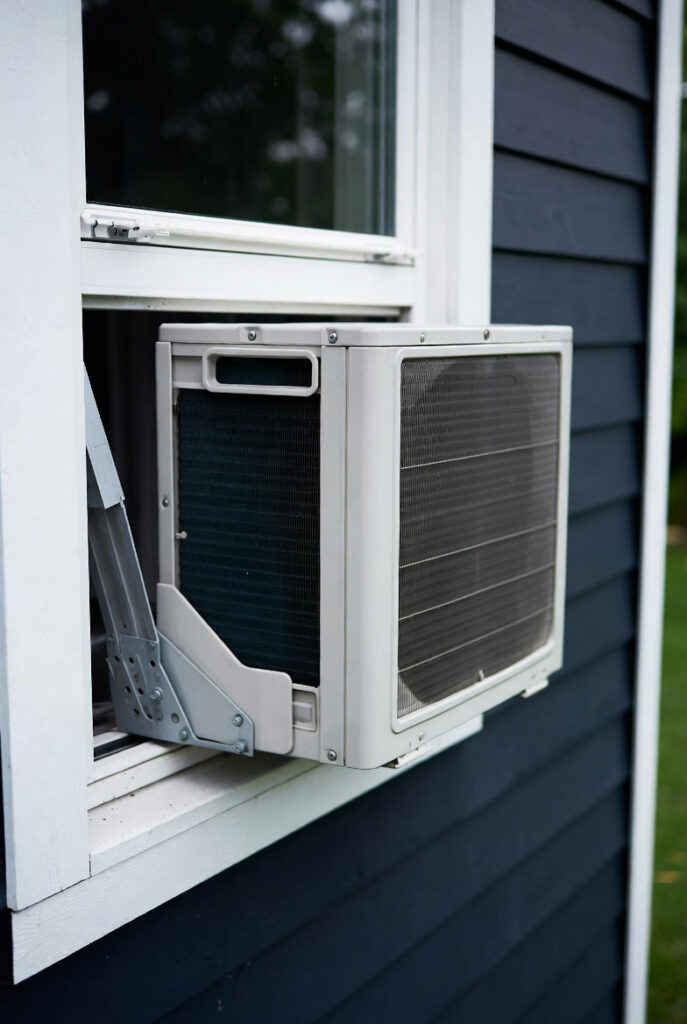
A soft start AC inverter solution is the difference between a 15,000 BTU air conditioner that trips your system every time the thermostat calls for cooling and one that starts so quietly you have to check the vents to confirm it is running. The Victron MultiPlus-II 3000VA is a 3,000 watt continuous inverter with a 6,000VA surge rating 50A at 120V. A standard 15,000 BTU window AC unit has a Locked Rotor Amperage of 60-80A. The math is clear. 80A exceeds 50A. Without a soft starter the inverter trips on overload every time the compressor tries to start. With a soft starter the 80A LRA becomes 18-20A well within the surge rating. The inverter runs the AC. The AC runs all summer. Before understanding the soft start solution understand how much solar power you actually need the system size determines whether a soft start AC inverter solution is the fix or whether a larger inverter is required.
Soft Start AC Inverter: The LRA Problem Explained
What Locked Rotor Amperage is: Every AC compressor motor has two current ratings on the nameplate the Full Load Amps (FLA) the current it draws while running at rated cooling capacity, and the Locked Rotor Amps (LRA) the current it demands during startup when the rotor is stationary and the motor must overcome the static friction of the compressor mechanism. For a 15,000 BTU window AC the typical nameplate shows: FLA 12A, LRA 68A. The LRA-to-FLA ratio is 5.7× the compressor demands 5.7 times its running current for the 200-500 milliseconds of the startup event. As covered in our Soft Starter Inverter guide any LRA-to-FLA ratio above 3× identifies a motor load that requires soft start management the 15,000 BTU AC at 5.7× is well above this threshold.
The MultiPlus-II 3000VA surge rating vs the LRA: The Victron MultiPlus-II 3000VA has a surge rating of 6,000VA 50A at 120VAC for short duration surge events. The 15,000 BTU AC LRA of 68A exceeds this 50A surge rating by 36%. Every startup attempt asks the inverter to deliver 36% more current than its surge design allows. The inverter’s output transistors current-limit. The output voltage sags. The compressor motor stalls increasing the LRA demand further. The inverter’s overload protection trips. The system shuts down. This is not inverter failure. This is physics.
I arrived at a client’s Guelph cabin on a 30°C August afternoon the client had been unable to run their 15,000 BTU window unit since system commissioning in May. Every startup attempt produced the same result: MultiPlus-II overload LED lit, AC fan stopped, system reset. Three months of Ontario summer without air conditioning while the inverter sat in the equipment room perfectly functional. I checked the AC nameplate: FLA 12A, LRA 68A. I checked the MultiPlus-II surge rating: 6,000VA = 50A at 120V. The gap was 18A. The inverter was not undersized it was being asked to deliver a 68A sledgehammer when it needed to deliver an 18A nudge. The soft start AC inverter solution cost $299. It was installed in 45 minutes. As covered in our Cold Start Surge guide Ontario temperature extremes affect motor starting demands in both directions the summer heat makes AC LRA events the most frequent inverter stress event of the year.
The Micro-Air Easy Start – The AC Soft Start Standard
What the EasyStart does: The Micro-Air EasyStart installs between the power supply and the compressor motor inside the AC unit’s electrical compartment. Instead of applying full line voltage to the compressor at startup it applies a controlled ramped voltage over 1-2 seconds. The compressor torque increases gradually as voltage ramps. The current rises slowly rather than spiking. By the time the compressor reaches operating speed the current has never exceeded 20A compared to the 68A unmanaged LRA.
The adaptive learning algorithm: The Micro-Air EasyStart uses a microprocessor-based adaptive learning algorithm on the first startup after installation it measures the compressor motor’s electrical characteristics: impedance, power factor, starting torque requirement, and resonant frequency response. It stores these measurements and calculates the optimal voltage ramp profile for that specific compressor. Every subsequent startup uses this optimized profile the ramp is tailored to the motor, not generic.
The 70% surge reduction in numbers: Original LRA: 68A. After EasyStart: 19A a 72% reduction. At 19A the MultiPlus-II 3000VA handles the startup with 31A of surge headroom remaining the overload protection never engages. The compressor starts. The lights do not flicker. The thermostat is satisfied. The system runs all summer.
I installed the EasyStart on that Guelph client’s 15,000 BTU window unit after explaining the LRA math. I attached a clamp meter to the AC supply lead before installation and ran one startup 68A for 380 milliseconds, MultiPlus-II overload LED, system trip. I installed the EasyStart a 45-minute procedure inside the unit’s electrical compartment and ran the startup again with the clamp meter in place. The display showed 19A ramping smoothly over 1.3 seconds. The client was standing next to the unit with his hand on it waiting for the thump. It never came. He said: is it running? The vents were blowing cold. It was running. The soft start AC inverter solution had turned a $5,000 problem into a $299 fix. As covered in our Off-Grid Solar Maintenance guide the before and after LRA measurements belong in the system commissioning log the after measurement confirms the EasyStart is achieving its rated reduction.
The Thermal Shock Mechanism – Why Soft Start Extends Compressor Life
What thermal shock does to motor windings: Each full-LRA startup event delivers a thermal shock to the compressor motor windings. The 68A startup current heats the copper windings at a rate proportional to I²R at 68A vs the 12A running current the winding heating rate is (68/12)² = 32× higher during the startup event than during normal operation. The winding insulation typically Class F rated for 155°C maximum experiences repeated thermal cycling between startup temperatures and running temperatures. Over thousands of startup cycles this thermal cycling fatigues the insulation material the insulation cracks, the winding shorts to the motor frame, the compressor fails.
The soft start longevity calculation: At 19A managed startup current vs 68A unmanaged: winding heating rate = (19/12)² = 2.5× above running compared to 32× without the soft starter. The soft start AC inverter solution reduces the thermal stress on the winding insulation by 92% at every startup event. For a compressor that starts 8 times per day in an Ontario summer approximately 1,000 starts per season the cumulative thermal fatigue reduction over 10 seasons is substantial. The EasyStart is not just an inverter protection device. It is a compressor life extension investment.
The mechanical wear reduction: Beyond thermal effects the full-LRA startup event applies maximum mechanical torque to the compressor crankshaft, bearings, and valve assembly simultaneously. The gradual torque ramp of the soft starter reduces peak mechanical stress on these components reducing wear at the bearing surfaces and valve seats that accumulate over thousands of startup cycles.
The Generator Compatibility – Why Small Generators Fail Without Soft Start
The generator current limit: A 2,000W portable generator at 120VAC delivers a maximum continuous current of: I = 2,000W / 120V = 16.7A continuous. A 15,000 BTU AC unit with a 68A LRA exceeds the generator’s maximum output by 4× at startup even for the 380-millisecond LRA duration. The generator cannot sustain 68A. The generator’s AVR cannot maintain voltage at 4× rated current. The voltage collapses. The compressor motor stalls. The generator surges and then recovers or the generator’s overload protection trips.
With soft start: At 19A managed startup current the 2,000W generator delivers: P = 19A × 120V = 2,280W 114% of rated output for 1.3 seconds. Most generators tolerate 110-120% overload for short durations. The generator holds voltage. The compressor starts. The running current drops to 12A – 1,440W well within the 2,000W generator continuous rating. The soft start AC inverter solution is the only way to run a 15,000 BTU AC on a 2,000W generator reliably.
The SoftStartUSA for well pump applications: For systems where both the well pump and the AC compressor require soft start management the SoftStartUSA handles single-phase pump motors while the Micro-Air EasyStart handles the AC compressor. Two separate devices each optimized for their specific motor type. As covered in our System Voltage guide the 48V system voltage provides the DC headroom that makes managing these simultaneous AC motor loads possible a 12V system would collapse under the combined inverter current demands.
NEC 440 and CEC Section 28 – The Motor Circuit Code
NEC 440 – USA: National Electrical Code Article 440 governs air conditioning and refrigeration equipment. NEC 440.52 addresses motor starting duty recognizing that high starting currents affect voltage drop on branch circuits and the sizing of overcurrent protective devices. While NEC 440 does not mandate soft starters the voltage drop requirements of NEC 440.52 are satisfied by the soft start AC inverter solution the managed 19A startup current produces far less voltage drop on the branch circuit than the unmanaged 68A LRA.
CEC Section 28 – Canada: The Canadian Electrical Code Section 28 governs air conditioning and refrigeration installations with requirements equivalent to NEC 440. The CEC equipment durability requirement that electrical equipment be installed and operated within its design limits applies directly to the inverter operating beyond its surge rating on every unmanaged AC startup. The soft start AC inverter solution brings the startup current within the inverter’s design limits satisfying the CEC Section 28 equipment durability standard.
Quick Reference – Soft Start AC Inverter Selection Guide
| AC Unit Size | Typical LRA | MultiPlus-II 3000VA Surge (50A) | Soft Start Required | Result After EasyStart |
|---|---|---|---|---|
| 8,000 BTU | 35-45A | Exceeds surge by up to 10A | Yes | 10-13A managed start |
| 12,000 BTU | 50-60A | Exceeds surge by 10-20A | Yes | 14-17A managed start |
| 15,000 BTU | 60-80A | Exceeds surge by 10-30A | Yes | 17-22A managed start |
| 8,000 BTU | 25-30A | Within surge rating | Optional | 7-9A longevity benefit |
| Any unit | LRA below 45A | Within 5000VA surge | Optional | Recommended for longevity |
Pro Tip: Measure the LRA with a clamp meter on the AC supply lead before purchasing a soft starter confirm the actual LRA of your specific unit rather than relying on nameplate data alone. Nameplate LRA is the maximum rated value actual LRA may be 10-20% lower depending on supply voltage and ambient temperature. A unit with a nameplate LRA of 68A may actually pull 58A at startup on a hot day at 118VAC. If the actual LRA is already within the inverter surge rating the soft starter provides longevity benefits but may not be strictly required for reliable starting. Measure first. Buy based on data. The before and after LRA measurements belong in the system commissioning log the after measurement confirms the EasyStart is achieving its rated reduction.
The Verdict
A soft start AC inverter solution converts a 15,000 BTU system killer into a reliable summer companion for $299 and 45 minutes.
Three selection criteria:
- Check the nameplate LRA if LRA exceeds the inverter surge rating (50A for MultiPlus-II 3000VA) a soft starter is required not optional
- Check generator compatibility if LRA exceeds generator maximum output (16.7A for 2,000W) a soft start AC inverter solution is the only solution
- Install and measure – clamp meter before and after – confirm below 25% of original LRA
Don’t buy a bigger hammer. Buy a smarter one.
Disclosure: This article contains affiliate links. If you buy through them, GridFree Guide earns a small commission at no extra cost to you.
Questions? Drop them below.
About the Author
Robert Bertrand spent 20 years as a service advisor in the automotive industry (Lexus and Nissan), where precision diagnostics, wiring integrity, and documentation standards were non-negotiable. He brings that same technical discipline to GridFree Guide, where he researches, tests, and documents off-grid solar systems for Ontario conditions. Based in Rockwood, Ontario, every article is built on verified specifications, manufacturer data, and the real-world climate constraints of Canadian off-grid living.
As an Amazon Associate I earn from qualifying purchases. This site also contains affiliate links to other products and services. GridFree Guide earns a small commission at no extra cost to you.