
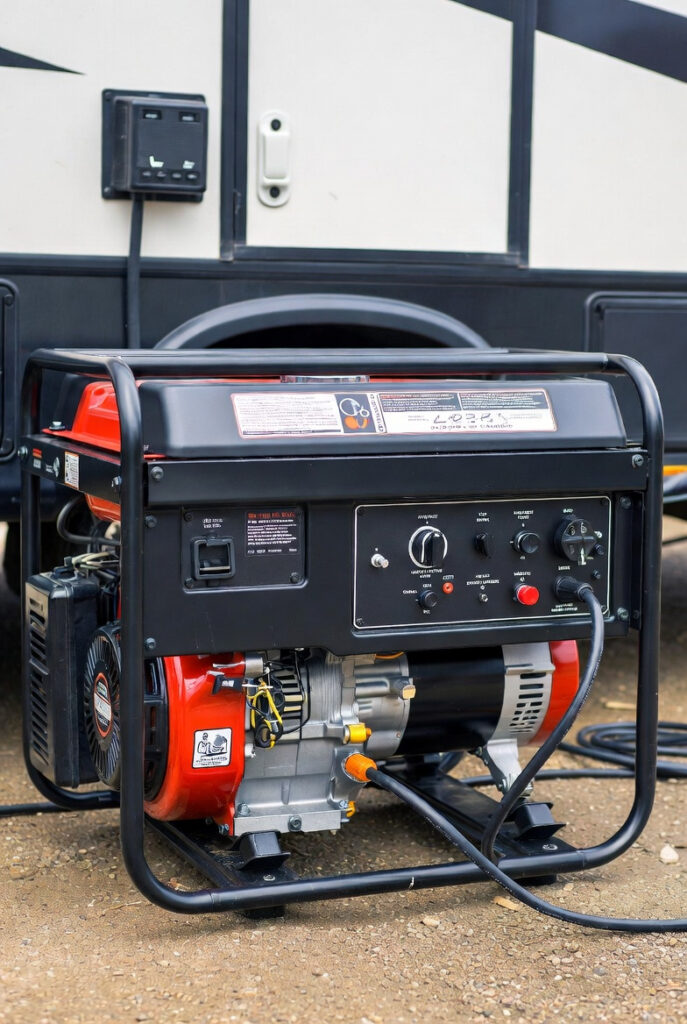
Your generator has a neutral-to-ground bond from the factory. Your Victron MultiPlus-II has an internal neutral-to-ground bond relay that activates in inverter mode. When you plug the generator into your off-grid system you now have two bonds simultaneously. Current begins flowing through your equipment grounding conductors the safety wires that are not supposed to carry current during normal operation. Your GFCI outlets start tripping for no apparent reason. Your lights flicker. Generator bonding off grid management is not optional it is the fix for every ghost electrical issue in your system. Before building your generator integration understand how much solar power you actually need the system architecture determines which source is the bonding authority.
Generator Bonding Off Grid: The Dual Bond Problem
What a neutral-to-ground bond is: As covered in our Equipment Bonding guide the neutral-to-ground bond connects the AC neutral conductor to the equipment ground at one specific location the source of the AC power. In an inverter-based off-grid system the correct bond location is inside the inverter the MultiPlus-II internal ground relay provides this bond automatically when the inverter is in inverter mode. This single bond is the reference point for the entire AC system.
Why generators come bonded from the factory: A portable generator used as a standalone power source on a jobsite is a separately derived system it has no connection to any other power source and no other neutral-to-ground bond anywhere in the circuit. NEC 250.30 requires that a separately derived system have exactly one neutral-to-ground bond and the generator factory bond provides this. On a jobsite the generator bond is correct, required, and safe.
The conflict when generator meets inverter: When that same bonded generator is connected to an off-grid inverter system the situation changes entirely. The inverter already has its own neutral-to-ground bond. The generator adds a second bond. Now there are two points where neutral connects to ground two parallel paths for neutral return current. Some of the AC return current that should flow exclusively through the neutral conductor splits some goes through the neutral, some goes through the equipment grounding conductors. This is objectionable ground current.
The objectionable ground current physics: The equipment grounding conductors the green or bare copper safety wires connecting every metal chassis to the main ground busbar are designed to carry current only during fault events. During normal operation they should carry zero current. When a second neutral-to-ground bond creates a parallel return path the grounding conductors carry a portion of the normal load return current continuously. This current heats the grounding conductors, creates voltage differences between grounded metal surfaces, and causes the ghost electrical symptoms GFCI trips, flickering lights, Cerbo GX communication errors that lead owners to believe their generator power is dirty. As covered in our Grounding Electrode guide the grounding system is not a current-carrying conductor under normal operation the dual bond violates this fundamental requirement.
The GFCI Trip Mechanism – Why Dual Bonding Trips Safety Devices
How a GFCI works: A Ground Fault Circuit Interrupter monitors the current flowing through the hot conductor and the current returning through the neutral conductor. In a properly wired circuit these currents are equal every amp that goes out through the hot comes back through the neutral. If the GFCI detects a difference of more than 5 milliamps between hot current and neutral return current it concludes that some current is taking an alternative path and trips.
Why dual bonding creates GFCI trips: When generator bonding off grid creates a second neutral-to-ground bond some of the neutral return current diverts through the equipment grounding conductors instead of returning through the neutral. The GFCI sees: hot current = 10A, neutral return current = 9.7A a 300 milliamp discrepancy caused by 300mA flowing through the ground path back to the generator bond. The GFCI interprets this as a ground fault trips immediately. No actual ground fault exists. The GFCI is working correctly it is detecting the objectionable current from the dual bond.
I ran the multimeter test on a client’s Honda generator last spring continuity between neutral and ground on the generator outlet confirmed the factory bond was present. The client’s system had two GFCI outlets that tripped every time the generator ran and bedroom lights that flickered visibly under changing loads. The owner had been attributing it to dirty generator power for two years. It was not the power quality it was the dual bond creating objectionable return current through the grounding conductors. Ten minutes with a screwdriver fixed two years of ghost electrical issues.
The MultiPlus-II Internal Bond – Understanding the Relay
What the MultiPlus-II ground relay does: The Victron MultiPlus-II has an internal neutral-to-ground bond relay relay K1 that activates automatically when the inverter is operating in inverter mode with no external AC source present. When relay K1 is closed neutral and ground are bonded inside the inverter. When an external AC source generator or shore powe is connected to the AC input the relay K1 opens automatically because the external source’s bond should now be the active bond for the system.
Why this works only if the generator is floating: The K1 relay opening on generator connection is correct behavior it defers the bond to the external source. But this only works as designed if the generator is floating. If the generator is bonded the dual bond exists during the K1 transition window and potentially throughout generator operation depending on system configuration. The generator bonding off grid float procedure eliminates this conflict entirely the inverter K1 remains the sole bond whether running on inverter or generator power.
The Victron Cerbo GX diagnostic: If the system has been running with a dual bond the VRM data will show intermittent AC input quality warnings and unexplained load fluctuations during generator operation. These are the electronic signatures of objectionable ground current not generator power quality issues. Filtering by generator run time in VRM reveals the correlation between generator operation and the communication anomalies.
The Multimeter Test – Confirming Your Generator Bond Status
The test procedure:
- Generator OFF and completely unplugged from any power source
- Set multimeter to continuity mode (audible beep)
- Place one probe on the neutral slot of a generator outlet (the wider slot)
- Place other probe on the ground pin (the round pin)
- If the meter beeps the generator is bonded (factory bond present float required)
- If no continuity the generator is already floating (no action required)
What the result means: A bonded generator used alongside a MultiPlus-II in an off-grid system requires floating removing the internal factory bond before connecting to the inverter system. A floating generator can be connected directly with no modification required.
The Floating Procedure – Removing the Factory Bond
Finding the factory bond: The neutral-to-ground bond in a portable generator is typically a small jumper wire or copper link inside the alternator head the generator end cover that houses the stator windings and output terminals. The location varies by manufacturer consult the generator service manual for the specific model. Common location: a green wire connecting the neutral terminal block to the chassis ground stud inside the alternator cover.
The removal procedure:
- Generator OFF, fuel valve closed – spark plug wire disconnected for safety
- Remove alternator head cover – typically 4-6 screws
- Locate the neutral-to-ground jumper – green wire or copper link between neutral terminal and ground stud
- Disconnect and remove the jumper – insulate the disconnected neutral terminal end with heat shrink
- Replace the alternator head cover
- Retest with multimeter – confirm no continuity between neutral and ground
I found the jumper wire on a Honda EU2200i last spring a 16 AWG green wire connected from the neutral terminal block to the chassis ground stud inside the alternator cover. Removing it took 10 minutes with a screwdriver and a pair of pliers. The multimeter retest showed no continuity between neutral and ground. We connected the generator to the client’s inverter system. Every GFCI outlet in the cabin held. The lights stopped flickering. Two years of ghost electrical issues eliminated in 10 minutes. As covered in our Solar System Labeling guide the generator got a label immediately after floating: FLOATING NEUTRAL BOND REMOVED – USE BONDING PLUG ON JOBSITE. The Blue Sea Systems HD 600A Disconnect showed clean ground bus current after the float zero objectionable current.
The Bonding Plug – Restoring Compliance on the Jobsite
What a bonding plug is: A bonding plug is a male 5-15P or 5-20P plug with the neutral pin and ground pin shorted internally a copper jumper between the neutral and ground contacts inside the plug body. When inserted into a generator outlet it restores the neutral-to-ground bond for that receptacle providing the NEC 250.30 required bond for a separately derived system on a jobsite.
When to use it: Insert the bonding plug into one generator outlet whenever the generator is used as a standalone power source jobsite, camping, emergency use away from the off-grid cabin. Remove the bonding plug before connecting the generator to the off-grid inverter system.
The labeling standard: Label the bonding plug: BONDING PLUG INSERT FOR STANDALONE JOBSITE USE -REMOVE BEFORE CONNECTING TO INVERTER SYSTEM. Store it in the generator carry bag or attached to the generator handle. The Next Guy who borrows the generator needs to know what it is and when to use it.
NEC 250.30 and CEC Section 10 – The Single Bond Requirement
NEC 250.30 – USA: National Electrical Code Section 250.30 governs grounding of separately derived systems. For a generator used as a supplemental source alongside an inverter-based system the NEC requires a single neutral-to-ground bond at the source. When the inverter is the primary source the inverter bond is the system bond the generator must be floating. NEC 250.6 specifically prohibits objectionable current flow on grounding conductors the dual bond condition that creates objectionable ground current violates NEC 250.6 directly.
CEC Section 10 – Canada: The Canadian Electrical Code Section 10 grounding requirements include the equivalent single bond requirement for AC systems. The CEC prohibits the connection of grounding conductors in a manner that allows normal load current to flow through them which is exactly what the dual bond condition produces. Generator bonding off grid management is a CEC Section 10 compliance requirement for any off-grid installation that includes a generator as a supplemental source.
Quick Reference – Generator Bonding Off Grid Checklist
| Test/Action | Procedure | Pass Condition |
|---|---|---|
| Multimeter bond test | Probe neutral and ground on generator outlet | No continuity = floating ✅ |
| Float procedure | Remove jumper in alternator head | No continuity after removal ✅ |
| GFCI test post-float | Run generator – test all GFCI outlets | All GFCI outlets hold ✅ |
| Bonding plug labeling | Label plug – insert for standalone use only | Labeled and stored with generator ✅ |
| Generator label | FLOATING NEUTRAL – USE BONDING PLUG ON JOBSITE | Applied to generator ✅ |
Pro Tip: Test for dual bond symptoms without a multimeter run the generator and plug a cheap GFCI outlet tester (available at hardware stores for $8-12) into every outlet in the cabin. If any GFCI outlet shows a fault indication while the generator is running and the system was clean on inverter power alone dual bond is the first suspect. This is the 60-second diagnostic that identifies the problem before you open the generator alternator cover. Confirm with the multimeter neutral-to-ground continuity test on the generator outlet. If it beeps float the generator.
The Verdict
Generator bonding off grid has one rule: there can be only one neutral-to-ground bond in the system at any given time.
Three steps to verify your generator bonding status this weekend:
- Multimeter test – probe neutral and ground on generator outlet if it beeps the generator needs to be floated
- Float procedure – remove the factory jumper inside the alternator head confirm no continuity after
- Make a bonding plug – label it store it with the generator for jobsite use
One bond. One source. The inverter is the boss of the ground. Make sure the generator knows it.
Disclosure: This article contains affiliate links. If you buy through them, GridFree Guide earns a small commission at no extra cost to you.
Questions? Drop them below.
About the Author
Robert Bertrand spent 20 years as a service advisor in the automotive industry (Lexus and Nissan), where precision diagnostics, wiring integrity, and documentation standards were non-negotiable. He brings that same technical discipline to GridFree Guide, where he researches, tests, and documents off-grid solar systems for Ontario conditions. Based in Rockwood, Ontario, every article is built on verified specifications, manufacturer data, and the real-world climate constraints of Canadian off-grid living.
As an Amazon Associate I earn from qualifying purchases. This site also contains affiliate links to other products and services. GridFree Guide earns a small commission at no extra cost to you.