
There is a $15 disconnect switch on a popular online marketplace with 400 reviews and a 4.5 star rating. It is rated 250V AC 100A. It has no DC voltage rating on the listing. Somebody put it on a 48V off-grid system. Under load the contacts welded. The switch would not open. The system could not be shut down. A dc disconnect switch without a DC voltage rating is not a safety device it is a liability with a handle. Before selecting your disconnect switch understand how much solar power you actually need your system current determines the continuous rating you need.
DC Disconnect Switch: Why AC Ratings Are Meaningless at 48V DC
The fundamental difference between AC and DC switching: AC current oscillates it crosses zero voltage 120 times per second on a 60Hz system. When an AC switch opens the arc between the contacts is naturally extinguished every time the current crosses zero 120 extinction opportunities per second. The arc cannot sustain itself without current flow and the natural zero crossing provides the extinction event automatically.
DC current does not oscillate. It is continuous pressure constant voltage, constant current, constant arc energy. When a DC switch opens under load the arc between the separating contacts receives continuous energy from the battery which does not zero-cross, which does not naturally extinguish, and will sustain the arc as long as the battery can supply current and the gap is insufficient to extinguish it by distance alone.
What this means for voltage ratings: A switch rated for 250V AC at 100A has contact gap geometry and arc extinguishing design optimized for AC zero-crossing extinction. At 48V DC under 100A load the same switch faces a sustained DC arc that the contact geometry was not designed to extinguish. The arc may sustain long enough to weld the contacts fusing them permanently closed or to carbonize the switch housing creating a conductive carbon path that defeats the isolation even when the handle is in the open position.
The welded contact failure mode: A dc disconnect switch that fails with welded contacts is not a failed switch it is a switch that cannot be opened. The system cannot be shut down by the intended means. In an emergency a battery fault, a wiring fault, a fire the main disconnect must open reliably. A welded contact switch in an emergency is a locked door in a burning building.
I found this exact scenario during a spring inspection for a client last year. The switch handle moved to the open position but the contacts were fused the system was live with no way to de-energize it without removing the battery cables at the terminal with live busbars. It cost $400 to replace the switch and a full day of remediation work. The original switch was a generic marine switch with only an AC rating purchased online for $22. As covered in our DC Disconnect guide the main disconnect is the emergency brake of the entire system and this one had failed in the locked position.
The UL 1107 Standard – The DC Switch Gold Standard
What UL 1107 means: UL 1107 Underwriters Laboratories Standard for Safety for Switches for Use in Electrical Systems for Ships — is the testing standard specifically developed for DC switching applications in high-current marine environments. A switch certified to UL 1107 has been tested for:
- DC arc interruption at rated voltage and current
- Contact welding resistance under specified overcurrent conditions
- Housing integrity under sustained arc conditions
- Ignition protection the switch will not produce a spark capable of igniting a defined flammable atmosphere
Why ignition protection matters: LiFePO4 batteries do not normally produce hydrogen gas. But under extreme overcharge or internal fault conditions they may produce small quantities of gas. In a mixed system LiFePO4 with a propane appliance nearby, a partially vented equipment room ignition protection is not theoretical. A UL 1107 certified dc disconnect switch will not ignite stray flammable gas during normal switching operations.
UL 1107 vs generic CE marking: A CE marking on a switch indicates the manufacturer’s self-declaration that the product meets European safety directives it does not specify DC arc interruption testing. A switch with CE marking only and no UL 1107 or equivalent DC-specific testing standard has not been independently verified for DC arc interruption performance. For a main dc disconnect switch on a 48V LiFePO4 system CE marking alone is not sufficient.
The Blue Sea Systems HD Disconnect – Why It Is the Standard
What Blue Sea Systems builds: Blue Sea Systems designs and manufactures electrical components specifically for marine DC applications an environment of high-current DC, continuous vibration, salt air corrosion, and ignition protection requirements that directly parallels off-grid solar in demanding conditions. Their switches carry UL 1107 certification, ABYC compliance, and clear DC voltage ratings.
The Blue Sea Systems HD 600A Disconnect specifications:
- Continuous DC rating: 600A
- Intermittent/cranking rating: 1,000A for 5 minutes
- DC voltage rating: 48V maximum
- UL 1107 certified ✅
- Ignition protected ✅
- Contact material: silver alloy corrosion resistant, low contact resistance
The continuous vs cranking rating: The 600A continuous rating means the switch can carry 600A indefinitely without thermal damage. The 1,000A intermittent rating means the switch handles the cold-start motor surge covered in our Cold Start Surge guide for up to 5 minutes without contact damage. For a 48V system with a furnace blower, well pump, and refrigerator compressor starting in January the intermittent rating is the number that matters.
I specify the Blue Sea HD 600A on every Rockwood Fortress build without exception. A client on one of those builds asked why not the cheaper rotary switch from Amazon looked similar, cost $35 less. No DC voltage rating on the listing. CE marking only. No UL 1107. I told him about the spring inspection the welded contacts, the live busbar, the $400 remediation. He bought the Blue Sea without another question. As covered in our Pre-Charge Resistor guide the switch and the pre-charge resistor work together the resistor protects the switch contacts at energization, the switch provides reliable isolation at de-energization.
The Ampacity Math – Sizing for Your System
What continuous rating means in practice: A 48V 200Ah LiFePO4 bank with a 5,000VA MultiPlus-II draws approximately 116A continuously from the battery at full load. A Blue Sea HD 600A is rated for 600A continuous providing 5× the rated continuous current as safety margin. This margin is not excessive it accounts for multiple simultaneous loads, motor inrush events, and the current concentration that occurs at the switch contacts during switching operations.
The breaking capacity requirement: CEC 64-210 requires that the main dc disconnect switch be capable of safely interrupting the maximum prospective short circuit current of the battery bank. For a 200Ah 48V LiFePO4 bank the short circuit current may exceed 2,000A. The Blue Sea HD 600A is rated for breaking capacity sufficient for this application. The generic AC-rated switch is not.
The DC breaker complement: The Blue Sea Systems 100A DC Breaker and Blue Sea Systems 40A DC Breaker complement the main disconnect providing branch circuit protection for individual loads downstream of the main busbar. As covered in our Lightning Protection guide the DC breaker between the SPD and the MPPT input serves both overcurrent protection and safe disconnection functions DC-rated, UL-listed, correct for the application.
The NEC and CEC Requirements
NEC 690.13 – USA: National Electrical Code Section 690.13 requires a manual means of disconnecting all ungrounded DC conductors of a photovoltaic system from all other conductors the main dc disconnect switch. It must be readily accessible within reach without climbing or moving obstacles. It must be clearly marked with its purpose. It must be capable of being operated by one hand while carrying equipment with the other. The Blue Sea HD series satisfies all NEC 690.13 requirements.
CEC 64-210 – Canada: The Canadian Electrical Code Rule 64-210 requires that the disconnecting means for a photovoltaic system be capable of interrupting the maximum short-circuit current of the system the breaking capacity requirement. A switch rated only for its continuous current without a specified breaking capacity does not satisfy CEC 64-210. Every Blue Sea Systems HD disconnect publishes both its continuous current rating and its breaking capacity the information required for CEC 64-210 compliance verification. As covered in our Battery Fortress guide the main disconnect is a mandatory component of the professional enclosure standard.
Quick Reference – DC Disconnect Switch Selection
| Requirement | Minimum Standard | Blue Sea HD 600A |
|---|---|---|
| DC voltage rating | Must exceed system voltage | 48V DC rated ✅ |
| Continuous current | Must exceed max continuous load | 600A ✅ |
| Intermittent rating | Must handle cold-start surge | 1,000A for 5 min ✅ |
| Arc interruption testing | UL 1107 or equivalent DC standard | UL 1107 certified ✅ |
| Ignition protection | Required for any fuel gas proximity | Ignition protected ✅ |
| Breaking capacity | Must interrupt max short circuit current | Rated for application ✅ |
| Code compliance | NEC 690.13 / CEC 64-210 | Compliant ✅ |
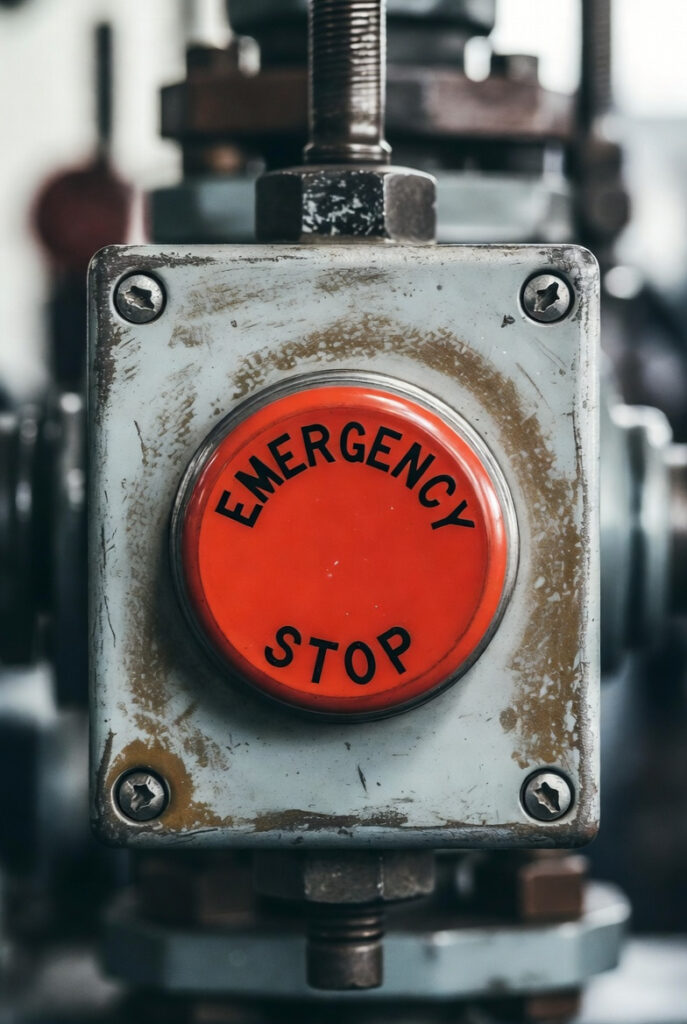
Pro Tip: Mount your main dc disconnect switch in a clearly visible and accessible location not inside the battery enclosure where it is difficult to reach in an emergency. The NEC 690.13 “readily accessible” requirement is not bureaucratic language it is the recognition that in an emergency the main disconnect must be reached and operated immediately without hesitation. Label it clearly: MAIN DC DISCONNECT – EMERGENCY SHUTOFF. Bright red label. Visible from the equipment room doorway. In a Rockwood cabin at 2am with a flashlight in one hand you need to find that switch in three seconds. Make sure you can.
The Verdict
A dc disconnect switch is the one device in your off-grid system that must work the first time it is needed in an emergency. It does not get a second chance.
Three criteria before installing any disconnect switch:
- DC voltage rating clearly stated on the product must exceed system voltage
- UL 1107 certification or equivalent DC-specific arc interruption testing
- Published breaking capacity sufficient for your battery bank short-circuit current
If the switch cannot answer all three it does not go in the cabin.
Disclosure: This article contains affiliate links. If you buy through them, GridFree Guide earns a small commission at no extra cost to you.
Questions? Drop them below.
About the Author
Robert Bertrand spent 20 years as a service advisor in the automotive industry (Lexus and Nissan), where precision diagnostics, wiring integrity, and documentation standards were non-negotiable. He brings that same technical discipline to GridFree Guide, where he researches, tests, and documents off-grid solar systems for Ontario conditions. Based in Rockwood, Ontario, every article is built on verified specifications, manufacturer data, and the real-world climate constraints of Canadian off-grid living.
As an Amazon Associate I earn from qualifying purchases. This site also contains affiliate links to other products and services. GridFree Guide earns a small commission at no extra cost to you.