
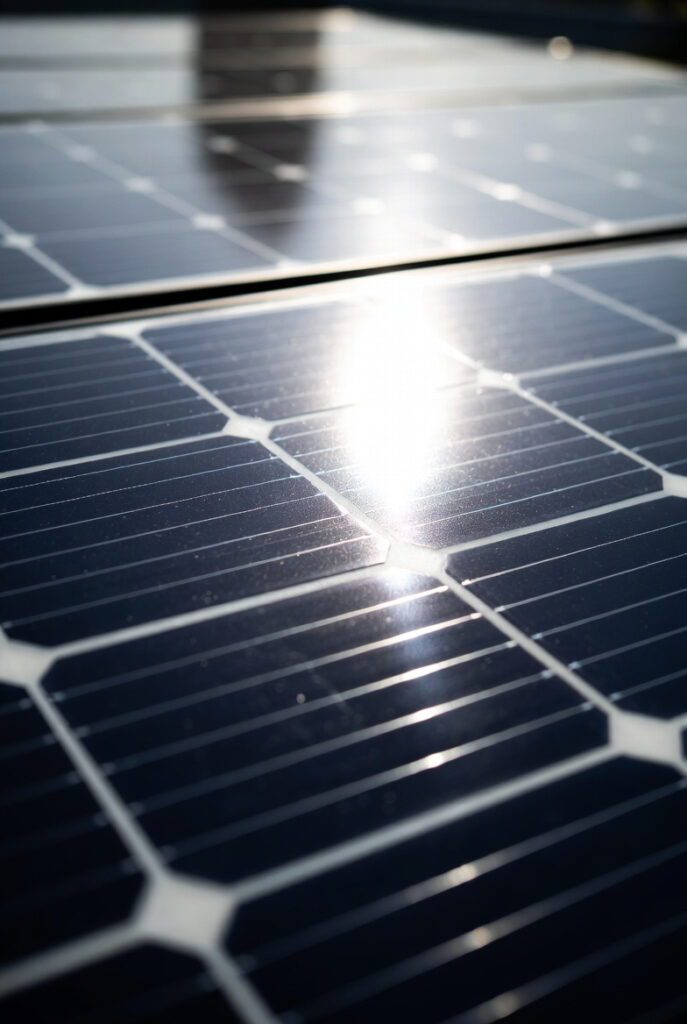
Don’t let the 400W sticker fool you. Solar panel efficiency explained in one sentence: your panel will almost never produce its rated output in real-world conditions. Here is the actual math and what you will see on your battery monitor.
Think of it like fuel economy on a car. The window sticker says 35 MPG but stop-and-go traffic in a Canadian winter tells a very different story. Same panel. Different conditions. Completely different output.
Solar Panel Efficiency Explained
Solar panel efficiency is the percentage of sunlight hitting the panel surface that actually converts into usable electricity. Most consumer panels in 2026 fall between 15–22% efficiency. Premium monocrystalline panels push toward 22–23%.
What does that mean practically? A 400W panel with 20% efficiency converts 20% of the sunlight hitting its surface into electricity. The other 80% becomes heat or reflects away. That is not a flaw that is physics. Even the best panels commercially available convert less than a quarter of available sunlight.
The efficiency rating tells you how much power you get from a given surface area. It matters most when space is limited. If you have unlimited roof or ground space efficiency percentage matters less than price per watt.
The Lab vs Reality Gap
Every solar panel is rated under Standard Test Conditions STC. The three STC conditions are 25°C panel temperature, 1000W/m² of irradiance, and 1.5 air mass spectrum.
Your roof in Ontario is almost never at STC. In summer panel surface temperature reaches 50–70°C on a clear day. In winter you get the right temperature but reduced irradiance from low sun angles and shorter days. Spring and fall come closest to STC which is why your best daily production numbers often come from April and October in Ontario.
The practical gap: A 400W STC-rated panel typically produces 320–360W under real-world conditions on a good day. Plan your system around 80–90% of rated output as your realistic peak and less than that for your daily average accounting for clouds, angle, and hours.
Why Heat Is the Enemy of Solar Power
This is the most counterintuitive fact in solar and the one most beginners get wrong.
Solar panels lose efficiency as temperature increases. Every degree above 25°C reduces output. The rate of loss is called the temperature coefficient typically -0.3% to -0.5% per degree Celsius for monocrystalline panels.
The math on a hot Ontario summer day:
- Panel surface temperature: 65°C
- Degrees above STC: 65 – 25 = 40°C above
- Temperature coefficient: -0.4% per degree
- Efficiency loss: 40 × 0.4% = 16% reduction
- A 400W panel produces approximately 336W on that hot day
The Ontario October advantage: A cold clear October day in Ontario with panel surface at 15°C is actually 10 degrees below STC. That means the panel runs slightly above its rated output. Cold air plus strong autumn sun is genuinely ideal solar production weather.
A 20% efficient panel in a cold clear Ontario October will often outperform the same panel in a hazy humid 35°C August. The sun is lower but the panel is more efficient.
Factors That Kill Efficiency
Shading The Silent Killer
Even a small shadow from a vent pipe, chimney, or tree branch can drop output by 50% or more depending on how your panel strings are configured. Solar cells in a panel are wired in series when one cell is shaded the output of the entire string drops to match the weakest cell.
One branch crossing one corner of one panel can halve your production for hours. Obstruction analysis before mounting is not optional it is the most important step in system design.
Dust, Grime, and Snow
A thin layer of dust or grime acts as a filter. Even 5% coverage can reduce output by 5–15%. In Ontario the specific risk is frost a thin frost layer that looks nearly clear can cut output by 20–30%.
Clean your panels two to three times per year minimum. After pollen season in spring. After wildfire smoke events in summer. Before winter sets in. It takes 20 minutes and recovers real production.
Snow is a separate issue. A full snow load blocks production entirely. But modern panels are tilted and dark they shed snow faster than most people expect. The bigger risk is the partial melt and refreeze cycle that leaves a patchy ice layer. That partial coverage is often worse than full coverage in some configurations.
Angle and Orientation
A panel at the wrong angle loses production every single hour of every single day. For Ontario the optimal fixed tilt angle is approximately 43–45 degrees roughly equal to your latitude. A panel lying flat loses 15–20% of annual production compared to optimal tilt. A south-facing panel at proper tilt outperforms east or west facing by 15–25%.
For the full positioning guide see our How to Mount and Position Solar Panels guide.
Monocrystalline vs Polycrystalline
Two technologies. One clear winner for most situations.
Monocrystalline: Made from single-crystal silicon. Higher efficiency (19–23%). Better performance in low-light and high-temperature conditions. Higher cost per panel but lower cost per watt of actual output.
Polycrystalline: Made from multiple silicon crystals. Lower efficiency (15–17%). Cheaper upfront. Takes more surface area to produce the same output. The price premium for mono has largely disappeared in 2026 poly’s only remaining advantage is gone.
The honest recommendation: Buy monocrystalline. The Renogy 200W Monocrystalline Panel is a quality example of a 20%+ mono panel at a reasonable price point for permanent installs.
The expert’s caveat: Chasing the highest efficiency percentage 23% vs 21% is often a waste of money unless you have extremely limited roof or ground space. A 21% efficient panel from a quality manufacturer installed at the correct angle will outperform a 23% panel installed poorly. Focus on mounting and positioning before chasing fractional efficiency gains.
For panel selection help see our Best Solar Panels for Beginners guide.
Pro Tip: The best efficiency upgrade costs nothing. Check your panel angle. In Ontario a panel tilted at 20 degrees produces significantly less than the same panel at 44 degrees. If your panels are mounted flat or at a shallow angle adjusting the tilt recovers more production than upgrading to higher-efficiency panels would. Geometry beats technology every time.
The Verdict
Solar panel efficiency explained in plain English: your 400W panel will produce 320–360W on a good day and less in heat, shade, or poor conditions. Plan for 80% of rated output as your realistic peak. Cold clear days outperform hot hazy days. Monocrystalline beats polycrystalline. Angle matters more than efficiency percentage.
Buy quality 20%+ monocrystalline panels. Mount them at the correct angle. Keep them clean. Everything else is detail.
Disclosure: This article contains affiliate links. If you buy through them, GridFree Guide earns a small commission at no extra cost to you.
About the Author
Robert Bertrand spent 20 years as a service advisor in the automotive industry (Lexus and Nissan), where precision diagnostics, wiring integrity, and documentation standards were non-negotiable. He brings that same technical discipline to GridFree Guide, where he researches, tests, and documents off-grid solar systems for Ontario conditions. Based in Rockwood, Ontario, every article is built on verified specifications, manufacturer data, and the real-world climate constraints of Canadian off-grid living.
As an Amazon Associate I earn from qualifying purchases. This site also contains affiliate links to other products and services. GridFree Guide earns a small commission at no extra cost to you.