
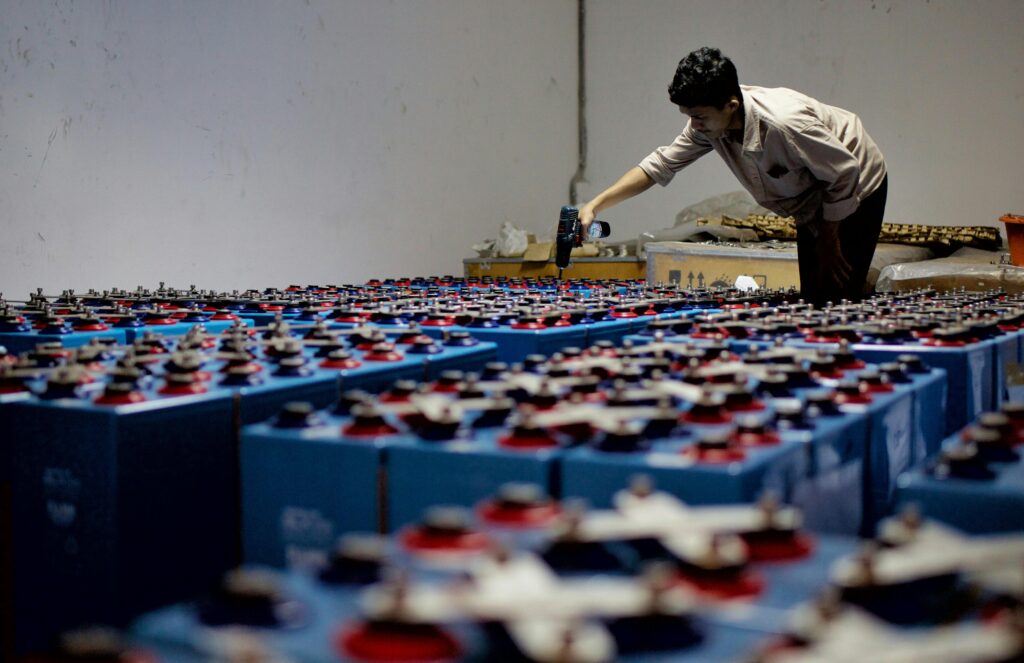
Someone bought two 100Ah batteries because it “sounded like enough.” Three hours into a blackout their system was dead. Meanwhile their neighbor with one properly sized 200Ah LiFePO4 battery made it through the night comfortably. The difference wasn’t money. It was math. This guide shows you exactly how to size a battery bank for off-grid solar so you never run out of power at the wrong moment.
Why Guessing Gets You Killed
Undersizing your battery bank is the single most common and expensive mistake in DIY solar. Too little storage means:
- Your system dies before sunrise
- Batteries deep discharge repeatedly destroying them faster
- You buy more batteries anyway but after the damage is done
Oversizing wastes money upfront. Undersizing costs you twice once in frustration and again in premature battery replacement.
The Three Numbers You Need
Before any calculation you need three numbers:
1. Daily load in watt-hours Add up everything you run and for how long:
- Fridge: 150W × 8 hours = 1200Wh
- Lights: 30W × 6 hours = 180Wh
- Phone charging: 20W × 2 hours = 40Wh
- CPAP: 50W × 8 hours = 400Wh
- Total daily load: 1820Wh
2. Days of autonomy How many cloudy days do you need to survive without solar input? Most setups need 1–2 days minimum. Serious off-grid needs 3.
3. Depth of discharge
- AGM: never go below 50% usable capacity is half the rated amount
- LiFePO4: can go to 80–100% usable capacity is nearly the full rated amount
The Battery Bank Formula
Here’s the formula for how to size a battery bank for off-grid solar:
Battery bank size = (Daily load × Days of autonomy) ÷ Depth of discharge
Example with LiFePO4:
- Daily load: 1820Wh
- Days of autonomy: 2
- Depth of discharge: 80% (0.8)
- Calculation: (1820 × 2) ÷ 0.8 = 4550Wh needed
- In 100Ah batteries at 12V: 4550 ÷ 12 = 379Ah
- Round up: 4 × 100Ah LiFePO4 batteries
Example with AGM:
- Same daily load and autonomy
- Depth of discharge: 50% (0.5)
- Calculation: (1820 × 2) ÷ 0.5 = 7280Wh needed
- In 100Ah batteries at 12V: 7280 ÷ 12 = 607Ah
- Round up: 7 × 100Ah AGM batteries
That’s why LiFePO4 wins on battery count even before cycle life is considered. For a full breakdown of battery chemistry see our LiFePO4 vs Lithium Ion vs AGM guide.
LiFePO4 Sizing Table:
| Setup | Daily Load | Autonomy | Battery Type | Batteries Needed |
|---|---|---|---|---|
| Basic blackout backup | 1000Wh | 1 day | LiFePO4 100Ah | 2 |
| Weekend off-grid cabin | 2000Wh | 2 days | LiFePO4 100Ah | 5 |
| Full time off-grid | 3000Wh | 3 days | LiFePO4 100Ah | 10 |
AGM Sizing Table:
| Setup | Daily Load | Autonomy | Battery Type | Batteries Needed |
|---|---|---|---|---|
| Basic blackout backup | 1000Wh | 1 day | AGM 100Ah | 3 |
| Weekend off-grid cabin | 2000Wh | 2 days | AGM 100Ah | 8 |
The Voltage Question 12V vs 24V vs 48V
Larger battery banks work better at higher voltages:
- 12V systems – fine up to about 200Ah
- 24V systems – better for 200–400Ah banks
- 48V systems – best for 400Ah+ serious off-grid builds
Higher voltage means lower current for the same power which means thinner wire, less voltage drop, and more efficient systems. For more on this see our Solar Wire Gauge Guide.
For beginners using portable power stations like the Anker SOLIX C1000 Gen 2 this decision is already made. The station runs at its internal voltage and handles the conversion automatically.
The Portable Power Station Shortcut
For beginners who don’t want to build a DIY battery bank a quality portable power station is the fastest path to properly sized storage.
The Anker SOLIX C1000 Gen 2 gives you 1056Wh of LiFePO4 storage in one unit. For most blackout backup scenarios that covers 1–2 days of essential loads without any battery bank math at all.
For panel input to keep it charged pair it with a Renogy 100W Solar Panel a reliable beginner friendly charging source that keeps your bank topped up between outages.
The Buffer Rule
Whatever size you calculate add 20%. Always.
Real world reasons your calculation will be optimistic:
- Battery capacity degrades over time
- Cold weather reduces available capacity see our Cold Weather Solar guide
- You’ll always add more loads than you planned
- Inefficiency losses in wiring and inverter eat into real capacity
Calculate what you need. Add 20%. That’s your real target.
Pro Tip – The Overnight Test: Before buying more batteries run your existing system for one full night with your normal loads. Check what percentage remains in the morning. If you’re below 30% on LiFePO4 or below 60% on AGM you need more capacity. Real data from your actual system beats any formula.
The Verdict
Battery bank sizing isn’t guesswork it’s arithmetic. Three numbers, one formula, twenty percent buffer. Do the math once and buy right the first time.
Under sizing your battery bank is the most expensive mistake in DIY solar. You’ll pay for it twice dead batteries at 2am and premature replacement.
Size it right. Sleep through the night.
Internal Links
- How Much Solar Power Do I Actually Need?
- LiFePO4 vs Lithium Ion vs AGM Battery Guide
- Solar Wire Gauge Guide
- Cold Weather Solar
Disclosure: This article contains affiliate links. If you buy through them, GridFree Guide earns a small commission at no extra cost to you.
About the Author
Robert Bertrand spent 20 years as a service advisor in the automotive industry (Lexus and Nissan), where precision diagnostics, wiring integrity, and documentation standards were non-negotiable. He brings that same technical discipline to GridFree Guide, where he researches, tests, and documents off-grid solar systems for Ontario conditions. Based in Rockwood, Ontario, every article is built on verified specifications, manufacturer data, and the real-world climate constraints of Canadian off-grid living.
As an Amazon Associate I earn from qualifying purchases. This site also contains affiliate links to other products and services. GridFree Guide earns a small commission at no extra cost to you.